
Most people who write about Alice Springs are describing a place they visited for a week. I am describing a place I lived in for nearly three years, from March 1987 through December 1989, and have never quite left, even decades later. My wife and I are planning to go back next year. We still keep in touch with friends there. When I think about the places that shaped how I understand the world, Alice Springs is near the top.
I was in the United States Air Force when we lived there, assigned to a small detachment of 21 people. At that time, the town had a population of roughly 25,000 people in the geographic center of Australia. We were not tourists, we were residents. We wore civilian clothes, lived in the community, played softball and rugby with locals, went to their pubs, attended their events, and, at least for those years, became part of the fabric of the place. I was the Operations Chief for our work, with 12 of those 21 people reporting to me.
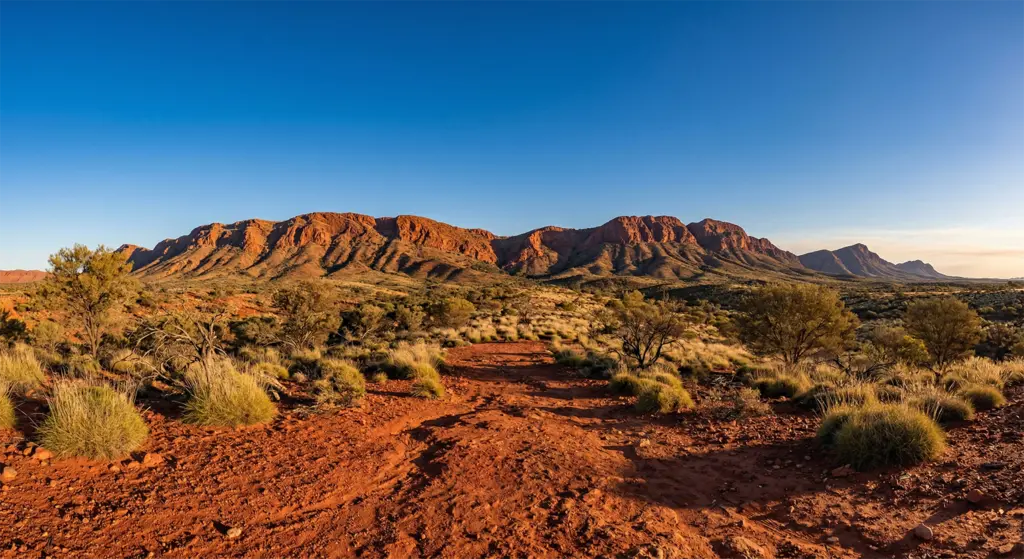
What I remember most is the people. And after the people, the Red Centre itself: the red earth against the blue sky. The MacDonnell Ranges rising on either side of town give you the sense that you are somewhere genuinely different from anywhere else on the planet. Alice Springs is not a stopover. It is a destination with its own gravity. Once it gets hold of you, it tends to keep you.
What Alice Springs Actually Is
Alice Springs sits at the geographic center of Australia, in the Northern Territory. It is roughly 1,500 kilometers from the nearest coastline in any direction. That isolation is real but misleading. The town has its own airport with regular services from Sydney, Melbourne, Brisbane, and Darwin. It has restaurants, shops, a functioning arts scene, universities, hospitals, and a population that has actively chosen to be there rather than drifting in by default. People do not end up in Alice Springs by accident. The ones who stay have decided that what the place offers is worth the distance from everywhere else.
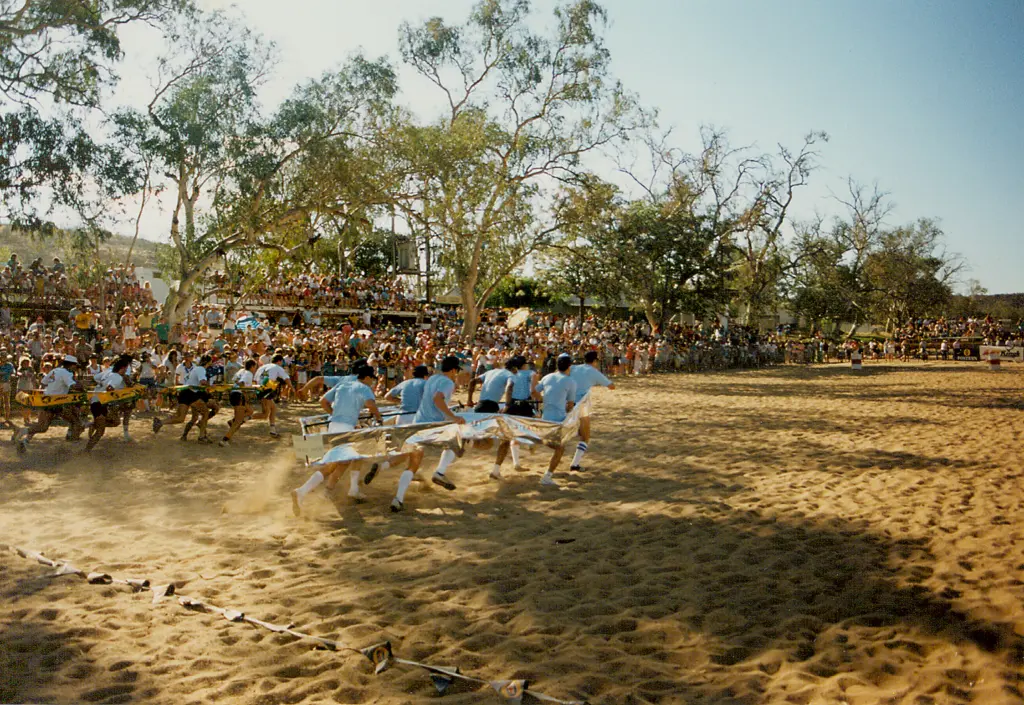
The town is built on and around the usually dry Todd River, which runs through the center. It also gives Alice Springs one of its more memorable annual events: the Henley-on-Todd Regatta. This is a boat race conducted entirely in a dry riverbed; you have to see it to believe it. Contestants carry bottomless boats and run. It is exactly as chaotic as it sounds and absolutely worth attending if your timing is right. The first time I watched it, I understood something important about Alice Springs. The town and its people are not bothered by the absurd. They lean into it.
The MacDonnell Ranges frame the town on either side. These are ancient red quartzite ridges that stretch hundreds of kilometers east and west. They give the landscape its defining character. The color of the rock and the earth is genuinely that red. You have seen photographs. The photographs do not quite capture it.
The History That Shaped the Town
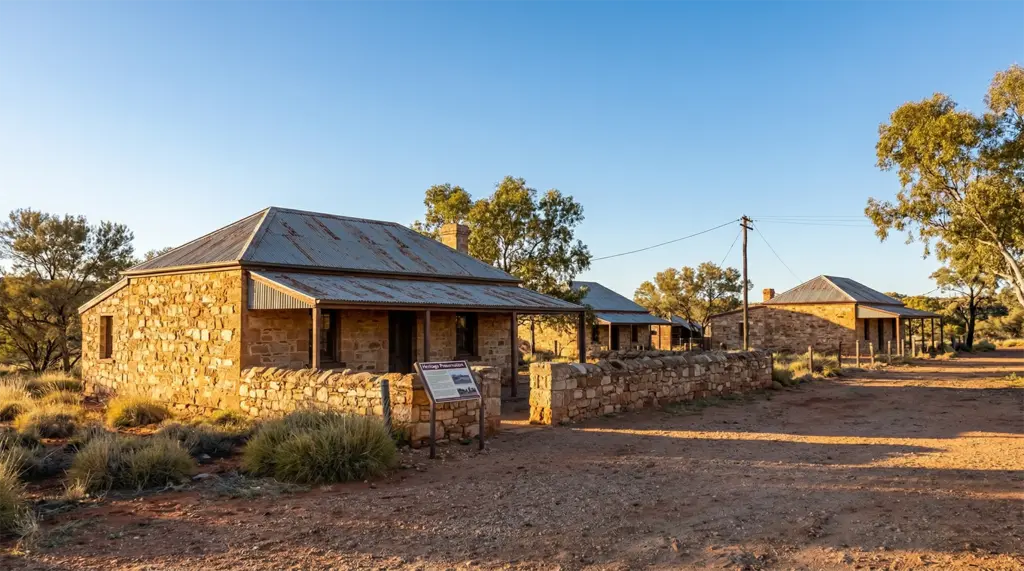
Alice Springs takes its name from Alice Todd, wife of Charles Todd, the South Australian Postmaster-General. He oversaw the construction of the Overland Telegraph Line in 1872. The line connected Darwin to Adelaide through 3,200 kilometers of previously unmapped desert. It also passes through a permanent waterhole that Todd’s survey team found in the MacDonnell Ranges. They named the waterhole Alice Springs after his wife. A telegraph repeater station was built there to amplify the signal on its journey south. The station is still standing and is one of the best-preserved 19th-century sites in Australia.
The telegraph line was not just a communications project. It was the first reliable connection between Australia’s southern population centers and the rest of the world. This was handled via the undersea cable at Darwin. For the first time, news from London arrived in Adelaide in hours rather than months. The station at what would become Alice Springs was the operational heart of that connection for decades.
During the Second World War, Alice Springs became a critical military staging point. The fall of Singapore in 1942 and the Japanese bombing of Darwin changed Australia’s strategic calculation overnight. The remote outback town suddenly found itself on a supply line feeding the war effort in the north. Roads were built, troops moved through, and the population — then a few hundred people — swelled with military personnel. The wartime infrastructure investments laid the groundwork for the modern town that grew afterward.
The American Presence in Alice Springs
The United States military has also maintained a continuous presence in Alice Springs since 1962. This is a fact most visitors do not know. During my years there, I was assigned to a small Air Force detachment. There were 21 people in total who operated as part of the community rather than on a separate basis. We lived in houses around town, drove regular cars, and wore civilian clothes. In most respects, we were indistinguishable from other residents. Unless you happened to know us, you would not have known we were there.
There was one exception: on ANZAC Day, the Australian and New Zealand Army Corps commemoration. This memorial is held every April 25th, the most solemn day on the Australian military calendar. We wore our uniforms and marched alongside the Australian military representatives in the local ceremony. That was the only day we appeared as what we were. The significance of being invited to participate was not lost on any of us. ANZAC Day is not a casual observance in Australia. To march in it is an honor that the Australians extended to us with full seriousness. And as a military group, we received it the same way.
The Independence Day Ball — Alice Springs’ Most Coveted Invitation
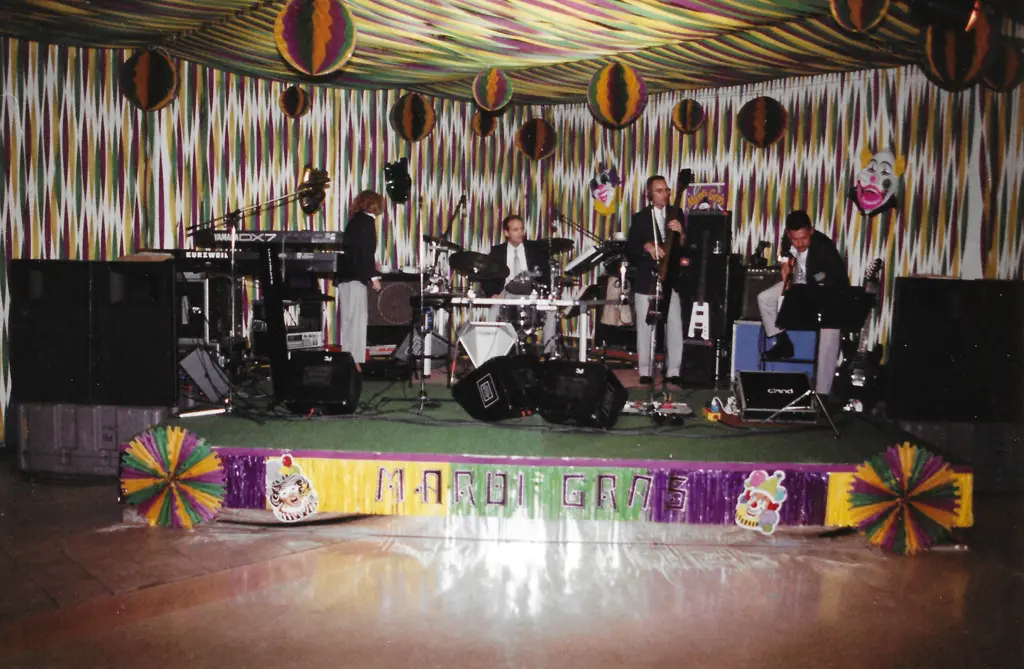
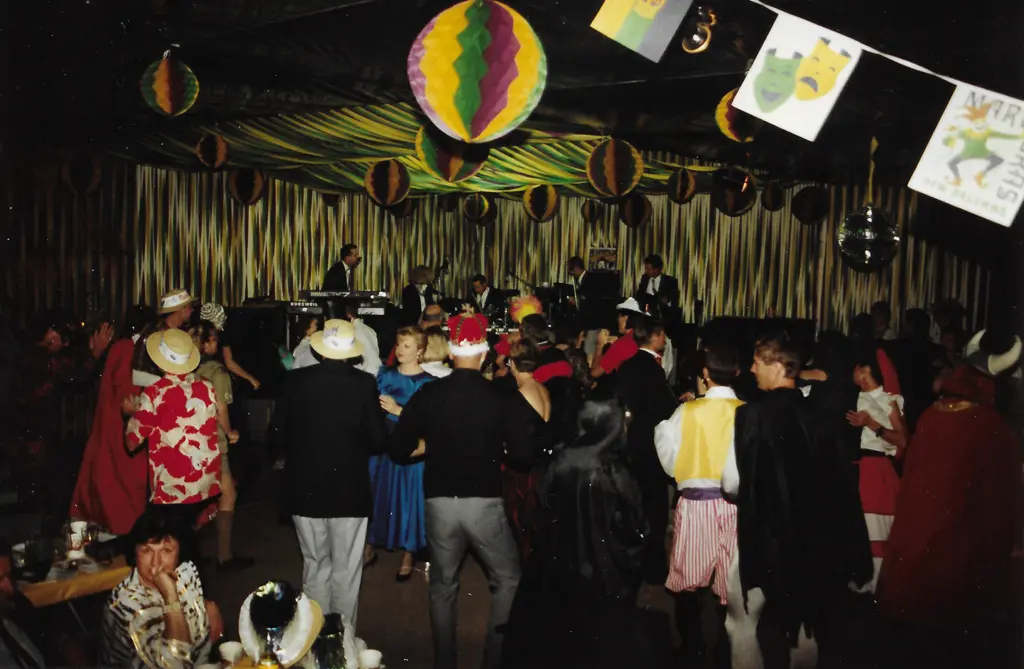
The other thing our detachment was known for throughout Alice Springs, and, apparently, throughout Australia, was our annual Independence Day Ball. The event was invitation-only. It always drew a crowd that reflected the diplomatic weight it carried. Members of the Australian Parliament, the United States Ambassador, local dignitaries, and community leaders. By the time I arrived there, the Ball had acquired quite a reputation. This made the invitations among the most sought-after in the region. People wanted to come. Getting a ticket was a social event in itself.
In 1990, I managed the Ball for the detachment. We planned a Mardi Gras theme and arranged for members of the United States Air Force Band to come to Alice Springs for a full week of performances around the community before the event itself. Think about that for a moment. Part of a professional military concert band, performing across a town of 25,000 people in the Australian outback. They were brought in for the Independence Day Ball and for the Ambassador’s Independence Day celebration. The band performed every day around town for a full week; these events were free and open to the public. The response from Alice Springs was exactly what you would expect from a community that knows how to show up for something: people came.
The Ball was not just entertainment. It was diplomacy, done at a human scale, in a remote town far from any capital city. The relationships built in a room like that, between American military personnel, Australian parliamentarians, and the broader community, were real and lasting. That is how alliances actually work, and Alice Springs was one of the places where that work happened quietly for decades.
Life in Alice Springs — What Residents Know
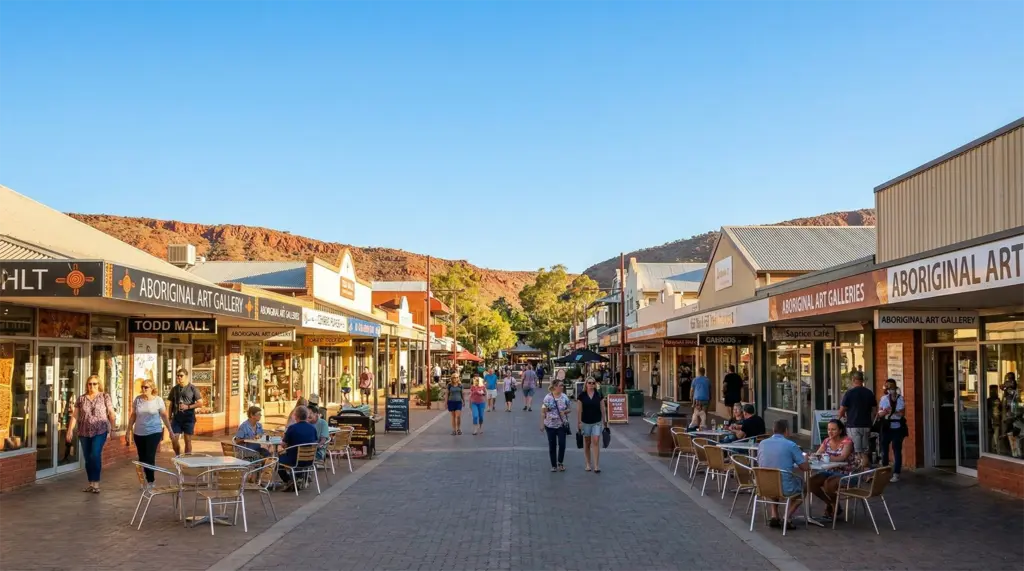
The social life in Alice Springs during my years there revolved around the community, as small-town social life everywhere does, with the added intensity that comes from being a long way from anywhere else. People looked out for each other. They showed up at each other’s events. The barriers between the various groups in town — locals, military, government workers, Aboriginal community members, tourists passing through — were lower than you might expect, because the town was small enough that everyone eventually ended up at the same events.
We played softball and rugby. Both were genuinely competitive and social in the way that only sports in small communities can be. The summer heat in Alice Springs is no minor consideration; temperatures regularly exceed 40 degrees Celsius (104 Fahrenheit) during the December-to-February peak, and we played through it. The hydration strategy was pragmatic: cold beer between the bases and at every opportunity between rugby phases. It was not the recommended sports science approach, but it was the Alice Springs approach, and it worked well enough that we kept coming back.
The pub culture was important. Not in the way that suggests excess, but in the way that a well-run local pub is the social infrastructure of a small community. You went there to talk to people, to hear what was happening, to maintain the relationships that made the place work. The conversations I had in Alice Springs pubs — with Australian Air Force personnel, with station workers who had driven in from properties hours away, with local Aboriginal community members, with government workers — gave me an education in Australian life that no formal program could have replicated.
The Red Centre — What the Landscape Does to You
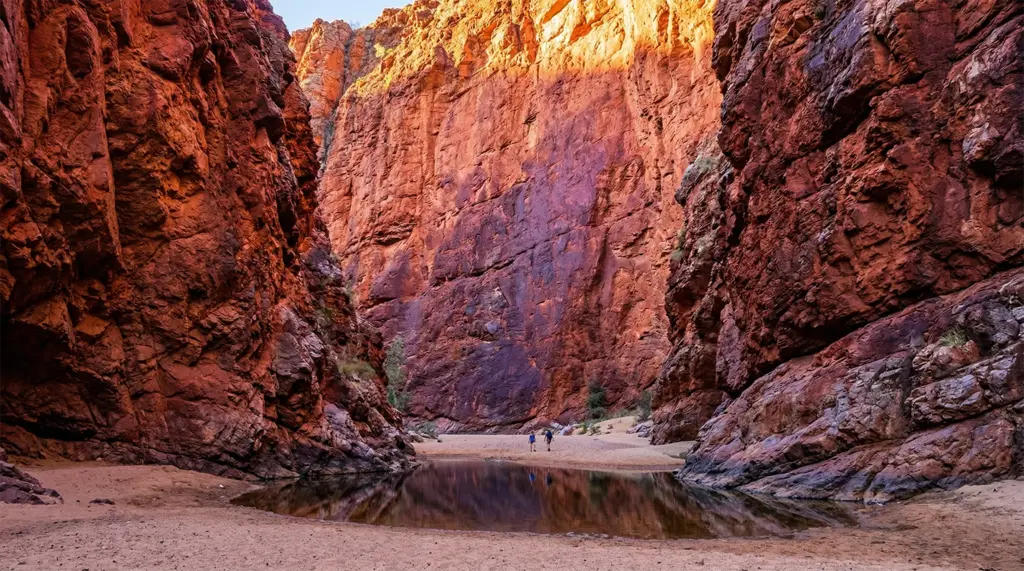
The landscape around Alice Springs is not comfortable. It does not invite you to relax into it the way a beach does. The MacDonnell Ranges are ancient — among the oldest exposed rock on earth — and they feel it. The red quartzite walls of Simpsons Gap, twenty kilometers west of town, rise vertically from a dry creek bed. Early morning, before the heat arrives and the rock catches the first light, the colors shift through shades of orange, red, and purple that lack straightforward names. You stand in the gap and understand why the Arrernte people — the traditional custodians of this country — have found it sacred for thousands of generations.
Standley Chasm, farther west, narrows to a slot barely wide enough for a person to walk through, and at midday, when the sun is directly overhead, it catches the light, turning the walls incandescent. Emily Gap, Ellery Creek Big Hole, the Ochre Pits where the Arrernte have quarried pigment for tens of thousands of years — the West MacDonnell Ranges alone justify the trip to Alice Springs before you have seen anything else.
Uluru (Ayers Rock)
And then there is Uluru. The sandstone monolith rises 348 meters from the flat desert plain about 460 kilometers southwest of Alice Springs, and the drive there is itself part of the experience. The highway runs straight and empty through red country for hours. The rock appears on the horizon long before you reach it, and it keeps revealing itself differently as you approach: the color changing with the angle and the time of day, the surface texture becoming apparent, the sheer scale refusing to be grasped until you are standing next to it. I made that drive multiple times during my years in Alice Springs. Each time was different.
The Arrernte People and the Culture of Alice Springs

Alice Springs sits on the traditional country of the Arrernte people, who have lived in this landscape for at least 30,000 years. That context shapes everything about the town, from the names of the places around it to the art that comes out of the region to the cultural institutions that give Alice Springs its character. Understanding Alice Springs without understanding this is like visiting Rome without knowing anything about the Romans.
The Araluen Cultural Precinct is the best starting point for visitors who want to engage with the culture in a serious way. It houses the Araluen Arts Centre, the Museum of Central Australia, and the Albert Namatjira Gallery — dedicated to the Arrernte artist whose watercolor landscapes of the Red Centre brought the region to international attention in the 1930s and 1940s. Namatjira’s work is extraordinary, and seeing it in the landscape that inspired it is something else entirely. The precinct also hosts the annual Desert Mob exhibition each September, the largest annual showcase of Central Australian Aboriginal art in the country.
The Aboriginal art market in Alice Springs is substantial and, in places, complicated. Significant galleries represent major artists and estates with full provenance and documentation. Smaller operations range from reputable to predatory. If you are buying, do your homework: ask about the artist, ask about the community, ask where the money goes. Ethical engagement with Aboriginal art is worth the additional effort. The artists and communities behind the work have long been navigating that relationship with the outside world, and they deserve buyers who take it seriously.
What to Do In and Around Alice Springs
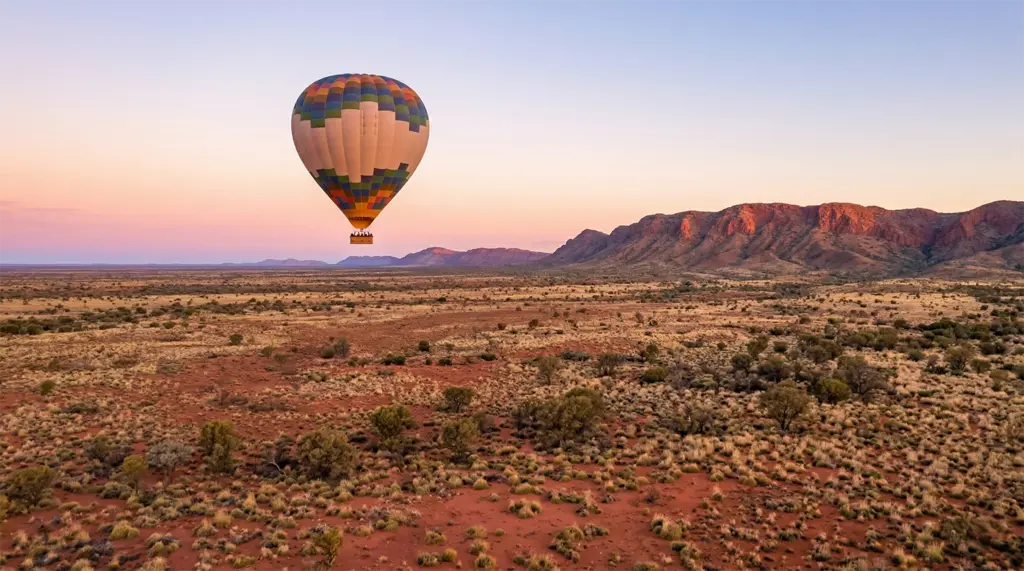
Hot air ballooning at dawn is the activity that Alice Springs does better than almost anywhere. The still morning air, the colors of the Red Centre catching the first light, the silence at altitude above a landscape stretching to the horizon in every direction — it is a genuinely remarkable experience, specific to this place and this time of day. Book early; the reputable operators fill quickly, particularly in the prime visiting months.
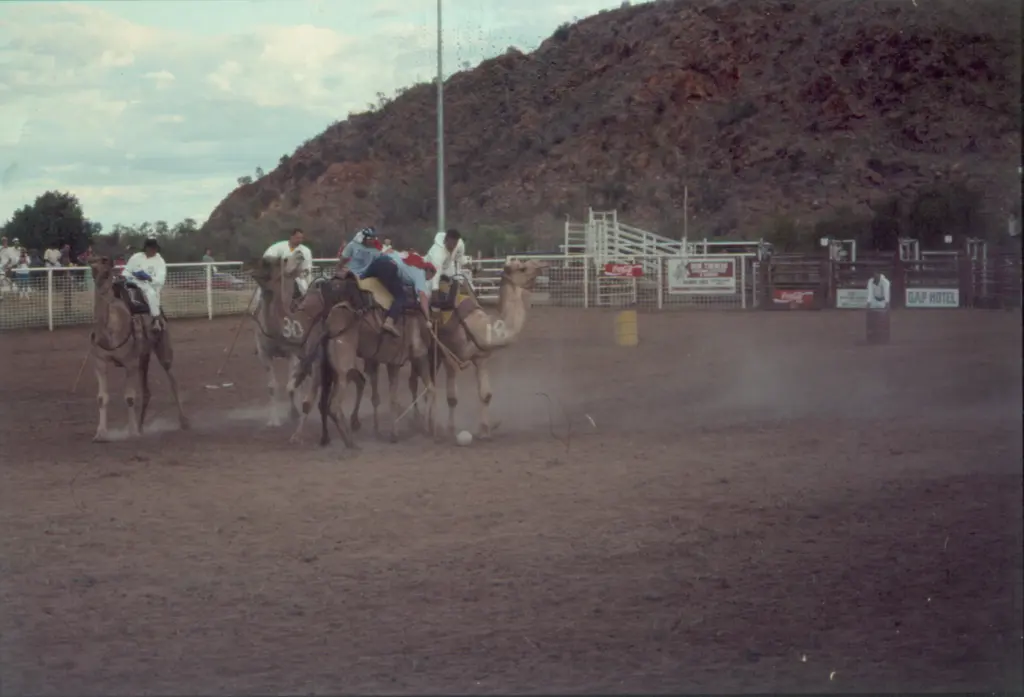
The Alice Springs Camel Cup, held annually in July at Blatherskite Park, is the kind of event that could only exist in the outback and is better in person than any description of it. Camels — which were introduced to Australia in the 19th century as working pack animals for the interior and now exist in feral populations across the desert — race around a track while their riders try to maintain some degree of influence over proceedings. The camels have their own ideas about this. The crowd, the food stalls, the general atmosphere of a community event that takes itself seriously as entertainment without taking itself too seriously as sport — the Camel Cup is one of the best afternoons Alice Springs has to offer. I was there more than once.
Other Local Highlights
The Alice Springs Telegraph Station remains an essential stop. The original 1872 stone buildings are preserved in a park setting north of town, and the site gives the clearest picture of what the telegraph era actually looked like and what the people who operated the line lived and worked through. The interpretive material is well done. Budget two hours.
The Royal Flying Doctor Service Museum and the School of the Air — the radio school that once educated children across thousands of kilometers of the outback — are both operating institutions offering visitor programs. Both give you a specific and irreplaceable window into what maintaining community across the vast distances of the Australian outback actually required. The Flying Doctor Service, in particular, has a history that deserves more than a passing glance: the volunteer network of aerial medical care it built, starting in 1928, is one of the more remarkable logistical achievements in Australian history.
The Alice Springs Desert Park, on the western edge of town, covers 1,300 hectares of the MacDonnell Ranges habitat and focuses on the native animals and ecosystems of the Red Centre. The nocturnal house is particularly worthwhile; the desert mammals that live around Alice Springs are mostly nocturnal, and this is the most reliable way to see them. The park also has strong Arrernte cultural programming that connects the natural environment to its human history.
Practical Information for Visiting Alice Springs
The best time to visit Alice Springs is April through October, when daytime temperatures are comfortable — typically 20 to 28 degrees Celsius (68 to 82 Fahrenheit), and the sky is reliably clear. The summer months from December through February bring the extreme heat I mentioned earlier, and while the town functions in it, visitors unaccustomed to sustained 40-degree days should plan accordingly. June and July are the peak visitor months and the coolest months; winter nights can drop below freezing, which surprises people who expect the outback to be uniformly hot.
Getting to Alice Springs is straightforward. Qantas, Jetstar, and Virgin Australia fly regular services from Sydney, Melbourne, Brisbane, and Darwin. The Ghan, the legendary train connecting Adelaide to Darwin, passes through Alice Springs and is one of the great rail journeys. If you have the time, the two-day train journey from Adelaide to Alice is worth doing in its own right, not just as transportation.
Within Alice Springs, the town center is walkable. Todd Mall is the main pedestrian strip and a reasonable base for understanding what the town offers. For the sites outside town, Simpsons Gap, Standley Chasm, Uluru, and the broader West MacDonnell ranges, a rental car is the practical option. The drives are not difficult, and the roads are well-maintained; the distances are simply too large for public transport to handle effectively. Fill your tank before leaving town for any destination beyond the immediate surroundings, and carry water. This is not cautious tourist advice. It is just accurate.
Where To Stay
Accommodation ranges from the large resort-style hotels on the edge of town to smaller guesthouses in the center. If you are staying more than a few days, a self-contained apartment gives you the flexibility to manage your own timing around the heat. The early mornings and late afternoons are the productive hours for outdoor activity. Midday in summer belongs to the locals, who have learned to find shade.
Why I’m Going Back
My wife and I are planning to return to Alice Springs next year. We have friends there we have stayed in contact with across the decades, and the thought of walking back into the Red Centre with them, people who know those years the way we do, is one I find genuinely exciting in a way that standard tourism does not produce.
Some things will have changed. The town has grown. The infrastructure has improved. The road to Uluru is better than it was in 1989. Some of the places I remember may not be there in the same form. That is the nature of returning to a place after 35 years.
But the Red Centre will not have changed. The MacDonnell Ranges do not change on human timescales. The red earth will still be that red against that blue sky. Simpsons Gap will still catch the early-morning light the way it did in 1987, when I first walked into it and stopped moving for longer than I planned to. The Arrernte country will still be there, carrying its 30,000 years of continuous human history in a landscape that looks, to the uninformed eye, simply empty.
Alice Springs is not empty. It never was. It is one of the most inhabited places I have ever been, in the sense that matters: full of people who have chosen to be there and who understand something about what the place is that you cannot get from a photograph or a travel guide. This is my attempt at a travel guide, written by someone who has been there. The real thing is better. Go.
Frequently Asked Questions About Alice Springs
Q1: What is the best time of year to visit Alice Springs?
April through October offer the most comfortable conditions for visitors. Daytime temperatures during this period typically range from 20 to 28 degrees Celsius (68 to 82°F), with clear skies and minimal rainfall. June and July are the peak months and the coolest, though winter nights can drop to near-freezing — bring a layer. The summer months (December through February) bring sustained extreme heat, regularly exceeding 40°C (104°F). The town functions in the heat, and locals manage it, but visitors should plan outdoor activities for early morning and late afternoons and expect to be inside during the hottest midday hours.
Q2: Is a rental car necessary for visiting Alice Springs?
For the town center itself, no. Todd Mall and its immediate surroundings are walkable, and local taxis and ride-sharing services handle in-town travel. For anything beyond the town center, Simpsons Gap, Standley Chasm, the Alice Springs Telegraph Station, and certainly for Uluru (460 kilometers southwest), a rental car is required. The West MacDonnell Ranges drive is a full-day or multi-day itinerary, and public transport does not reach these sites. All major rental companies operate from the Alice Springs airport. The roads are well-maintained; carry water and ensure your fuel level is adequate before leaving town.
Q3: How far is Uluru from Alice Springs, and is it a day trip?
Uluru is approximately 460 kilometers from Alice Springs, a drive of roughly four and a half to five hours each way. A true day trip is therefore not practical if you want to give Uluru the time it deserves. Most visitors either fly directly into Uluru-Kata Tjuta Airport (with regular services from Alice Springs, Sydney, and other cities) or drive and stay for one or two nights at the Ayers Rock Resort, the accommodation complex adjacent to the national park. The resort caters to all budgets. Seeing Uluru at both dawn and dusk, when the rock’s colors shift through their most dramatic range, requires at least one overnight stay.
Q4: What is the Henley-on-Todd Regatta?
The Henley-on-Todd Regatta is Alice Springs’ annual “boat race,” held on the dry bed of the Todd River, typically in late August or September. Contestants carry bottomless boats, their legs visible below the hull, and race on foot through the sand. The event started in 1962 as a good-natured parody of the famous Oxford regatta and has grown into one of Alice Springs’ most distinctive annual events. It has been canceled exactly once in its history, in 1993, when the Todd River was actually flowing. The Alice Springs sense of humor about its own geography is perfectly expressed by that cancellation. Check the current schedule before planning around it.
Q5: What should I know about engaging with Aboriginal culture in Alice Springs?
Alice Springs is a major center for Central Australian Aboriginal art, and the opportunity to engage with it seriously, rather than just purchasing souvenirs, is genuine and worth taking. The Araluen Cultural Precinct is the reliable starting point: the Museum of Central Australia and the Albert Namatjira Gallery offer genuine depth. For art purchases, work with established galleries that provide documented provenance, identify the artist, and explain how proceeds are distributed to communities. The difference between a reputable gallery and a tourist shop can be significant in terms of both quality and ethics. The Desert Mob exhibition in September is the largest annual showcase of Central Australian Aboriginal art in the country and an excellent context for understanding the range and depth of the work being produced in the region today.
SUGGESTIONS FOR LODGING AND TRAVEL
Lodging is widely available throughout Australia. However, you can get some assistance booking tours to some of the attractions. For transparency: We may earn a commission when you click on certain links in this article, but this doesn’t influence our editorial standards. We only recommend services that we genuinely believe will enhance your travel experiences. This will not cost you anything, and I can continue to support this site through these links.
Lastly, we recommend booking international travel flights through established organizations rather than a local travel agent in the Philippines. I recommend Expedia.com (see the box below), the site I use to book my international travel. I have provided a search box below for you to use to search for flights (click on “Flights” at the top) or Hotels (click on “Stays” at the top). This tool will provide me with an affiliate commission (at no cost to you).
Specific Lodging Suggestions
- Stay at Alice Springs Hotel: A good hotel in Alice Springs with reasonable rates ranging from $90 to $180. This is in a great location, making it easy to get around the area.
- Elkira Court Motel: Another excellent, centrally located hotel. It is upscale, with prices typically ranging from $94 to $115.
- Diplomat Hotel Alice Springs: This is a slightly more cost-effective hotel that still maintains a good reputation. It’s very quaint. The prices typically range from $87 – $120.