
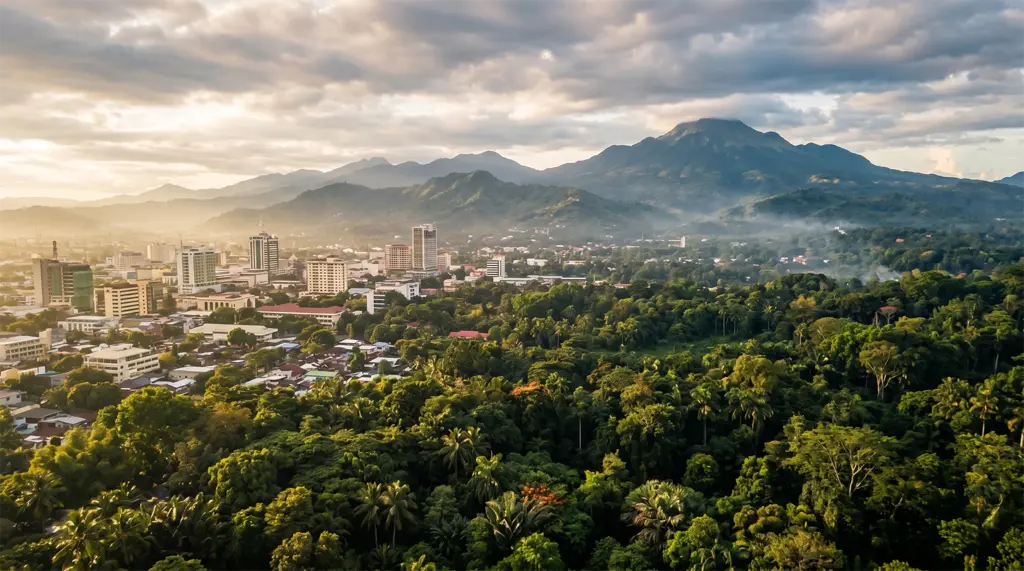
Davao City sits at the southeastern tip of Mindanao, making it the largest city in the Philippines by land area. It is also one of Asia’s most livable urban centers. Further, the city serves as the gateway to a remarkable concentration of biodiversity. Among the most notable are the country’s highest peak, a UNESCO World Heritage forest, a national bird sanctuary, and island beaches, all within a half-day’s travel.
Visitors who arrive expecting a typical Philippine beach holiday often leave with a broader picture. Davao rewards the curious traveler with wildlife encounters, highland hiking, chocolate tourism, and river adventure in a single trip. This guide covers the city’s top attractions. It also addresses the best time to visit, and where to stay across budget, mid-range, and luxury options.
Mt. Apo: Climbing the Highest Peak in the Philippines
At 2,954 meters (9,692 feet), Mt. Apo is the highest mountain in the Philippines. Additionally, its peak straddles the boundary between Davao City and Cotabato Province. Conversely, it is protected within the Mt. Apo Natural Park. It is also a recognized habitat for Philippine eagles, Philippine deer, and numerous endemic orchid species.
The Climb
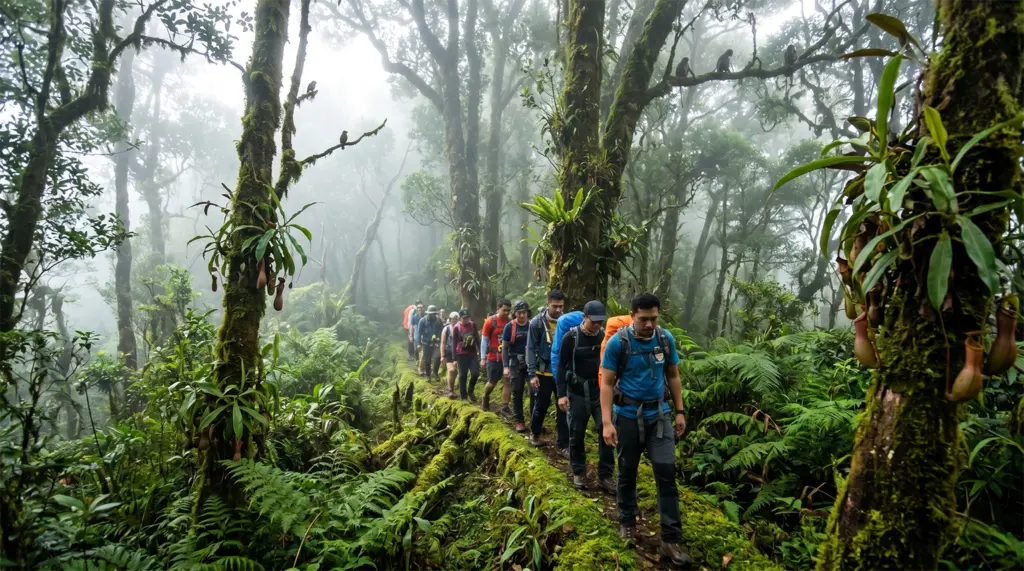
Most guided expeditions take two to three days, entering from trailheads at Kidapawan (North Cotabato) or Digos (Davao del Sur). The route passes through cloud forest, sulfuric vents near the crater lake, and high-altitude grassland before reaching the summit. A permit from the Protected Area Management Board (PAMB) is required, and guided treks are mandatory inside the protected zone.
The summit offers wide views across Mindanao on clear mornings. Climbers typically depart early on the final summit day to arrive before clouds build in late morning. Trail conditions vary by season; the dry months of November through April give the most reliable window for the ascent.
Flora and Wildlife Along the Trail
The lower slopes support dipterocarp forest, which transitions into mossy cloud forest above 2,000 meters. As a result, hikers regularly spot Philippine eagles riding thermals above the upper ridges. The mountain also hosts wild orchids, pitcher plants, and the rare Mindanao bleeding-heart pigeon. Guides hired through accredited operators typically provide background on the ecology along the route.
Eden Nature Park: Adventure and Highland Scenery Above the City
Eden Nature Park sits in the highland barangay of Toril, roughly 30 kilometers from downtown Davao. It has an elevation above 1,000 meters. The cooler air and mountain scenery make it a popular day trip for both families and adventure travelers. The park spans forested ridges, farm plots, and activity areas arranged across terraced hillsides.
Activities
The park offers sky-cycling along a suspended cable route, zip-lining across forested ravines, horseback riding, and ATV trails through farm terrain. For visitors who prefer a slower pace, the butterfly garden, koi ponds, orchid walks, and coffee demonstration plots provide a quieter alternative. A mini-zoo within the grounds houses native birds and small mammals.
Eden is also known for its highland cuisine. The on-site restaurant features farm-fresh produce grown within the property, and the highland strawberries are frequently cited by returning visitors. Most guests arrive as part of a day package that bundles entrance and selected activities at a fixed rate.
The Philippine Eagle Center: A Conservation Landmark in Calinan
The Philippine Eagle Center in Malagos, Calinan District, is the primary conservation facility for the Philippine eagle, the country’s national bird. The center is managed by the Philippine Eagle Foundation (PEF) and focuses on captive breeding, research, and public education. It houses more than 30 eagles along with other rescued wildlife.
The Philippine Eagle
The Philippine eagle is one of the world’s largest and most powerful raptors. Adults reach a wingspan of up to 2.2 meters (7.2 feet) and stand 90 to 100 centimeters tall. The species is critically endangered, with an estimated wild population of fewer than 800 pairs. Almost all of these pairs are confined to forests on Mindanao, Leyte, Samar, and Luzon.
The center allows visitors to observe the birds at close range in naturalistic enclosures. Guided tours explain the ecology of the species and the threats it faces, primarily deforestation and illegal capture. The PEF captive breeding program has produced successful hatchlings, and several birds have been released into protected forest reserves.
Other Wildlife at the Center
Beyond the eagles, the facility houses Philippine crocodiles, monitor lizards, Palawan peacock-pheasants, and various rescued primates. Informational signage throughout the property covers the broader biodiversity of Mindanao. The center is generally open daily, and entrance fees contribute directly to the foundation’s breeding and release programs.

Malagos Garden Resort: Chocolate, Birds, and Botanical Gardens
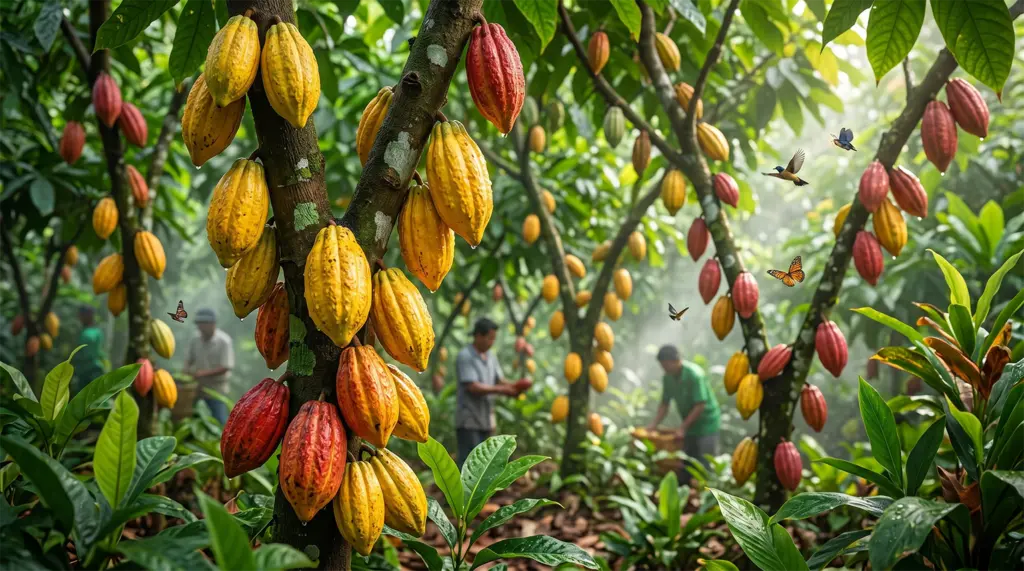
The Malagos Garden Resort is located in the Calinan District. It combines a working cacao farm, a botanical garden, a bird park, and an award-winning chocolate production facility. All are located on a single property. Malagos chocolate has won recognition at the International Chocolate Awards. It is considered one of the finest single-origin chocolates produced in Southeast Asia.
The Chocolate Experience
Visitors can join guided tours of the cacao orchard and observe the fermentation and drying process. The on-site chocolate shop offers tastings and sells the full range of Malagos products. These products range from dark bars to bonbons and drinking chocolate. The resort’s restaurant incorporates cacao into several dishes on the menu, including a popular durian chocolate dessert.
Gardens and Bird Park
The botanical garden section features orchid collections, tropical hardwoods, koi ponds, and manicured walkways through themed garden areas. The bird park is home to Philippine cockatoos, bleeding-heart pigeons, and various parrots in walk-through aviaries. A butterfly sanctuary and a small science park cater to families traveling with children. Most visitors combine the garden and chocolate experience into a half-day visit.
Crocodile Park Davao: Philippine Crocodiles and Wildlife Education
Davao Crocodile Park, located along McArthur Highway, keeps one of the largest collections of Philippine crocodiles in the country. It is also situated alongside a range of other reptiles, birds, and mammals. The park’s most recognized resident is Pangil, a large saltwater crocodile. It has become a local landmark and a popular subject for visitor photographs.
What to Expect
Scheduled feeding demonstrations are the centerpiece of the park visit. They draw visitors to the main crocodile enclosures at set times each day. Beyond the crocodile exhibits, the park houses ostriches, pythons, monitor lizards, fascinating birds, and a small-mammal section featuring macaques and civets. An on-site souvenir shop sells locally crafted crocodile-skin goods, a practice that has drawn some visitor commentary regarding conservation ethics.
The park operates educational programs for school groups and has partnered with local conservation bodies. Their intention is to raise awareness about the critically endangered Philippine crocodile. This is a freshwater species separate from the more common saltwater crocodile found in coastal areas across the region.
Samal Island: Beaches, Waterfalls, and Island Pace
The Island Garden City of Samal lies just across the Pakiputan Strait from Davao City, reachable by ferry. It is roughly a 10-minute ride from the Santa Ana Wharf. Despite its proximity to the city, Samal operates at a noticeably slower pace. It also offers a range of beaches, waterfalls, and dive sites along its 230-kilometer coastline.
Beaches and Resorts
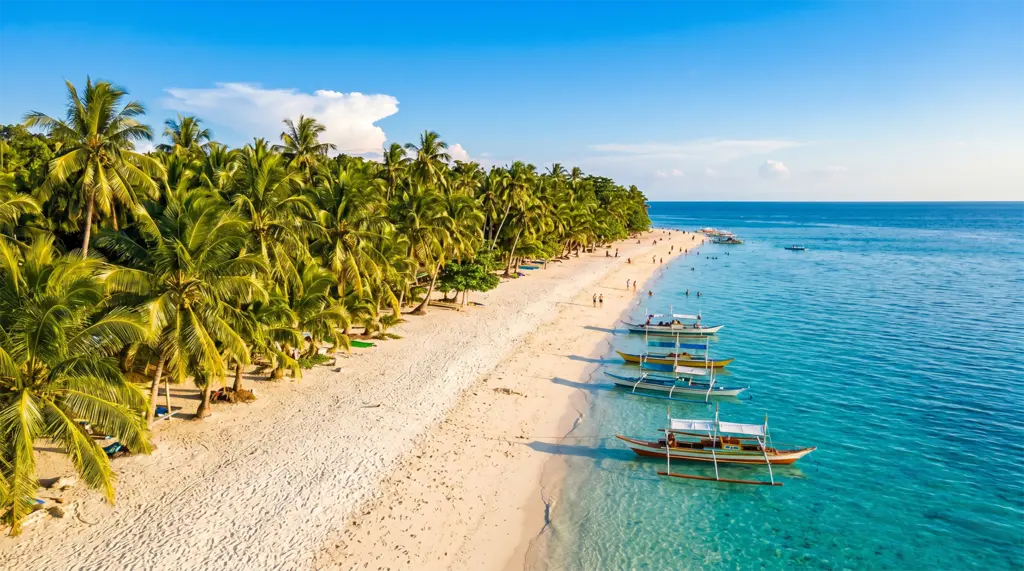
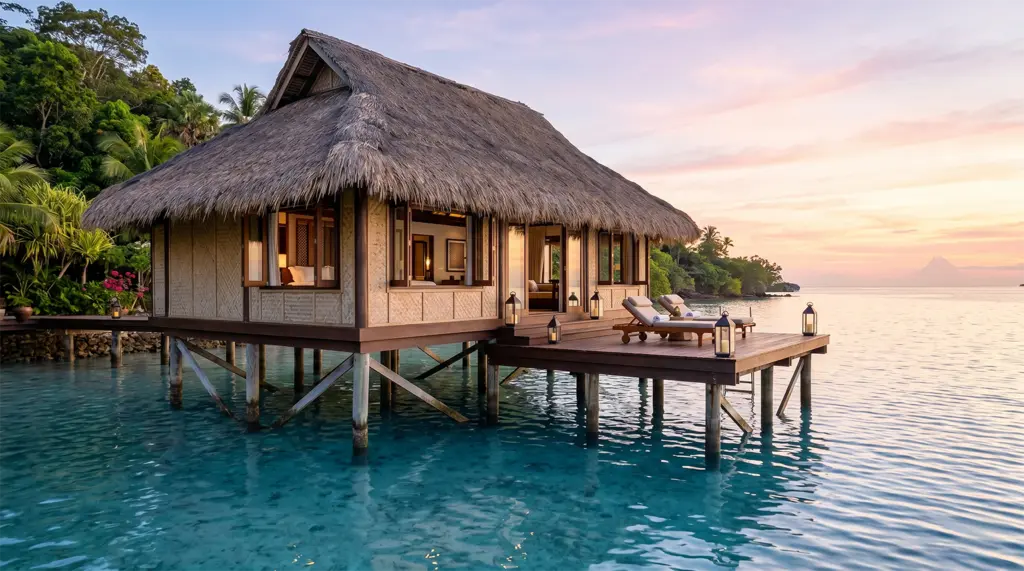
Samal’s best-known beach stretches are at Paradise Island Park and Beach Resort, Coral Garden Resort, and the Pearl Farm Beach Resort on Malipano Island. Pearl Farm, the island’s flagship luxury property, occupies the site of a former pearl farming operation and offers overwater villas above the Davao Gulf. Day-trippers generally access the public beach areas or mid-range resort facilities without an overnight commitment.
Hagimit Falls and Other Activities
Hagimit Falls in Babak District offers a set of cascades and natural pools suitable for swimming, with picnic facilities and basic food stalls nearby. The island also has a well-documented snorkeling and diving circuit, particularly around the coral gardens off the western shore. Monfort Bat Cave in Babak holds a Guinness World Record for the largest known colony of Geoffrey’s rousette bats, with estimates of more than 1.8 million individuals roosting in a single limestone cave.
Davao River White Water Rafting: Rapids and Jungle Scenery
The Davao River offers white water rafting on Class II to Class III rapids, making it accessible to first-time paddlers while still providing a genuine challenge. The standard rafting run covers roughly 8 kilometers of river corridor through secondary jungle, passing under vine-covered canyon walls and through pools that briefly slow the pace between rapids.
The Experience
Guided trips typically depart from the put-in point at Mati, Calinan District, and take two to three hours to complete the run. Equipment provided includes helmets, life vests, and paddles. The river corridor supports visible wildlife, and guides frequently point out hornbills, kingfishers, and long-tailed macaques in the canopy above the banks.
The best season for rafting runs from October through April, when water levels produce consistent rapids without the flood-stage surges that can close the river during the wetter months. Several operators in Calinan District offer combined packages that add an Eden Nature Park visit to the same day.
Mount Hamiguitan UNESCO World Heritage Site: The Pygmy Forest of Davao Oriental
Mount Hamiguitan Range Wildlife Sanctuary was inscribed as a UNESCO World Heritage Site in 2014, recognized for its outstanding biodiversity and the rare montane forest ecosystem it preserves. The mountain rises to 1,637 meters in Davao Oriental Province and is approximately four hours by road from Davao City.
The Pygmy Forest
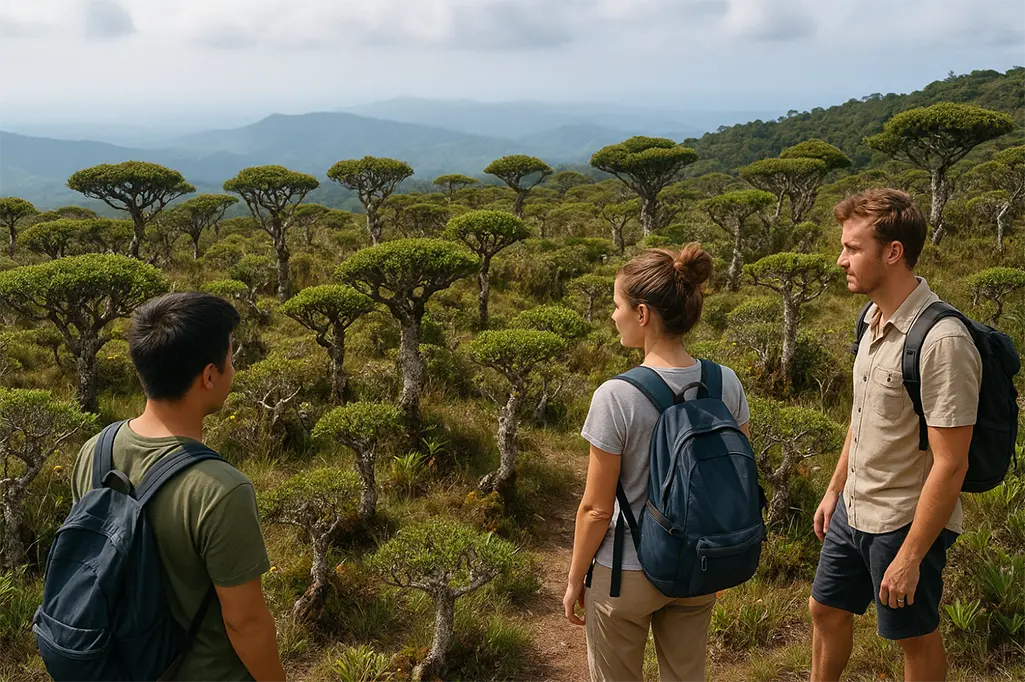
The defining feature of Hamiguitan is its pygmy forest, found in the upper montane zone above 1,600 meters. Centuries of growth on ultramafic rock, which is low in nutrients and toxic to most plant species, has produced a stand of ancient bonsai-like trees no taller than two meters. Many individual trees in this zone are estimated to be several hundred years old despite their small stature.
Endemic Species and Access
The sanctuary hosts 341 plant species, of which 75 are endemic to the Philippines, and many are found only on this mountain. Wildlife includes the Philippine eagle, flying lemurs, Mindanao horned frogs, and multiple endemic lizard species. Trekking permits are issued through the Protected Area Management Board office in San Isidro, and all visitors must be accompanied by a certified local guide. Treks to the pygmy forest take two days with an overnight camp at the mid-station.
Wildlife and Biodiversity in the Davao Region
The Davao Region sits within the Western Pacific biodiversity hotspot and supports a wildlife community found nowhere else on earth. Mindanao’s long geographic isolation produced high rates of endemism, and the forests, rivers, and coastal zones around Davao City protect many of these species.
Key Species to Watch For
Beyond the Philippine eagle, the region supports flying lemurs (colugos), Philippine deer, long-tailed macaques, civets, and over 200 recorded bird species. Reptile diversity is high, including monitor lizards, the Philippine crocodile, and several endemic skink species. The Davao Gulf provides habitat for dugongs, whale sharks, and several dolphin species, though sightings are less predictable than in dedicated marine sanctuaries elsewhere.
Responsible Wildlife Viewing
Protected areas in the region enforce strict guidelines on wildlife interaction. Feeding wild animals is prohibited throughout the national parks and wildlife sanctuaries. Visitors are advised to book guided trips through operators affiliated with the Department of Environment and Natural Resources (DENR) or the Protected Area Management Boards, which ensures compliance with permit requirements and wildlife protection rules.
Birdwatching in Davao: A Hotspot for Mindanao Endemics
Davao and the surrounding region offer birdwatching opportunities that rank among the most productive in Southeast Asia for endemic species. With more than 200 bird species recorded in accessible locations near the city, a dedicated birding trip can yield sightings unavailable anywhere outside Mindanao.
Top Birding Sites
The Philippine Eagle Center in Calinan provides reliable sightings of the national bird and associated forest species within a half-day visit. Malagos Garden Resort has a reputation for high bird counts in its garden and aviary zones. Mt. Hamiguitan and the Mt. Talomo Range reward more committed birders with a range of montane endemics, including the Mindanao racquet-tail, the Wattled Broadbill, and several sunbird species not found on Luzon or the Visayas.
Dawn departures produce the highest activity windows in the forests and along the river corridors near Calinan District. Most guided birding tours in the Davao area operate out of Calinan or Malagos and can be booked through the Philippine Eagle Foundation or local ecotourism offices.
Eco-Tourism and Sustainable Travel in Davao
Davao City has pursued an eco-tourism framework for more than two decades and has received national recognition for its environmental management programs. The city’s green reputation is backed by ordinances restricting single-use plastics, strong enforcement in protected areas, and a permit system that manages visitor numbers in sensitive ecosystems.
Certified eco-lodges operating near Eden Nature Park, in the Calinan District forests, and in Davao Oriental provide accommodation aligned with low-impact principles, including solar power, rainwater collection, and sourcing from community employment. Farm-to-table dining is a feature at several highland properties, with produce grown within the premises or sourced from neighboring upland farms.
Travelers planning visits to protected areas should confirm that their guide and operator hold current DENR accreditation. Permits for Mt. Apo and Hamiguitan must be secured in advance and cannot be arranged at the trailhead. Carrying reusable water bottles, packing out all refuse, and staying on designated trails are core practices that the protected area boards request of all visitors.
When to Visit Davao
The dry season from December through May offers the most reliable conditions for outdoor activities throughout the Davao Region. Trekking on Mt. Apo, highland day trips to Eden Nature Park, river rafting on the Davao River, and beach visits to Samal Island all perform best during this window. Clear skies in January and February give the highest probability of good summit visibility on Mt. Apo.
Wet Season Considerations
The wet season runs roughly from June through November. Rainfall is generally moderate rather than the sustained heavy monsoon experienced on the western coast of the Philippines, and short afternoon showers are typical rather than all-day rain. Some attractions operate year-round without disruption, including the Eagle Center, Malagos Garden Resort, Crocodile Park, and the botanical gardens. River rafting and high-altitude trekking become less predictable during the wet months.
Temperature and What to Pack
Lowland Davao averages 25 to 32 degrees Celsius year-round. Highland areas such as Eden Nature Park and the upper slopes of Mt. Apo can be considerably cooler, particularly at night, and a light jacket is worth carrying for any highland excursion. Standard tropical packing applies to anyone planning river or waterfall visits: sunscreen, insect repellent, a reusable water bottle, and waterproof footwear.
Where to Stay in Davao
Davao City has a well-developed accommodation supply across all budget categories. As a result, most visitors base themselves in the city center or in the Agdao and Lanang districts and make day trips to the surrounding attractions. Those focusing on Samal Island or the highland areas may find it more convenient to base themselves there.
Budget: Green Windows Dormitel
Green Windows Dormitel in downtown Davao offers clean, air-conditioned rooms with free Wi-Fi at rates starting around PHP 400 to 600 per night. The location puts guests within walking distance of jeepney routes, public markets, and the city’s food strips. Subsequently, it’s a reliable choice for solo travelers and backpackers who want a central base without an extended commute to transport hubs.
Mid-Range: Seda Abreeza Hotel
Seda Abreeza is directly connected to Abreeza Ayala Mall in the Bajada business district and offers well-appointed rooms, a rooftop pool, a full-service restaurant, and a gym. Rates typically run PHP 4,000 to 6,000 per night. The Bajada location is well served by ride-hailing apps and provides straightforward access to the main road arteries leading to Calinan, Toril, and the Santa Ana Wharf ferry terminal.
Luxury: Pearl Farm Beach Resort
Pearl Farm Beach Resort on Malipano Island, Samal, is consistently rated among the top resorts in Mindanao. In effect, the property’s origins as a pearl-farming operation inform its design, which incorporates indigenous architecture and overwater villas built on stilts over the Davao Gulf. Rates range from PHP 15,000 to 25,000 per night and include access to a private beach, a spa, and a range of water activities. In addition, the resort runs its own ferry service from the Santa Ana Wharf in Davao City.
Conclusion: Davao Rewards the Curious Traveler
Davao offers a genuinely different kind of Philippine travel experience. In fact, the city serves as the base camp for the country’s highest mountain, the primary sanctuary for its national bird, a UNESCO-recognized ecosystem, and beaches accessible by short ferry ride from the urban center. For visitors who have already explored the Visayas or Manila, Davao provides a compelling reason to extend a Philippine itinerary to Mindanao.
The city’s long-running commitment to environmental management means that many of its most impressive attractions are also among its best-preserved. Planning ahead matters here more than in some destinations: permits must be arranged in advance, guides are mandatory in protected zones, and the top accommodation on Samal Island books out weeks ahead during peak season. With preparation, the return on the visit is substantial.
Frequently Asked Questions About Exploring Davao
1. Is Davao safe for independent travelers?
Davao City consistently ranks among the safest cities in the Philippines in national crime index surveys. The city enforces an 11 PM curfew for minors and a strict liquor ordinance. Standard precautions apply as in any urban environment, but solo travelers and families generally find the city comfortable and well-organized.
2. Do I need permits to climb Mt. Apo or visit Mt. Hamiguitan?
Yes. Both mountains require permits issued by their respective Protected Area Management Boards. Guided treks are mandatory in both protected areas. Permits for Mt. Apo should be arranged at least a week in advance through the PAMB offices in Kidapawan or Digos. Hamiguitan permits are issued in San Isidro, Davao Oriental.
3. Can I visit the Philippine Eagle Center as a day trip from the city center?
The Philippine Eagle Center in Malagos, Calinan District, is approximately 35 kilometers from downtown Davao. Consequently, by private vehicle or booked transfer, the journey takes 45 to 60 minutes. The center is typically combined in a day itinerary with Malagos Garden Resort, which is within a short distance of the facility.
4. What is the best way to get to Samal Island?
Ferries to Samal depart from Santa Ana Wharf near the downtown area and take approximately 10 minutes to cross. Tricycles and habal-habal motorcycle taxis are the primary modes of transport on the island. Pearl Farm Beach Resort operates its own private ferry.
5. Is Davao Crocodile Park suitable for children?
The park is family-friendly, and the feeding demonstrations are suitable for older children. Parents should supervise young children closely near the crocodile enclosures. The park also houses animals beyond crocodiles, including birds and mammals, giving children a variety beyond the reptile focus.
6. What local food should visitors try in Davao?
Davao is known for its fruit abundance: durian, pomelo, mangosteen, and marang are all widely available in season. Restaurants in the city center serve grilled tuna and seafood from the Davao Gulf. The Aldevinco shopping area and Roxas Night Market are popular destinations for local food and pasalubong (take-home items).
You Might Also Enjoy
- Top 10 Tourist Destinations in the Visayan Islands
- Best Island Trips in the Philippines
- Senior Traveler’s Guide to Philippine Island Adventures
SUGGESTIONS FOR LODGING AND TRAVEL
Lodging is widely available throughout the Philippines. However, you may want to get some assistance booking tours to some of the Philippines’ attractions. I’ve provided a few local agencies that we’ve found to be very good for setting up tours. For transparency: We may earn a commission when you click on certain links in this article, but this doesn’t influence our editorial standards. We only recommend services that we genuinely believe will enhance your travel experiences. This will not cost you anything, and I can continue to support this site through these links.
- For Hotel Accommodations in the Manila area, I highly recommend The Manila Hotel. It is centrally located and within walking distance of Rizal Park and Intramuros. Many other attractions are easily accessible from there as well. I have provided a search box below for you to find hotels (click on “Stays” at the top) or flights (click on “Flights” at the top). This tool will provide me with an affiliate commission (at no cost to you).
Local Travel & Lodging Assistance
- Guide to the Philippines: This site specializes in tours throughout the Philippines. They seem to have some flexibility in scheduling, and pricing is very competitive.
- Kapwa Travel is a travel company focused on the Philippines. It specializes in customizing trips to meet customers’ needs.
- Tourismo Filipino is a well-established company that has operated for over 40 years. It focuses on tailoring tours to meet customers’ needs.
- Tropical Experience Travel Services – Tours of the Philippines: This company offers a range of tour packages, allowing you to tailor your trip to your preferences.
Lastly, we recommend booking international travel flights through established organizations rather than a local travel agent in the Philippines. I recommend Expedia.com (see the box below), the site I use to book my international travel. I have provided a search box below for you to use to search for flights (click on “Flights” at the top) or Hotels (click on “Stays” at the top). This tool will provide me with an affiliate commission (at no cost to you).