
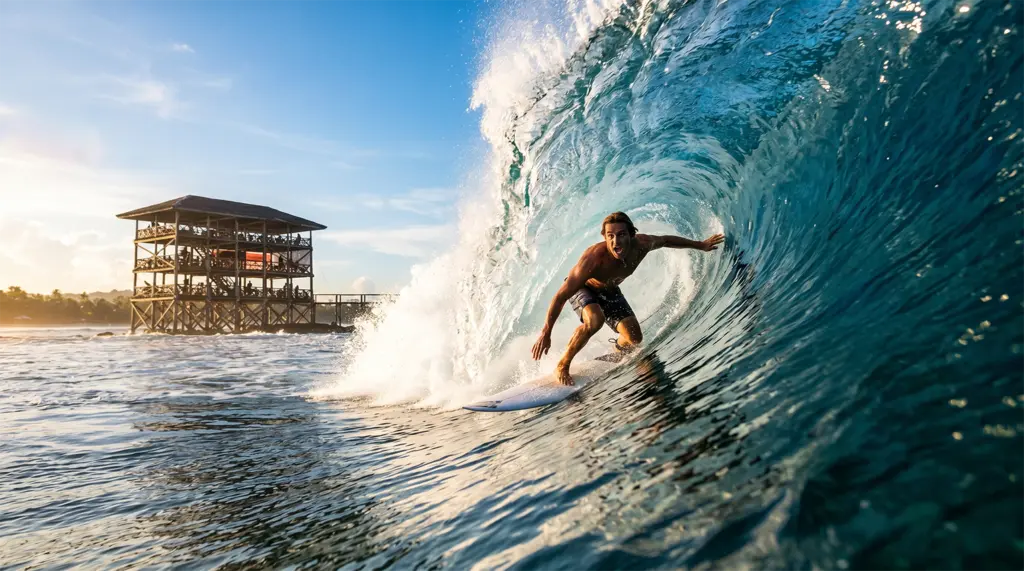
Siargao is a teardrop-shaped island in Surigao del Norte, in the Philippine Sea off the northeastern coast of Mindanao. It is 437 square kilometers of coconut palms, mangroves, lagoons, tidal rock pools, and reef breaks. Most visitors come for the surfing. Cloud 9, the right-hand reef break on the eastern coast, is one of the most recognized waves in Southeast Asia and the site of the annual Siargao Cup professional competition. But two weeks on the island is long enough to understand that the surf is only one part of what Siargao offers.
This itinerary covers fourteen days across the island’s main attractions: the surf breaks, the tri-island tour, Magpupungko Rock Pools, Sugba Lagoon, the Maasin River, the cave pools, and the general pace of a place that rewards slowing down. General Luna is the base for most of the two weeks. It is the island’s tourist hub: small enough to walk across in twenty minutes, with enough restaurants, surf shops, and accommodation options that logistics stay simple.
Getting to Siargao
Sayak Airport (IATA: IAO) receives daily domestic flights from Manila and Cebu on Cebu Pacific and Philippine Airlines. Flight time from Manila is approximately two hours. The airport is small, and the baggage system is straightforward. Vans and tricycles meet arriving flights and run the 45-minute road to General Luna for a fixed rate. Arrange this in advance through your accommodation or agree on the rate before boarding.
The alternative entry is by ferry from Surigao City on the Mindanao mainland, a roughly three-hour crossing to Dapa port on the northern coast of Siargao. This route adds travel time from Cebu or Manila but avoids the limited flight schedule and is useful for travelers who want flexibility.
A note on timing: Typhoon Odette struck Siargao in December 2021, causing severe damage to infrastructure across the island. Recovery has been substantial, and most tourist facilities have been rebuilt or improved. It is worth checking the current conditions at your accommodation before traveling, particularly if you plan to visit more remote areas.
Week One: The Island’s Core Experiences
Days 1 and 2: Arrival and Orientation
Arrive, check in, and spend the first afternoon walking General Luna rather than scheduling activities. The layout of the town is easy to absorb on foot: the main beach road, the surf break area, and the cluster of restaurants along the inland streets. Kinilaw is the right first meal, ideally made with the morning’s catch from the fishing boats that still work the channel. The version here, cured in local cane vinegar with ginger and chili, is noticeably different from kinilaw on the Cebu coast.
Day two is for renting a scooter and getting the island’s geography straight. The road north from General Luna passes through coconut plantation country before reaching the less-developed northern coast. The road south reaches the quieter barangays and smaller fishing communities. Understanding the island’s scale and road conditions before committing to a full-day itinerary is time well spent.
Days 3 and 4: Cloud 9 and the Surf Breaks
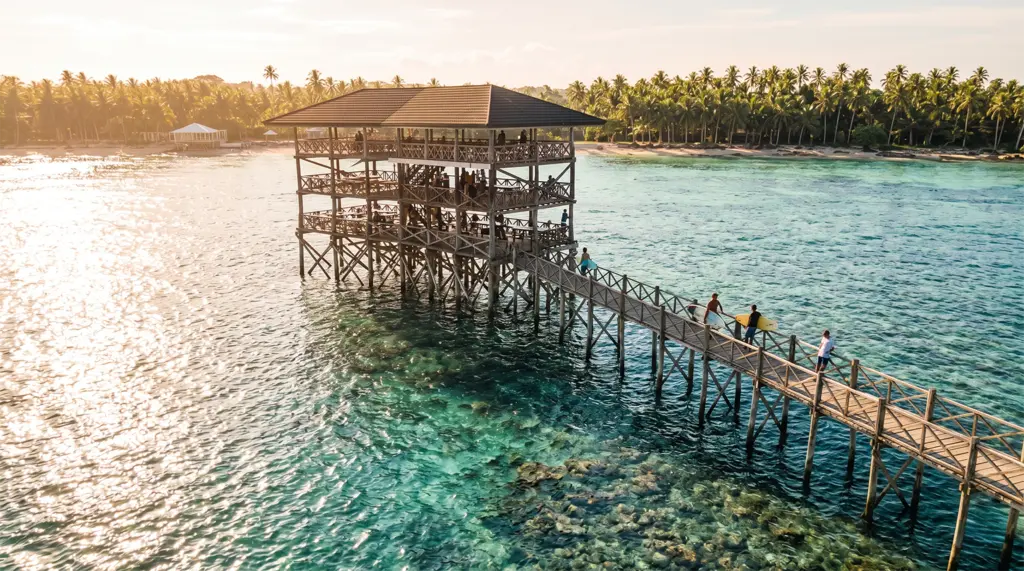
Cloud 9 is a reef break off the southeastern point of General Luna. It produces a hollow, fast-moving right-hand wave that breaks over a shallow coral reef and has hosted international competitions since the 1990s. The famous competition tower stands at the edge of the reef, and even non-surfers come to watch from the boardwalk during a good swell.
For experienced surfers, the surf season peaks from August through November when Pacific swells are largest and most consistent. Cloud 9 is best at intermediate to advanced level on a solid swell day. Beginners have better options: Jacking Horse, a gentler break just north of Cloud 9, and Stimpy’s, which offers slower, more forgiving waves. Surf schools and board rentals operate along the beach road and can assess your level and recommend the appropriate break.
Non-surfers should still spend time at Cloud 9 on a good swell day. The wave is worth watching. The afternoon light on the reef, with the competition tower silhouetted against the sky, is the image most associated with Siargao, and it earns the association.
Days 5 and 6: The Tri-Island Tour
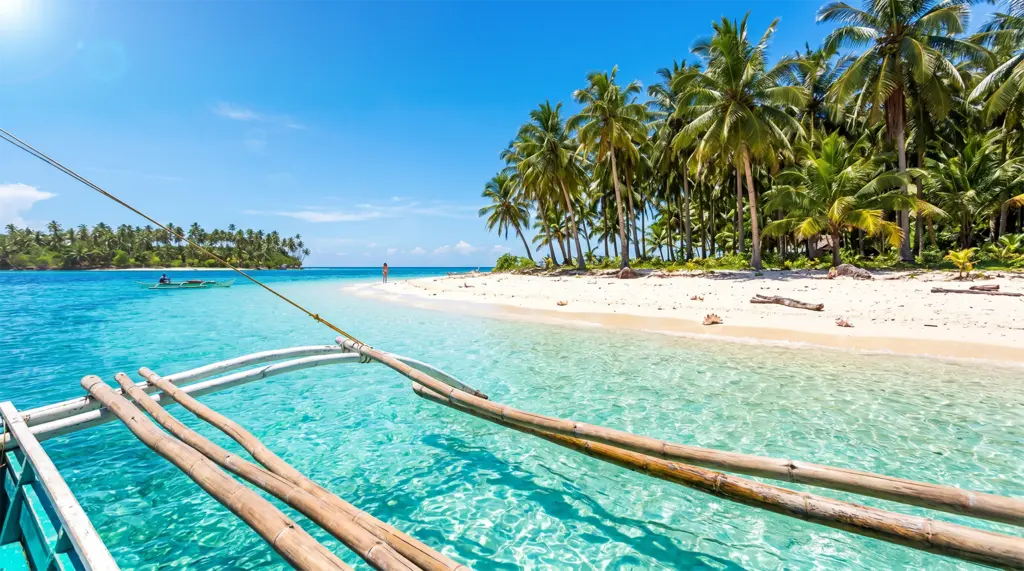
The tri-island tour is the standard day trip from General Luna and covers three small islands in the channel south of the main island. Most operators run the same route: Naked Island, Guyam Island, and Daku Island, in that order. Outrigger boats leave from the General Luna beach area in the morning.
Naked Island is a sandbar with no shade and no permanent structure. It is at its best in the early morning before the day tour boats arrive in numbers. Guyam Island is tiny, covered in coconut palms, and ringed by a shallow reef good for snorkeling. Daku Island is the largest: it has a fishing village, a long beach shaded by coconut trees, and is the lunch stop on most tours. The seafood grilled on the beach at Daku is the meal of the two weeks.
Spend day six at rest or explore the reef off the General Luna coast. Snorkeling directly off the beach at the point near Cloud 9 is accessible at high tide and offers good coral in the shallower sections.
Day 7: Magpupungko Rock Pools
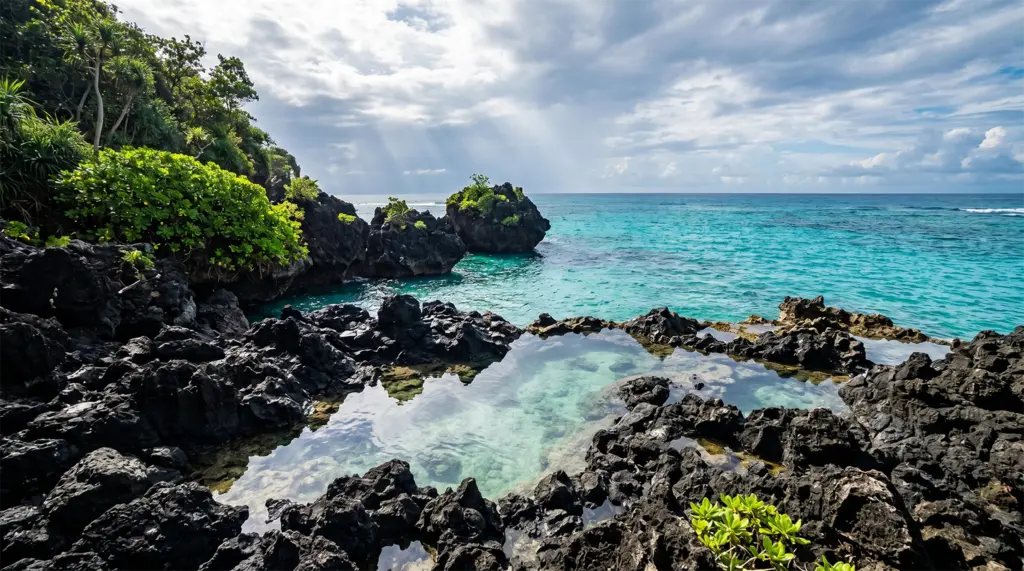
Magpupungko is in the municipality of Pilar, roughly 45 minutes northeast of General Luna by scooter or van. The attraction is a series of natural tidal pools in a volcanic rock formation along the coast. At low tide, the pools are fully exposed: calm, clear, warm water in rock basins ranging from ankle-deep to swimming depth. Check the tide schedule before going. The pools require low tide to be worth the trip. At high tide, the rocks are submerged, and the pools disappear.
There is a jump point off the rocks into the deeper water beyond the pools. It is used regularly and is safe at the right tide, but the rock surface is slippery, and the approach requires care. The area has basic food stalls nearby. Arrive early in the morning to have the pools largely to yourself before the midday tours arrive from General Luna.
Week Two: The Quieter Side of Siargao
Day 8: Sugba Lagoon
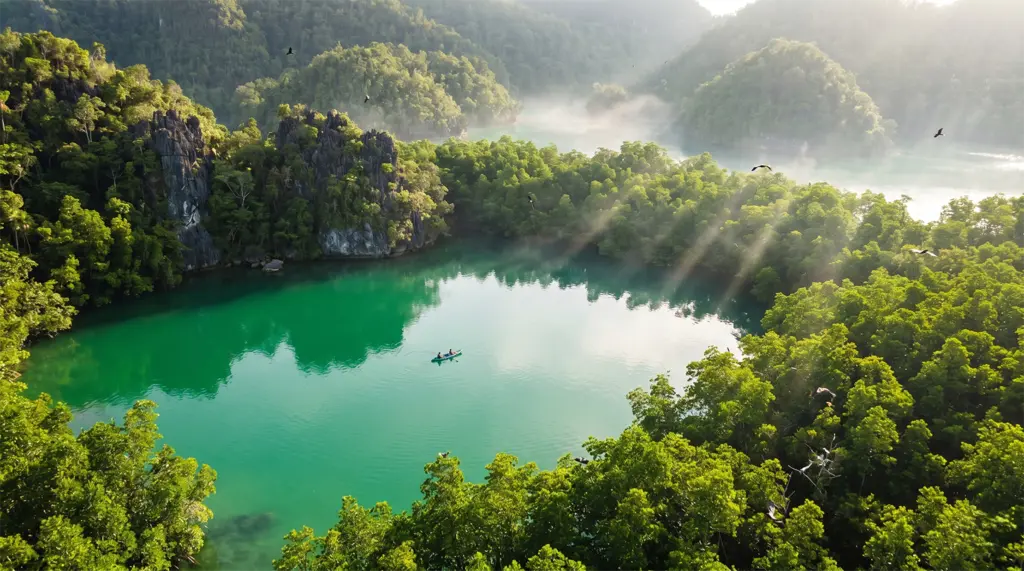
Sugba Lagoon is in the Del Carmen municipality, about 45 minutes from General Luna by scooter to the boat departure point. The lagoon is a large, enclosed body of water surrounded by mangroves and limestone formations, with emerald-green water that remains calm regardless of the conditions outside. Kayaks, transparent kayaks, and paddleboards are available for rent at the lagoon. A platform in the middle is the jump point for those who want it.
The DIY option is straightforward and saves significantly over organized tours: scooter to Del Carmen, hire a boat at the dock, pay the entrance and environmental fees at the lagoon, and rent equipment there. Morning visits have calmer water and fewer people than the afternoon. The mangrove channels on the approach by boat are worth attention.
Days 9 and 10: Maasin River and the Interior

The Maasin River, inland from the southern coast of Siargao, is known for its canopy of coconut palms that lean and arch over the water at acute angles. The palms grow toward the light from the riverbank, creating the arched corridor that appears in most photographs of the Maasin River. Canoes are available at the river entrance for a self-guided paddle upstream. The route is quiet, and the birding along the banks is worth slowing down for.
Day ten is for Tayangban Cave Pools, in the interior near Pilar. The cave system has freshwater pools inside the cavern, accessed by wading through the cave entrance. The water is cold relative to the Siargao ambient temperature and clear enough to see the floor. A local guide is required and available at the site. The combination of cave geology and swimming pool makes it one of the more distinctive half-day experiences on the island.
Days 11 and 12: Pacifico and the North
Pacifico Beach is on the northern coast of Siargao, about an hour from General Luna. It is less developed than the southern coast, with a different surf character: more exposed to the northeast swells and less crowded than the Cloud 9 area. The drive north through the island’s interior passes through farming communities, coconut plantations, and the wetlands around Del Carmen that support the largest mangrove forest in the Philippines.
Day twelve is a rest day. Siargao has enough good restaurants in General Luna that spending a full day eating, reading, and watching the surf from the beach is a legitimate use of the time. The evening market near the main road has fresh produce and cooked food at prices well below those of the tourist restaurants.
Day 13: General Luna Markets and Final Afternoon
The General Luna public market is the practical souvenir option: locally made woven items, Siargao-branded apparel, dried seafood, and small craft work at negotiable prices. Fat Lips Surf Shop on the main beach road carries quality surf-culture apparel and accessories for those who want something more specific. Neither requires more than an hour.
The last afternoon is best spent at the Cloud 9 boardwalk if there is any swell running, or on the General Luna beach itself if the sea is flat. Sunset from the competition tower platform, with the reef lit from the west, is the appropriate close to two weeks on the island.
Day 14: Departure
Sayak Airport is a short drive from General Luna. Flights to Manila and Cebu depart in the morning and early afternoon. The terminal is small and security moves quickly, but the single-runway operation can back up on high-traffic days. Allow ninety minutes before your flight time.
Practical Notes for Siargao
Scooter rental is the most practical transport for independent travelers. Rates are around 300 to 400 PHP per day in General Luna and include access to all destinations on this itinerary. The roads are manageable but require attention: unpaved sections, deep puddles after rain, and the occasional carabao on the road are routine. Tricycles and habal-habal (motorcycle taxis) are available for specific trips if renting is not preferred.
Cash is essential. ATMs are available in General Luna, but supply is inconsistent, and they can run out during busy periods. Bring sufficient pesos from Cebu or Manila. Most restaurants, surf shops, and tour operators do not accept cards. The entrance fees, boat fares, and activity costs listed throughout this itinerary are in Philippine pesos and subject to change.
The best overall time to visit for non-surfers is March through May: dry weather, calm seas, and lower visitor numbers than during the peak surf season. For surfing, August through November is the target window. October and November are peak seasons for both surf and general tourism, and accommodation books up well in advance.
Siargao in the Broader Philippines Picture
Siargao appears in the broader Philippines island coverage on this site. The guide to the best island trips in the Philippines covers Siargao, Palawan, Boracay, Bohol, Cebu, and Batanes, with guidance on timing and choosing among destinations. The top ten Visayan Islands destinations article covers Siargao’s southeastern neighbors in more depth, including Apo Island, Malapascua, Kalanggaman, and Siquijor. Both articles are useful contexts for building a broader Philippines itinerary around a Siargao visit.
Frequently Asked Questions About Siargao
1. Do I need to be a surfer to enjoy Siargao for two weeks?
No. Surfing is the primary draw for many visitors, but the island has enough non-surf content for two full weeks. The tri-island tour, Magpupungko Rock Pools, Sugba Lagoon, the Maasin River, Tayangban Cave Pools, the Pacifico drive, and the mangrove forests of Del Carmen all stand independently of surfing. General Luna has a good food and cafe scene. The pace of the island suits extended stays for travelers who want rest as much as activity. That said, non-surfers who are curious should try a beginner lesson at Jacking Horse or Stimpy’s. The experience is worth having regardless of whether you continue.
2. What is the best time of year to visit Siargao?
It depends on priorities. For surfing, August through November offer the largest and most consistent Pacific swells, with Cloud 9 at its best in September and October. The Siargao Cup professional competition typically runs in October. For non-surfers and general travelers, March through May is preferable: dry weather, calm seas, and lower visitor numbers. December through February can bring rougher weather and occasional northeast swells that close out the reef breaks. July is a transition month and can go either way.
3. Has Siargao fully recovered from Typhoon Odette?
Typhoon Odette (international name: Rai) struck Siargao on December 16, 2021, and caused some of the most severe damage the island has experienced. The storm destroyed a significant portion of the island’s coconut palms, many structures in General Luna, and infrastructure across the island. Recovery has been substantial. Most tourist accommodation and restaurants in General Luna have been rebuilt or reopened, and the surf breaks were unaffected by the storm. Some attractions, particularly in more remote areas, may still have limited facilities. Confirming the current status of your accommodation before visiting specific sites is good practice.
4. How do I get from Siargao to the Tri-Island tour?
Boats for the tri-island tour depart from the main beach in General Luna. You can book through your accommodation, directly at the beach with the boat operators, or through one of the tour offices along the main road. The standard tour covers Naked Island, Guyam Island, and Daku Island with a packed lunch at Daku. Most tours depart between 8 and 9 am and return by mid-afternoon. Going earlier rather than later gives you the islands with fewer other tour boats present, particularly on Naked Island.
5. Is a scooter or a van hire better for getting around Siargao?
A scooter is the better option for most independent travelers. It gives the flexibility to stop anywhere, costs significantly less than van hire, and is appropriate for every road on the main itinerary. The roads between General Luna and Magpupungko, Sugba Lagoon’s departure point at Del Carmen, and Maasin River are all paved and manageable on a scooter. Van hire is better for groups of four or more, for travelers who are not comfortable on a scooter, or for the Pacifico drive if the road conditions after recent rain make it advisable. Your accommodation can advise on current road conditions.
Other Articles That May Be of Interest
You may find the following articles of interest as well:
- Best Island Trips in the Philippines: A Guide to the Top Destinations
- Top 10 Tourist Destinations in the Visayan Islands
SUGGESTIONS FOR LODGING AND TRAVEL
Lodging is widely available throughout the Philippines. However, you may want to get some assistance booking tours to some of the Philippines’ attractions. I’ve provided a few local agencies that we’ve found to be very good for setting up tours. For transparency: We may earn a commission when you click on certain links in this article, but this doesn’t influence our editorial standards. We only recommend services that we genuinely believe will enhance your travel experiences. This will not cost you anything, and I can continue to support this site through these links.
- For Hotel Accommodations in the Manila area, I highly recommend The Manila Hotel. It is centrally located and within walking distance of Rizal Park and Intramuros. Many other attractions are easily accessible from there as well. I have provided a search box below for you to find hotels (click on “Stays” at the top) or flights (click on “Flights” at the top). This tool will provide me with an affiliate commission (at no cost to you).
Local Travel & Lodging Assistance
- Guide to the Philippines: This site specializes in tours throughout the Philippines. They seem to have some flexibility in scheduling, and pricing is very competitive.
- Kapwa Travel is a travel company focused on the Philippines. It specializes in customizing trips to meet customers’ needs.
- Tourismo Filipino is a well-established company that has operated for over 40 years. It focuses on tailoring tours to meet customers’ needs.
- Tropical Experience Travel Services – Tours of the Philippines: This company offers a range of tour packages, allowing you to tailor your trip to your preferences.
Lastly, we recommend booking international travel flights through established organizations rather than a local travel agent in the Philippines. I recommend Expedia.com (see the box below), the site I use to book my international travel. I have provided a search box below for you to use to search for flights (click on “Flights” at the top) or Hotels (click on “Stays” at the top). This tool will provide me with an affiliate commission (at no cost to you).