
Culture & Food

Culture & Food

About the Culture and Food Section

Filipino culture is one of the most misunderstood in Southeast Asia. This is partly because the Philippines presents a surface that’s immediately accessible to Western visitors (English-speaking, Catholic, outwardly familiar). It’s also partly because what lies beneath that surface takes real time and genuine curiosity to understand. The festivals that appear in travel magazines are real, but they represent perhaps five percent of what Filipino cultural life actually is. This section is about the other ninety-five.

Food is the right place to start. Filipino cuisine has long been underestimated, even by Filipinos themselves. It’s shaped by generations of colonial influence into ambivalence about their own culinary traditions. What’s happening now is a genuine reckoning. Chefs, home cooks, food writers, and farmers are digging back into regional traditions that never made it onto restaurant menus. They are recovering techniques and ingredients that were nearly lost. And they are asking what Filipino food actually is when it’s not performing for an outside audience. The guides here follow that conversation,  not just recipes and restaurant recommendations, but the history and argument behind the food.

The same depth of attention applies to the rest of this section. The significance of fiestas beyond their photographic spectacle is one example; another is the complexity of Filipino family structures and their meaning for everyday social life; and no evaluation of the Philippines would be complete without considering how Catholicism has been absorbed and transformed into something distinctly Filipino. Then there is  the regional identities that persist and strengthen even as Manila exerts its gravitational pull; the art, music, and literature that most visitors never encounter. There are also honest discussions of the aspects of Philippine culture that can be difficult to understand from the outside — the dynamics of class, the weight of colonial history, the gap between public and private life.

This section doesn’t try to explain the Philippines. It tries to give you better questions to ask it.,

Articles

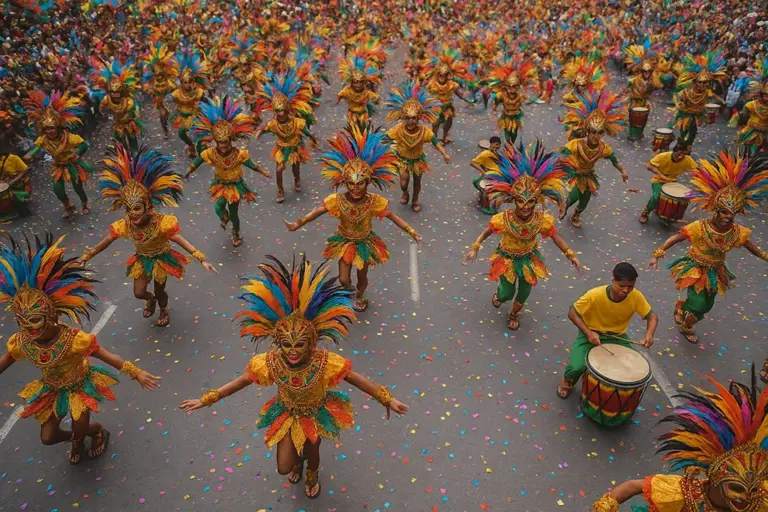
Dancers in colorful costumes performing at a Philippine festival street parade
Food & Culture

The Ultimate List of Philippine Festivals: What They Really Celebrate

Get ready, as this article covers over 20 different festivals and fiestas. You’ve seen the photos. Feathers. Sequins. Smiles that could power a small city. Nice. They’re all really cool. Now let’s talk about what really happens at Philippine Festivals ...
Read More →
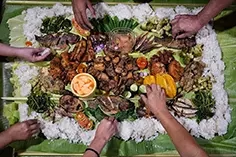
A great way to enjoy the Filipino Cuisine -- a Boodle fight (kamayan).
Food of Luzon

Filipino Cuisine – The Ultimate Guide: Must-Try Dishes by Region

Introduction: Welcome to the Delicious Archipelago The Philippines on a Plate Close your eyes and try to imagine what Filipino Cuisine is. There are 7,641 islands sprinkled across a turquoise sea, each carrying the scent of sizzling garlic, smoky meat, ...
Read More →
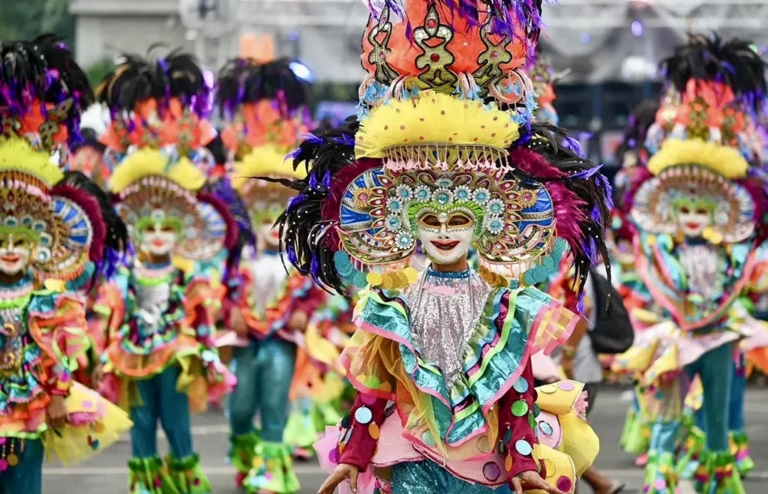
A close-up of a Sinulog Festival parade dancer in Cebu City, Philippines, wearing an ornate jeweled mask, towering feathered headdress, and a multicolored ruffled sequined costume, with a line of similarly costumed dancers visible in the background.
Sinulog

Amazing Sinulog Festival: Cebu’s Celebration of Faith and Fiesta

You can feel a beat in your bones before landing in Cebu for the Sinulog Festival. It’s a thump that echoes through the streets, embedded in the chants of “Pit Señor!” (which, if you’re new here, roughly translates to “Praise ...
Read More →
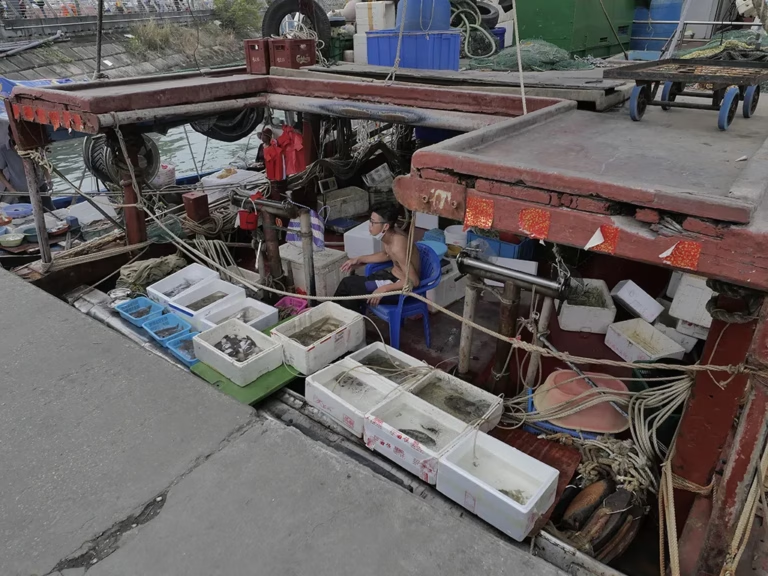
A fisherman selling seafood right on the boat.
Food of Luzon

The Best Fresh Seafood in the Philippines

Welcome to Seafood Heaven Imagine this: you’re sinking your teeth into the freshest, juiciest seafood while the turquoise waters of the Philippines shimmer in the sunlight, and the salty breeze playfully tousles your hair. Welcome to a true seafood lover’s ...
Read More →
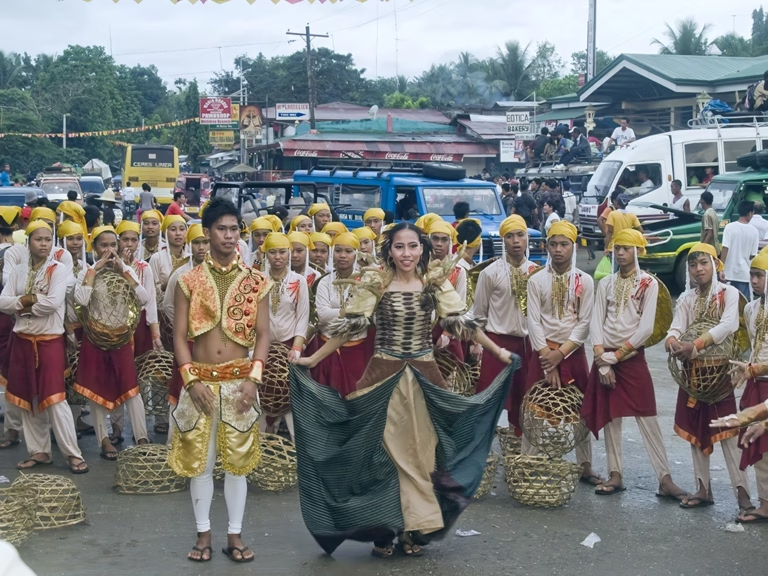
A dance group practicing at the 2009 Mabinay Langub Festival.
Langub

Exploring the Heart of Mabinay: The Vibrant Langub Festival

Introduction Nestled in the heart of Negros Oriental, in the Visayan Island Region of the Philippines, Mabinay is home to the electrifying Langub Festival. This annual extravaganza puts the town on the map as the “Cave Capital of the Philippines.” ...
Read More →
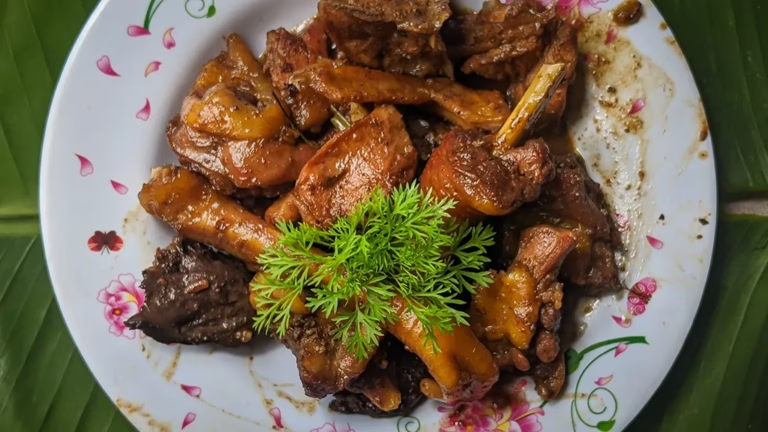
A plate of Filipino Adobo sa Gata, chicken pieces braised in vinegar, garlic, and coconut milk until deeply glazed, garnished with fresh green herbs and served on a floral-rimmed white plate atop a banana leaf.
Food of Luzon

Amazing Philippines Favorite Adobo Recipe

Welcome to the culinary world of the Philippines, a vibrant tapestry of flavors, cultures, and traditions! One dish that stands out and steals the hearts of many is the Filipino Adobo recipe. This tantalizing dish represents the rich heritage of ...
Read More →
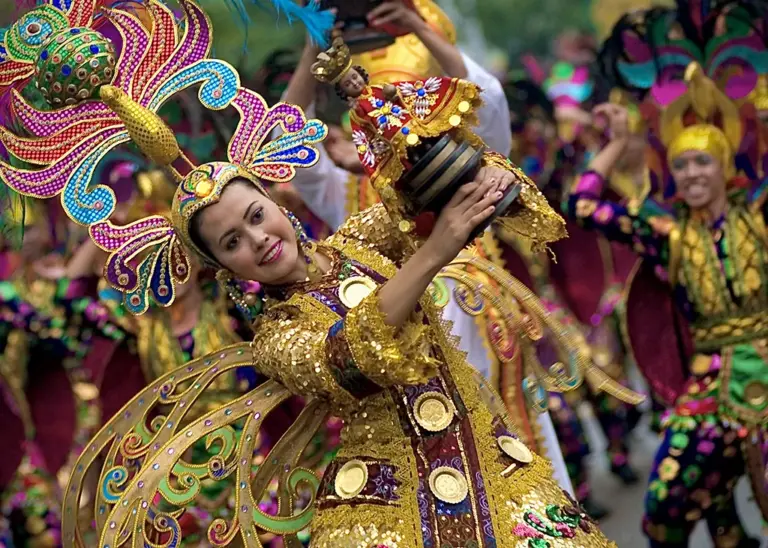
A picture from the Sinulog Festival of a woman dancing, adorned in costume, with a religious statue in her hands.
Food & Culture

Top 6 Festivals and Schedules in the Philippines

The Philippines is a nation that genuinely excels in celebration. Its calendar is overflowing with lively, spirited fiestas, ensuring there is always a reason to rejoice. From electrifying parades to dynamic street dances, each festival highlights the Filipino people’s rich ...
Read More →
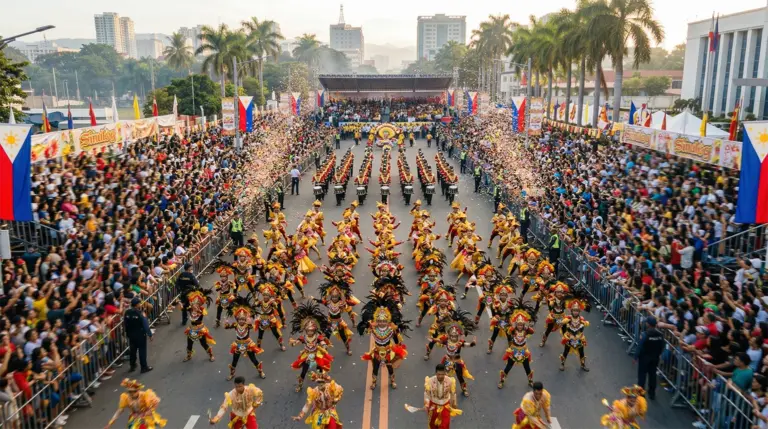
Sinulog Festival of Cebu Grand Parade contingent Osmeña Boulevard, Philippines
Sinulog

The Sinulog Festival of Cebu: The Dance, the Devotion, and the Lechon

The noise hits you before you see anything. The Sinulog Festival of Cebu fills the streets of Cebu City with an estimated two million people on the third Sunday of January, and their collective voice produces a sound you feel ...
Read More →