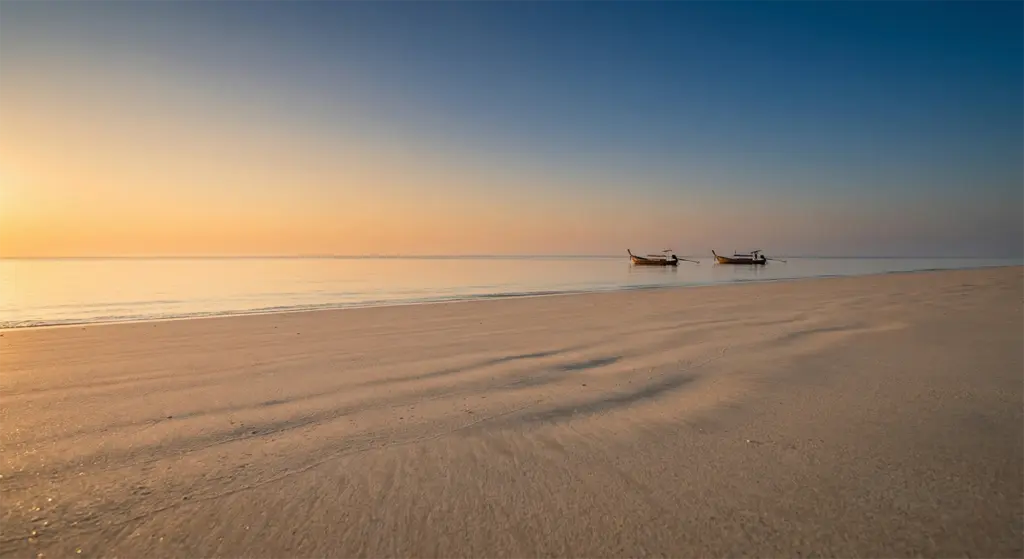
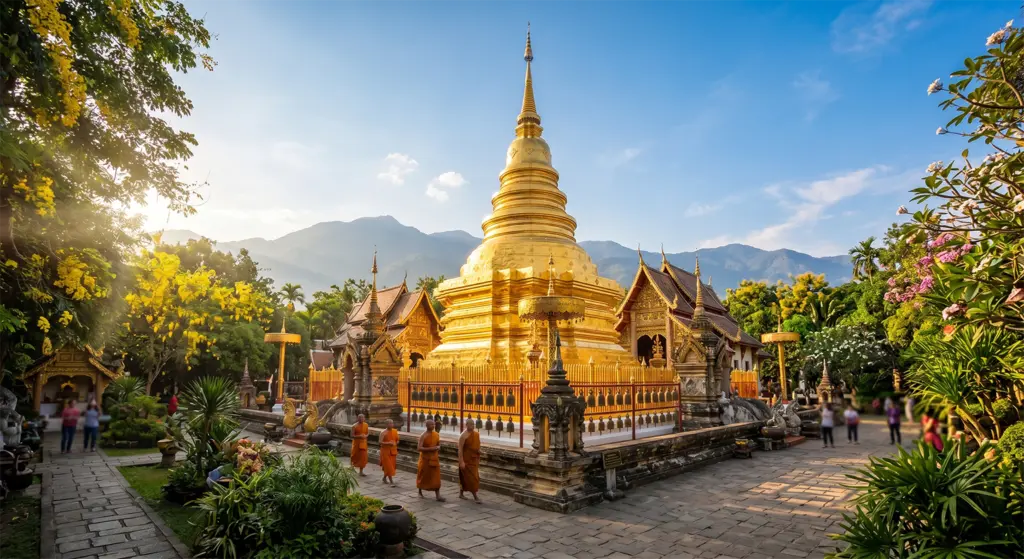
My first trip to Thailand came down to a single planning decision: which version of the country to see first. Thailand offers several wildly different travel experiences, and trying to combine too many of them on one trip results in a week of airports rather than a week of places. I chose Chiang Mai in the north and Krabi on the Andaman coast. The two cities share almost nothing except the country. That contrast turned out to be exactly right.
Chiang Mai is a temple city in a mountain valley, the former capital of a kingdom that predates Bangkok by five centuries. Krabi is limestone cliffs, Andaman waters, and island-hopping routes that connect beaches most travelers never see. One rewards walking slowly through history. The other rewards are getting on a boat and pointing it at the horizon. Together, they cover a range of what Thailand actually is.
Chiang Mai: Capital of the Ancient Lanna Kingdom
Chiang Mai was founded in 1296 by King Mangrai as the capital of the Lanna Kingdom, the independent northern Thai state that remained distinct from the kingdoms of central Thailand for more than two centuries. The city sits in a broad valley at around 300 meters elevation, ringed by mountains, with Doi Suthep rising to the west. More than 300 Buddhist temples are concentrated within and around the old walled city. The number is not a statistic to be impressed by. It is the context for what you encounter at every turn.
Wat Phra That Doi Suthep
The temple that defines Chiang Mai from a distance is Wat Phra That Doi Suthep, built in 1383 on the slopes of the mountain that bears the same name. The origin story is specific: a white elephant carried a Buddha relic up the mountain, walked around it three times, trumpeted, and died. The spot was taken as sacred, and the chedi was built there. The story is part of how Chiang Mai understands itself.
Getting to the temple means climbing more than 300 steps up a Naga-flanked staircase or taking the cable car. I climbed. The view of the city in the valley below is worth it. The central gilded chedi is the main structure, surrounded by chedis, shrines, and prayer bells. Monks are present throughout the day. The temple is an active place of worship, not a monument, and it feels that way.
The Old City and Its Temples
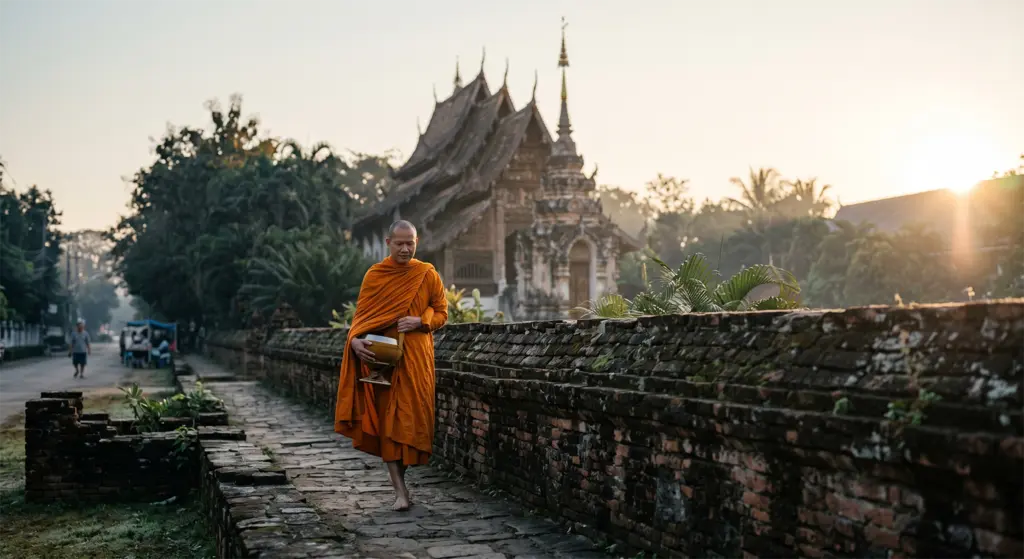
The old walled city is square, enclosed by a moat that still runs its full perimeter. Within it, temples appear on every block. Wat Chedi Luang, built in the 15th century, has a ruined chedi that was once the tallest structure in Chiang Mai. Wat Phra Singh houses a highly revered Buddha image and the finest surviving example of Lanna-style temple architecture in the city. Both are within walking distance of each other.
Walking the Old City at dawn is a unique experience from walking it in the afternoon. Monks in saffron robes make alms rounds through the streets. The temple compounds are quiet and open. By midday, the same streets are lined with cafes and guesthouses, and the contrast between the ancient and the contemporary is part of what makes the Old City work as a place to stay for several days rather than a morning.
The Night Markets of Chiang Mai
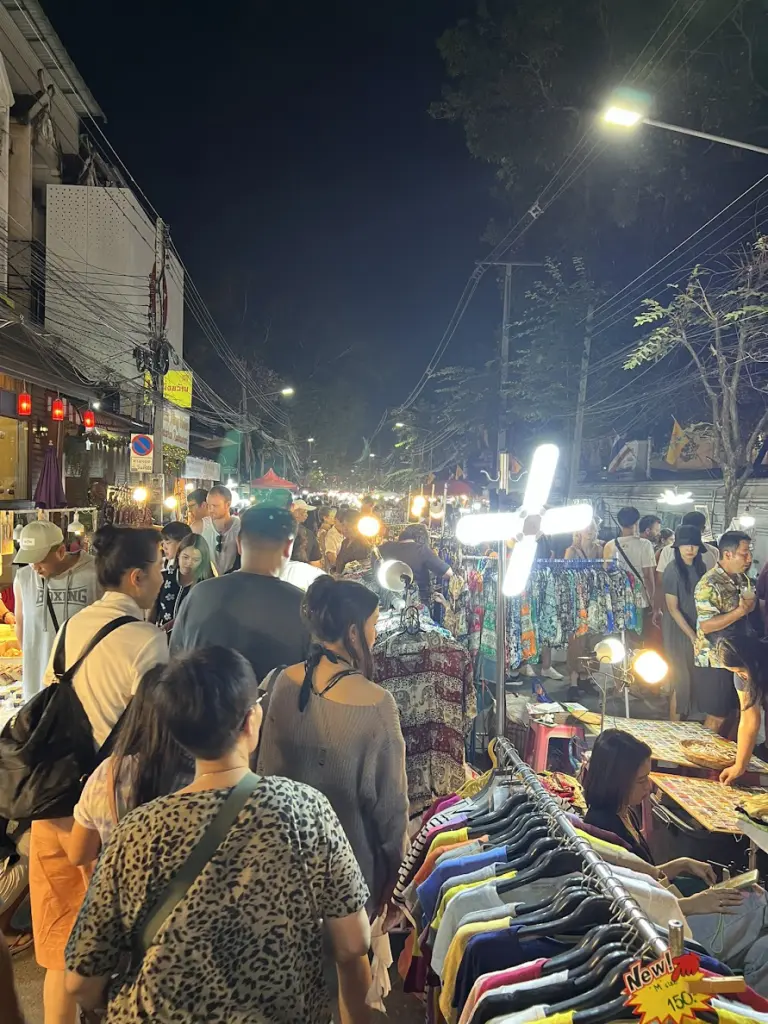
Chiang Mai has three main night markets, and they are not interchangeable. Understanding which one suits what you are looking for saves time.
The Night Bazaar on Changklan Road runs every night and occupies several blocks of permanent stalls and open-air shopping centers. It is the largest and most commercial, with textiles, carvings, silver, and every category of northern Thai craft. Prices are negotiable. The food stalls along the edges are good.
The Saturday Walking Street on Wualai Road is the silversmith market. Wualai has been the center of Chiang Mai’s silver-craft tradition for generations, and the weekend market reflects this with a higher proportion of genuine craftwork among the vendors.
The Sunday Walking Street runs from Tha Phae Gate along Wualai and the surrounding streets. It is the largest of the three by area and the most popular with both locals and visitors. Street food is another attraction alongside shopping. Sai oua (northern Thai sausage), khao soi (coconut curry noodle soup native to Chiang Mai), and mango sticky rice all appear regularly.
Ethical Elephant Sanctuaries Near Chiang Mai
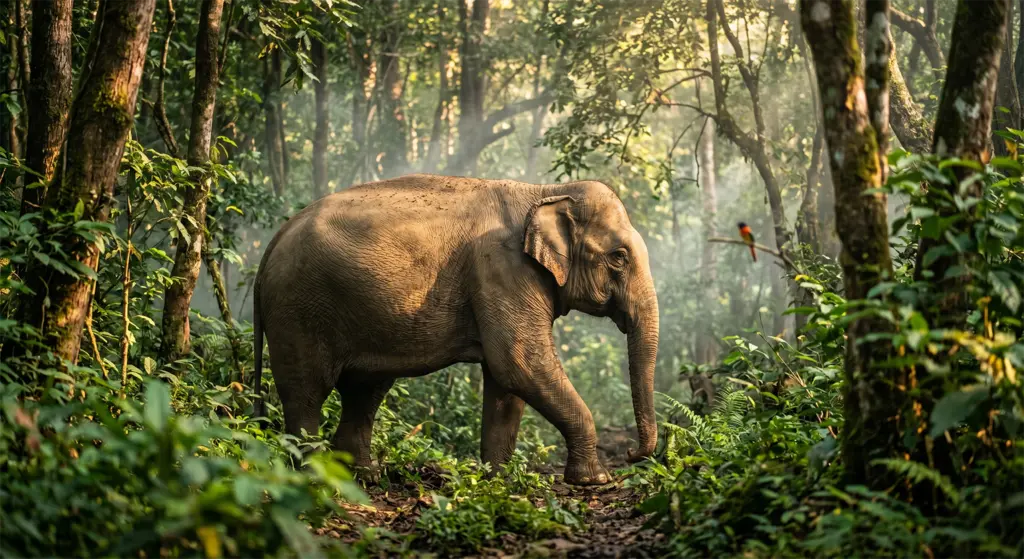
The elephant sanctuary visit is one of the most significant experiences available near Chiang Mai, and the distinction between an ethical sanctuary and an exploitative one matters before booking. The difference is observable: an ethical sanctuary does not offer elephant riding, does not use bullhooks or chains during visitor interactions, and allows the animals to move freely and choose their own level of engagement.
Elephant Nature Park, founded by Sangduen ‘Lek’ Chailert, is the most recognized ethical sanctuary in the Chiang Mai area. It operates as a rescue and rehabilitation center for elephants retired from logging and tourism work. Visitors feed and walk alongside the elephants under staff supervision. The bathing experience takes place in a river rather than in a performance setting. The elephant’s behavior in these encounters is instructive: animals that have been well-treated behave differently from those that have not, and the difference is apparent.
Day trip bookings fill quickly, particularly in peak season from November through February. Book directly through the sanctuary’s own website rather than through third-party tour operators to ensure the fees go to the animals’ care.
Krabi: Limestone Cliffs and the Andaman Coast
Krabi province occupies the southwestern coast of Thailand, facing the Andaman Sea. The defining geological feature is the karst limestone formations: sheer cliff faces and rock towers that rise directly from the water throughout the coastline and offshore islands. The landscape looks unlike that of anywhere else in Southeast Asia, except for similar karst areas in southern China and northern Vietnam.
Railay Beach
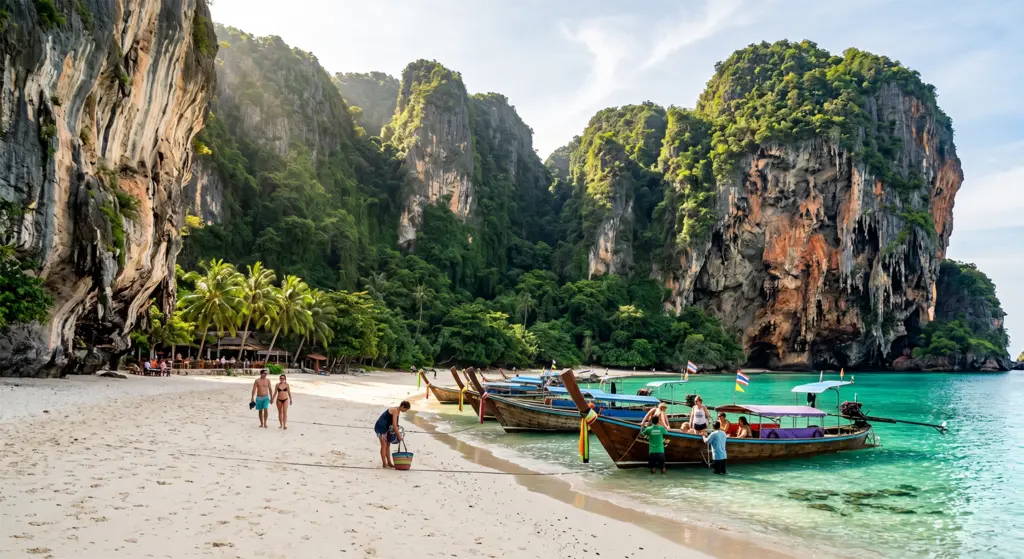
Railay Beach is accessible only by longtail boat. It is cut off from the road network by the limestone cliffs that surround it on three sides. From Ao Nang, the crossing takes about 15 minutes. Railay has two main beaches. Railay West, with calm water and the main boat landings. Then there is Railay East, a mangrove-fringed shore that is less suited for swimming. The cliffs above Railay are internationally known for sport climbing. There are routes at all levels established along the Tonsai and Railay walls.
Ao Nang and Krabi Town
Ao Nang is the main road-accessible resort beach and the practical base for exploring the region. The beach itself is pleasant, and the infrastructure for tours, restaurants, and accommodation is well developed. Krabi Town, 20 minutes inland, sits on the Krabi River where the twin limestone peaks of Khao Khanap Nam rise at the river mouth. Short boat trips from town enter the caves in the cliff face, which hold stalactites and ancient human remains.
Krabi’s cultural character is a mix of Buddhist and Muslim communities. The mix shows in the markets, the food, and the tempo of daily life. Southern Thai cuisine is distinctly different from the central Thai food most visitors know. Massaman curry, khao yam (rice salad with herbs and toasted coconut), and fresh seafood prepared with Andaman-caught fish rather than farmed alternatives. The weekend Walking Street market in Krabi Town is the best place to eat through the local repertoire in one evening.
Island Hopping from Krabi
The island-hopping tours out of Ao Nang and Railay are organized around two main route clusters. The Four Islands tour and the Phi Phi Islands tour cover hugely different territory and suit different interests.
The Phi Phi Islands
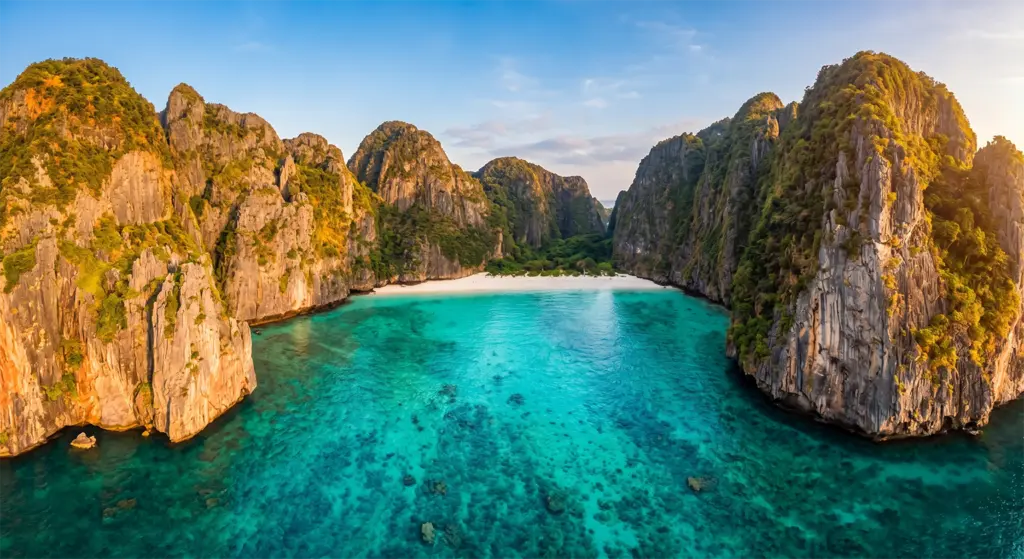
Ko Phi Phi Don and Ko Phi Phi Leh are the two main islands of the group, located about 45 kilometers from Krabi by speedboat. Ko Phi Phi Don is inhabited, with a village, guesthouses, and dive operators. The island of Ko Phi Phi Leh is uninhabited and holds Maya Bay, the beach made famous by the 2000 film ‘The Beach.’ Maya Bay was closed from 2018 to 2022 to allow the reef and beach to recover from visitor damage. It has reopened with daily visitor limits and designated entry periods to prevent the degradation that led to its closure. The bay is genuinely beautiful. The experience is managed and timed rather than spontaneous.
The Four Islands
The Four Islands tour covers Ko Poda, Koh Gai (Chicken Island, named for a rock formation at its northern tip), Ko Tub, and Ko Mor. These are closer to Ao Nang than the Phi Phi group, making the tours shorter and less exhausting. The snorkeling around Ko Poda and Ko Gai is good, with healthy coral at accessible depths. At low tide, a sandbar connects Ko Tub and Ko Mor, which is the most photographed feature of the route. The overall pace of the Four Islands tour is slower than the Phi Phi day trip and suits travelers who prefer fewer boat hours.
Beyond the Islands: What Else Krabi Offers
Tiger Cave Temple, known in Thai as Wat Tham Sua, sits about three kilometers from Krabi Town. The temple complex includes forest caves with Buddhist shrines at the base. From the main compound, a steep staircase of 1,237 steps climbs to the summit of the limestone hill, where a large Buddha image looks out over the province. The climb takes about 45 minutes at a steady pace. The view from the top is panoramic in a way no boat tour can replicate.
The Emerald Pool and Blue Pool in the Khao Pra Bang Khram Wildlife Sanctuary, about an hour from Krabi Town, are freshwater pools fed by geothermal springs in a forested limestone landscape. They are a different texture of Krabi entirely from the Andaman coast. The water temperature and the forest setting make them worth the drive, particularly for travelers who have already done the standard island routes.
Planning a Chiang Mai and Krabi Trip
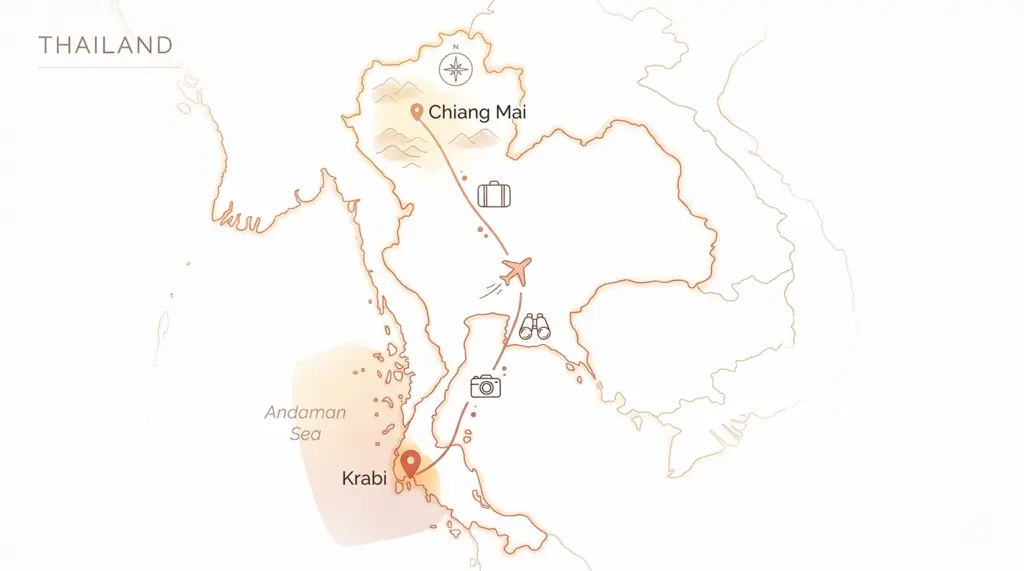
The best time to visit both destinations is November through April. This is Thailand’s cool and dry season: lower humidity in Chiang Mai, calm Andaman seas, and clear water for diving and snorkeling in Krabi. November through February is the most comfortable weather window. March and April are hotter but still reliably dry. May marks the onset of the southwest monsoon, which significantly affects Krabi’s sea conditions until October.
Both cities have their own airports. Chiang Mai International Airport is served by frequent domestic flights from Bangkok’s Suvarnabhumi and Don Mueang airports. Krabi International Airport has domestic connections from Bangkok and increasingly from other Thai cities. Getting between Chiang Mai and Krabi directly requires a connection through Bangkok, which takes a full travel day. Plan the two destinations as sequential stops rather than trying to combine them with a day-trip mindset.
A week in each city is enough for a first visit. Three days in Chiang Mai covers the Old City temples, an elephant sanctuary day trip, and the Sunday Walking Street with room to spare. Four to five days in Krabi allows a full Phi Phi day trip, the Four Islands tour, Tiger Cave Temple, and enough time to find the pace the Andaman coast rewards. Rushing to either destination misses the point of choosing it.
Frequently Asked Questions About Chiang Mai and Krabi
Q1: How do I get from Chiang Mai to Krabi?
There is no direct flight between Chiang Mai and Krabi. The standard route connects through Bangkok, either Suvarnabhumi or Don Mueang airports. The total travel time, including the connection, is typically five to seven hours. Thai Airways, Bangkok Airways, and budget carriers, including AirAsia and Nok Air, serve both routes. Booking the legs separately with budget carriers is often cheaper than booking a through connection with a full-service airline. Allow at least two hours for the Bangkok connection.
Q2: What is the difference between ethical and non-ethical elephant sanctuaries in Chiang Mai?
The clearest indicators of an ethical sanctuary are: no elephant riding is offered, no bullhooks or chains are used during visitor interactions, and elephants can move freely within the grounds. Ethical sanctuaries rescue animals from logging and performance work rather than breeding them for tourism. Elephant Nature Park is the best-known ethical operator in the Chiang Mai area. Be cautious of operations that use words like ‘ethical’ or ‘responsible’ in their marketing without specifying their no-riding policy. Check what previous visitors report about the actual conditions.
Q3: Is Railay Beach worth visiting if I am based in Ao Nang?
Yes. The longtail boat crossing from Ao Nang takes about 15 minutes and runs throughout the day and evening. The limestone scenery at Railay is more dramatic than at Ao Nang, and the beach itself is quieter. A half-day trip to Railay is easy to arrange with no advance booking required. If you are a climber or interested in sport climbing, Railay and neighboring Tonsai Beach are among the most recognized limestone climbing destinations in Southeast Asia, with routes from beginner to advanced difficulty.
Q4: What happened to Maya Bay on Phi Phi Leh, and is it open now?
Maya Bay was closed to visitors in June 2018 after the combination of large daily visitor numbers and boat anchoring caused severe damage to the coral reef inside the bay and to the beach itself. The bay reopened in January 2022 with a daily visitor limit and restricted entry periods. Boats are no longer permitted inside the bay; visitors are brought to a floating pier and enter on foot. The reef has shown significant recovery. The experience is more regulated than before the closure, but the setting is as good as it ever was.
Q5: What is khao soi, and where should I try it in Chiang Mai?
Khao soi is a northern Thai noodle soup unique to the Chiang Mai region. It is built on a coconut milk and curry broth, typically served with chicken or beef, soft egg noodles in the bowl, and crispy fried noodles on top. The toppings include pickled mustard greens, shallots, lime, and chili oil. It does not appear in this form in Bangkok or central Thai cuisine. In Chiang Mai, khao soi is available at dedicated restaurants, market stalls, and the Sunday Walking Street. Khao Soi Khun Yai, near the Saturday Walking Street, and Khao Soi Islam, near the mosque on Charoen Prathet Road, are both well-regarded local options.
Suggestions for Travel and Lodging
Lodging is widely available throughout Thailand. However, you can get assistance booking tours to some of Thailand’s attractions. For transparency: We may earn a commission when you click on certain links in this article, but this doesn’t influence our editorial standards. We only recommend services that we genuinely believe will enhance your travel experiences. This will not cost you anything, and I can continue to support this site through these links.
- Hotel Accommodations: I have provided a few suggestions below to help you out. I have also provided a search box below for you to find hotels (click on “Stays” at the top) or flights (click on “Flights” at the top). This tool will provide me with an affiliate commission (at no cost to you).
- Rembrandt Sukhumvit in Bangkok – a nice hotel in a good location. It’s also reasonably priced.
- Lotus Hotel Pang Suan Kaew in Chiang Mai – This is an older hotel that is quite large and well-maintained. This cost is very reasonable.
- L Resort in Krabi – a very nice resort. It’s located right on the coast, and they have all the amenities you would need. In addition, it’s a great location for families with two pools for the young ones. It’s a little more costly than most but worth every penny! Highly recommended!
Lastly, we recommend booking international travel flights through established organizations rather than a local travel agent. I recommend Expedia.com (see the box below), the site I use to book my international travel. I have provided a search box below for you to use to search for flights (click on “Flights” at the top) or Hotels (click on “Stays” at the top). This tool will provide me with an affiliate commission (at no cost to you).