
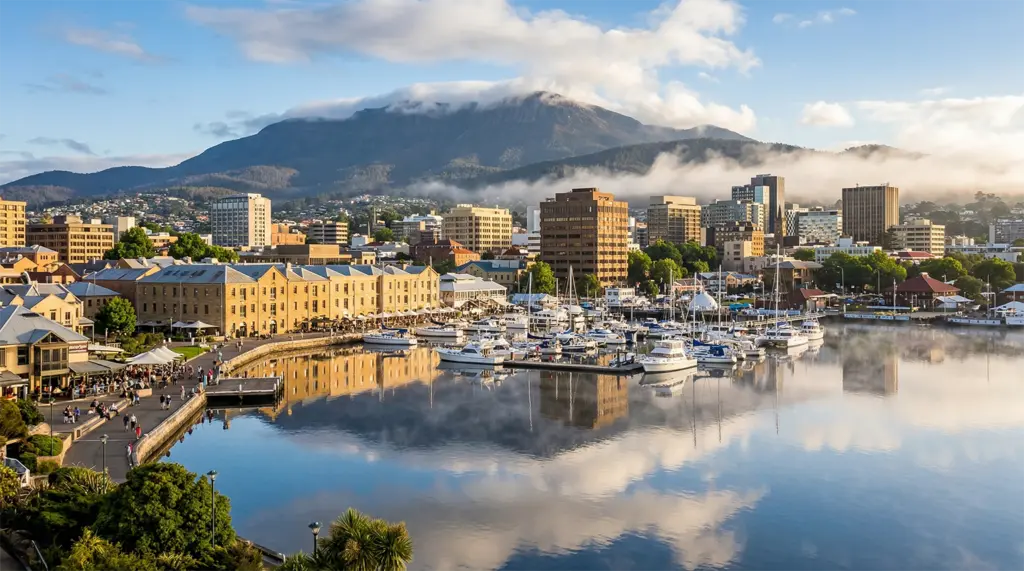
The first thing you see when the plane descends toward Hobart, Tasmania, is the mountain. Not the harbor, not the colonial streetscape, not the waterfront that every travel summary leads with. Mount Wellington. It sits above the city at 1,271 meters, and from the air it looks as if it has not yet decided whether to tolerate what has been built below it. That first impression turned out to be accurate.
Hobart, Tasmania, is one of those places that does not explain itself to you. You have to stay long enough to find the explanation. Most visitors give it a weekend and leave with pleasant impressions of the waterfront and Salamanca Place. That is a fair summary of 20 percent of the city. I spent enough time to find the other 80 percent. This article covers what I found: the history that Australia finds complicated, the museum that changed what museums are supposed to be, the island day trip that most visitors do not take time for, and the mountain that puts everything else in context.
Battery Point, Salamanca Place, and the History That Still Functions
Battery Point is a suburb of Hobart where the colonial era is not a theme. It is just the built environment. The sandstone cottages, the narrow lanes, the Georgian houses on Hampden Road: this is what the city looked like in the 1830s, and enough of it survived to give you a genuine sense of the place rather than a reconstruction.
The difference matters. There is a kind of heritage tourism that puts you behind velvet ropes and gives you a printed timeline. Battery Point does not do that. The houses are occupied. The streets are in use. The antique shops are running actual businesses. You are walking through a neighborhood that chose to keep what it had, and the result is a more honest encounter with the past than any formal heritage site manages.
Historical Salamanca Place
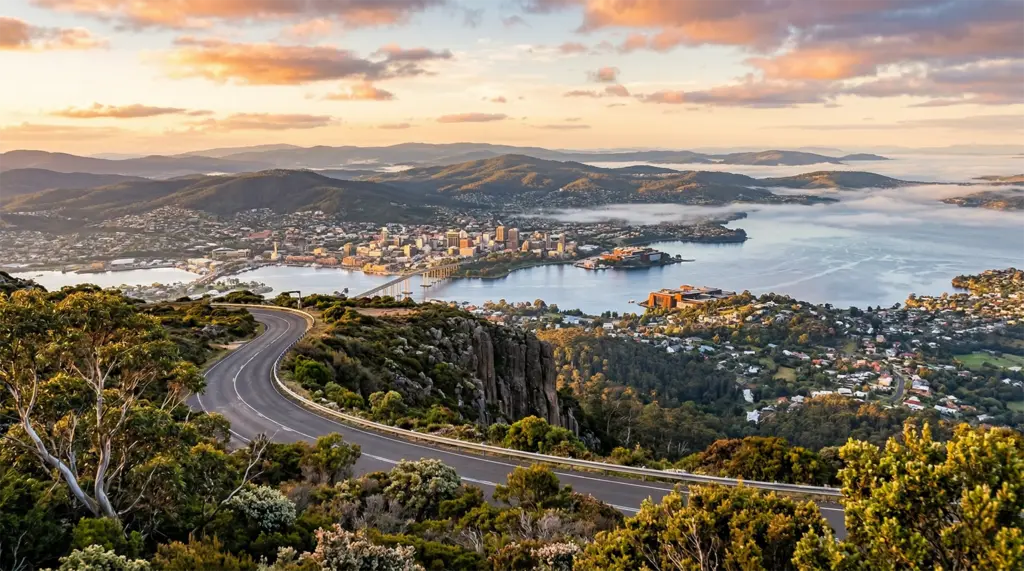
Salamanca Place runs along the waterfront at the bottom of the hill. The Georgian sandstone warehouses were built in the 1830s and 1840s for maritime trade (wool, whale oil, timber), and they are now restaurants, galleries, and market stalls. Every Saturday, the Salamanca Market fills the plaza with Tasmanian produce, craftwork, and street performers. The market is worth a full morning. The food at the market is locally sourced in ways that are visible rather than claimed. Tasmanian oysters, smoked salmon from the island’s fish farms, leatherwood honey from old-growth forests, and fresh produce from farms within the state. Buy things. Eat things. This is the part of the city that rewards anyone willing to slow down. Alice Springs is worth reading alongside this for a different kind of Australian historical encounter. The contrast reveals something about how the country holds its different pasts.
MONA and the Argument About What a Museum Is For
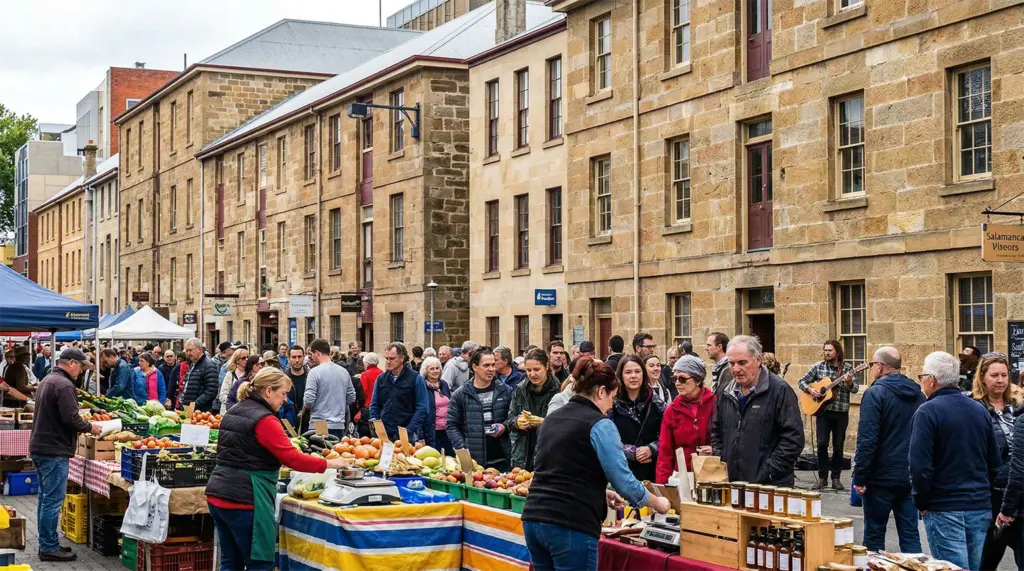
The Museum of Old and New Art sits about twelve kilometers north of central Hobart, Tasmania. You get there by ferry from the Brooke Street Pier, and the ferry is worth the ticket price on its own, regardless of the museum. The Derwent River at that stretch of the journey is wide and cold and serious, and arriving at MONA by water feels more appropriate than arriving by road.
The museum was built by David Walsh, a professional gambler who made enough money to construct an entirely underground gallery into the sandstone cliff above the river. The collection confronts death, sexuality, religion, and time. Some of it is deliberately difficult. Some of them are very funny. All of it is intentional. Walsh built MONA to question the boundaries between what is considered high culture and what is considered obscene, and the question runs through every room.
What MONA gets right that most museums get wrong is that it does not tell you what to think. The O, its interpretive app, gives you context and opposing viewpoints rather than authoritative explanations. You encounter artworks in dark corridors and have to find your own way through the space. There is no correct direction. The layout is deliberately disorienting, and the disorientation is the point. I spent half a day there and left with three arguments I had not arrived with. That is the test for whether a museum is doing its job. Most fail it. MONA passes.
Mount Wellington, the Botanical Gardens, and Two Very Different Kinds of Quiet
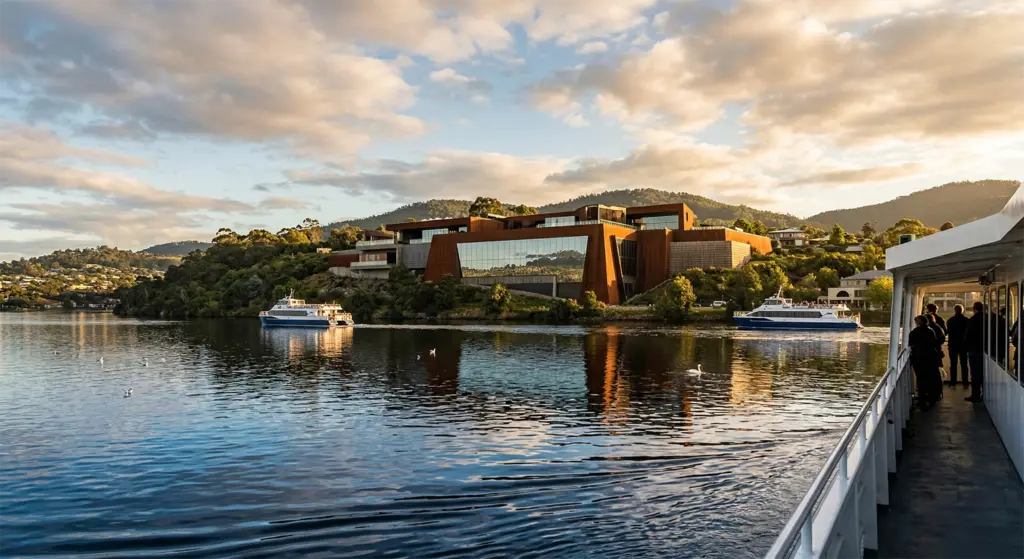
The drive to the summit of Mount Wellington takes about 45 minutes from central Hobart. It takes you through distinct vegetation zones as the temperature drops and the eucalyptus gives way to alpine dolerite. At the top, on clear days, you can see across the Derwent estuary, across the Tasman Peninsula, and in certain conditions as far as the mountains of New Zealand. Overcast days are common here. On those days, you sit inside a cloud and watch it move.
Both versions of the summit are worth the trip. The clear-day views tell you something about where Hobart sits in relation to the rest of the world. The cloud version tells you something about the mountain’s actual character. There is endemic wildlife above the tree line: Bennett’s wallabies, Tasmanian pademelons, and occasional sightings of quolls. The walking trails at the summit cover several hours if the weather allows.
The Royal Tasmanian Botanical Gardens offer a completely different kind of experience. Established in 1818, they are the second oldest in Australia and contain the Arthur Wall, a sandstone heritage structure from the convict era. The gardens are a working research collection, not just a display. The subantarctic plant house is unusual: it maintains the conditions of the remote Heard and Macquarie Islands and holds plants found almost nowhere else in the world.
Spend an hour in the botanical gardens after the mountain. The contrast between the summit’s exposure and the sheltered paths below is significant. Both do the same thing: put the city’s geography in front of you, approaching it from opposite directions.
Port Arthur and the History Australia Does Not Always Want to Discuss
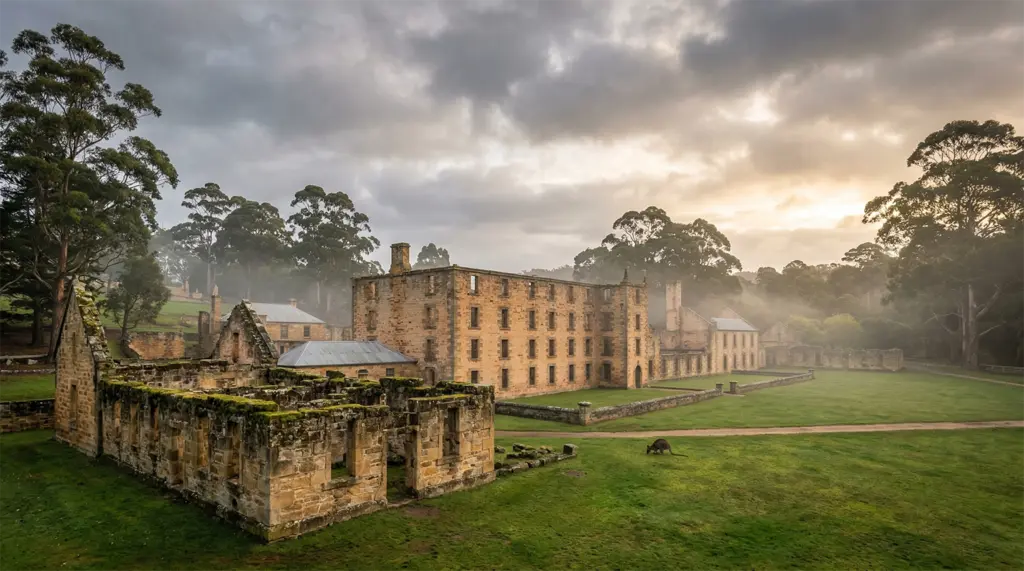
Port Arthur is a 90-minute drive from Hobart, Tasmania, on the Tasman Peninsula. It was a convict settlement from 1833 to 1877, and at its peak, it held more than a thousand prisoners under a penal philosophy that favored psychological over physical punishment. The administrators called it the Silent System. Prisoners were required to be silent at all times, masked when outside, and denied any human recognition from guards. The intention was to break the sense of self.
The tour takes you through what remains: the church ruin, the penitentiary, the separate prison, the hospital, and the model prison where the Silent System was applied most strictly. The guides are knowledgeable and honest. They do not soften what happened here. The separate prison, where prisoners spent 23 hours a day in isolation cells designed to prevent any awareness of other human presence, is the part that stays with you.
Background
Australia’s history of convict transportation is a subject the country has not always approached directly. Port Arthur makes it impossible to be indirect. There were 73,000 convicts transported to Van Diemen’s Land (the colonial name for Tasmania) between 1803 and 1853. Their labor built the colony’s infrastructure: roads, bridges, government buildings, and the Georgian architecture you admire in Battery Point. The tour asks you to hold both of those facts at once.
I was not prepared for how effectively the site does this. The visit is a long one. Take the full tour. The harbor cruise that shows you the settlement from the water offers a perspective that the land tour cannot provide. Port Arthur is not comfortable, and it should not be. That is exactly why it is worth the 90-minute drive from the city.
Bruny Island, the Cascade Brewery, and What Hobart, Tasmania Does With Food
Bruny Island is a 30-minute drive from Hobart, Tasmania, followed by a 15-minute car ferry from Kettering. The island comprises two landmasses connected by a narrow isthmus called the Neck, which is one of the best places in Australia to observe fairy penguins and short-tailed shearwaters. The southern part of the island is a national park and largely inaccessible by road, which is the point.
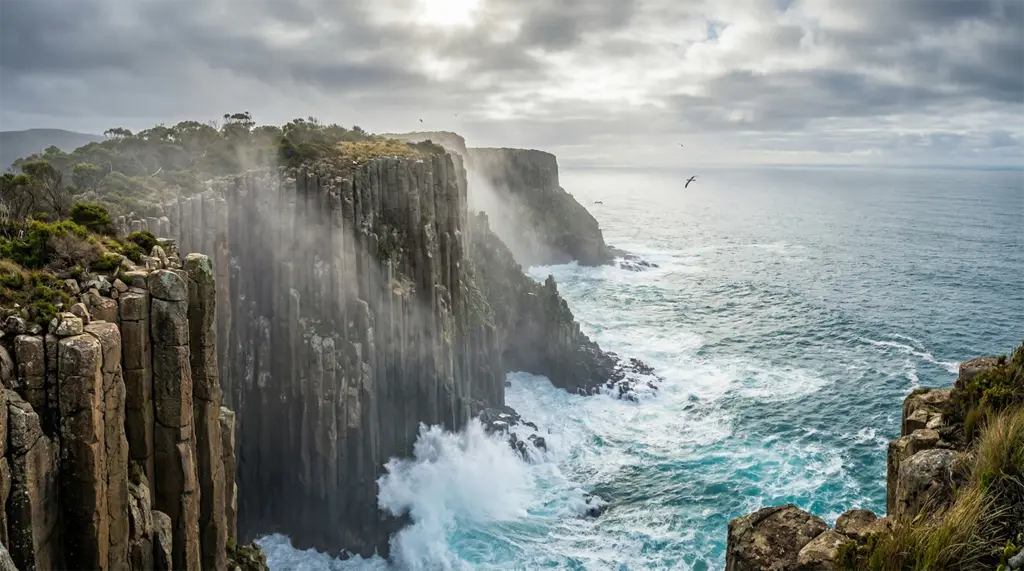
The wildlife around Bruny Island is the reason to go. Dolphins, Australian fur seals, and sea eagles are consistent on the boat tours that run along the southern cliffs. The cliffs themselves are dolerite columns dropping straight into the Southern Ocean: geologically distinct and visually significant. I spent a morning on the island and should have spent longer. This is the part of Tasmania that reminds you that Hobart is a city at the very edge of the inhabited world, and the wilderness just past its borders is genuinely wild.
Other Attractions
The Cascade Brewery, back in Hobart, was established in 1824 and is Australia’s oldest continuously operating brewery. The building sits below Mount Wellington and uses water from the mountain’s springs. The tour covers the full brewing process and the history of an operation that has run through the colonial period, two world wars, and six changes of ownership. The beer is produced to consistent standards. The history of the place is more interesting than the beer.
Tasmanian food has improved significantly over the past two decades. The Salamanca waterfront and the nearby streets serve quality seafood: abalone, crayfish, oysters, and scallop pies. The scallop pies sold at fish and chip shops are a specific local tradition and worth tracking down. The whisky industry in Tasmania has also developed significantly over the past twenty years. Sullivans Cove and Lark distilleries produce single malts that compete with Scottish standards. For a broader overview of what the Australia Travel section covers, including other parts of Australia worth comparing with Tasmania, see the pillar page.
Frequently Asked Questions About Hobart, Tasmania
Q1: How many days do you need in Hobart, Tasmania?
A minimum of four days gives you enough time to cover the core of what the city has to offer without rushing. First day: Battery Point, Salamanca Place, and the Saturday market if your timing allows. Second day: MONA; budget a full half-day for the museum and take the ferry in both directions. Third day: Port Arthur as a full-day trip from Hobart, leaving early and returning by evening. Fourth day: Bruny Island in the morning, then Mount Wellington or the Botanical Gardens in the afternoon.
Five or six days allows you to slow down, return to places that rewarded a second visit, and explore the broader Tasman Peninsula beyond Port Arthur. The drive up to Freycinet National Park or across to the west coast requires at least an additional two days and puts you in a completely different part of Tasmania. If your schedule allows only two or three days in Hobart, prioritize Port Arthur and MONA over the waterfront attractions. Those two are the most irreplaceable. Battery Point and Salamanca Place are excellent, but they will still be there the next time you come back.
Q2: When is the best time to visit Hobart, Tasmania?
The December to February summer months are the most straightforward in terms of weather, with temperatures averaging 17 to 21 degrees Celsius and longer daylight hours that extend your time at outdoor sites. Dark Mofo, the winter solstice arts festival, runs in June during Hobart’s winter. If cultural events are your priority, June is worth the colder temperatures. Dark Mofo is a significant festival produced by MONA, and the winter setting is intentional to the program.
March through May (autumn) is arguably the best balance: stable temperatures, reduced visitor numbers, the autumn light on the Derwent and the sandstone buildings, and minimal waiting times at popular sites. The Taste of Tasmania food festival runs in the week around New Year and draws crowds to Salamanca Place, which is worth knowing if you prefer a quieter experience. The Rolex Sydney Hobart Yacht Race ends at Constitution Dock in late December and brings the city alive in ways that are worth seeing if you time a visit around it.
Q3: Is Port Arthur worth the day trip from Hobart, Tasmania?
Yes, without reservation. Port Arthur is the most historically significant and emotionally demanding site in Tasmania, and the 90-minute drive from Hobart in each direction is time well spent. The site covers 40 hectares of ruins and restored buildings, and the full guided tour takes between two and three hours. Add the harbor cruise for the view from the water, and the total visit runs for a minimum of four to five hours.
The site is well-maintained, and the interpretation is honest. The guides do not shy away from what the convict experience involved. The separate prison where the Silent System was applied is the section that most visitors find most difficult. Prisoners were kept in total isolation, masked when outside, and denied any human acknowledgment. That difficulty is appropriate. Australia transported 73,000 convicts to Van Diemen’s Land between 1803 and 1853, and their labor built much of what colonial Tasmania became. Port Arthur puts that history in front of you without softening it. Go with enough time to engage rather than pass through.
Q4: What is MONA, and is it worth visiting?
MONA, the Museum of Old and New Art, is a private museum twelve kilometers north of central Hobart, built by David Walsh into the sandstone cliff above the Derwent River. It opened in 2011 and has since been credited with significantly changing Tasmania’s tourism profile and influencing how contemporary museums approach curation and visitor experience.
The collection is large, deliberately provocative, and refuses to tell visitors what to think. Works in the collection address death, sexuality, religion, time, and bodily experience. Some of it will offend some visitors. None of it is accidental. The O app provides context and competing interpretations rather than authoritative explanations. The layout is underground and deliberately disorienting. These are design decisions, not oversights.
Is it worth visiting? Yes, if you approach it on its own terms. It is not a traditional museum and should not be evaluated as one. Budget a minimum of three hours; four is better. Take the ferry from Brooke Street Pier rather than driving. The approach by water sets the right frame. MONA is the primary reason the city now appears on international travel itineraries in ways it did not before 2011. That influence is justified.
Q5: What food is Hobart, Tasmania, known for?
Tasmania has the best seafood in Australia, and Hobart is where much of it is concentrated. Tasmanian oysters farmed in the island’s cold, clean waters are the place to start. They are sold fresh at Salamanca Market, at the waterfront fish co-ops, and at the restaurants along the Salamanca waterfront strip. Pacific oysters and Sydney rock oysters are both produced here; the flavor reflects the water temperature. The abalone is worth the price when you find it on a menu.
Scallop pies are a Hobart tradition specific to the state: pastry shells filled with scallops in cream sauce, sold at fish and chip shops throughout the city. They are not elegant. They are exactly right for what they are. The smoked salmon from Tasmanian aquaculture is sold at the market alongside leatherwood honey (produced from Huon Valley bees working old-growth forest flowers) and fresh produce from farms within a few hours of the city.
The whisky industry deserves separate mention. Sullivans Cove produces a single malt that won the World’s Best Single Malt award in 2014, and Lark Distillery has been producing since 1992, when founder Bill Lark successfully lobbied to change Australian law, which had prohibited small-batch distilling since the 1800s. If you drink whisky, visit one of the distilleries. The Cascade Brewery tour is worthwhile for its history, though the beer itself is a mainstream lager rather than a craft product.
Q6: How do you get to Bruny Island from Hobart, Tasmania?
Bruny Island sits south of Hobart, accessible via a 30-minute drive to the town of Kettering, followed by a 15-minute car ferry operated by Bruny Island Ferry. The ferry runs regularly throughout the day in both directions and takes vehicles as well as foot passengers. No booking is required for the ferry itself, though during peak summer periods the wait for vehicle spaces can be 30 to 60 minutes.
On Bruny Island, a vehicle is necessary to reach most worthwhile sites. The island is 50 kilometers from top to bottom, and the key attractions are spread across significant distances: the Neck, the southern national park, the penguin viewing area at the Neck, and the boat tour departure points. Organized day tours from Hobart include return transport, the ferry crossing, and boat tours of the southern cliffs, making them the most efficient option for visitors without a rental car.
The boat tours that operate along the dolerite sea cliffs of South Bruny offer the best wildlife viewing. Bottlenose dolphins are a constant presence, Australian fur seals haul out on accessible rocks, and sea eagles patrol the cliff faces. The cliff scenery itself (vertical dolerite columns dropping into the Southern Ocean) is the most distinctive feature of the landscape around the city. Allow a full day for Bruny Island rather than trying to make it a quick stop.
SUGGESTIONS FOR LODGING AND TRAVEL
Lodging is widely available throughout Australia. However, you can get some assistance booking tours to some of the attractions. For transparency: We may earn a commission when you click on certain links in this article, but this doesn’t influence our editorial standards. We only recommend services that we genuinely believe will enhance your travel experiences. This will not cost you anything, and I can continue to support this site through these links.
Lastly, we recommend booking international travel flights through established organizations rather than a local travel agent in the Philippines. I recommend Expedia.com (see the box below), the site I use to book my international travel. I have provided a search box below for you to use to search for flights (click on “Flights” at the top) or Hotels (click on “Stays” at the top). This tool will provide me with an affiliate commission (at no cost to you).
Specific Lodging Suggestions
- DoubleTree by Hilton Hobart: A well-known hotel in Hobart with reasonable rates ranging from $143 to $190. This is in a great location, making it easy to get around the area.
- RACV Hobart Hotel: Another excellent, centrally located hotel. It is upscale, slightly lower-cost, with prices typically ranging from $109 to $160.
- Hadley’s Orient Hotel: This is a Victorian hotel with lead light ceilings and rattan furniture. Very quaint. The prices typically range from $90 – $160.