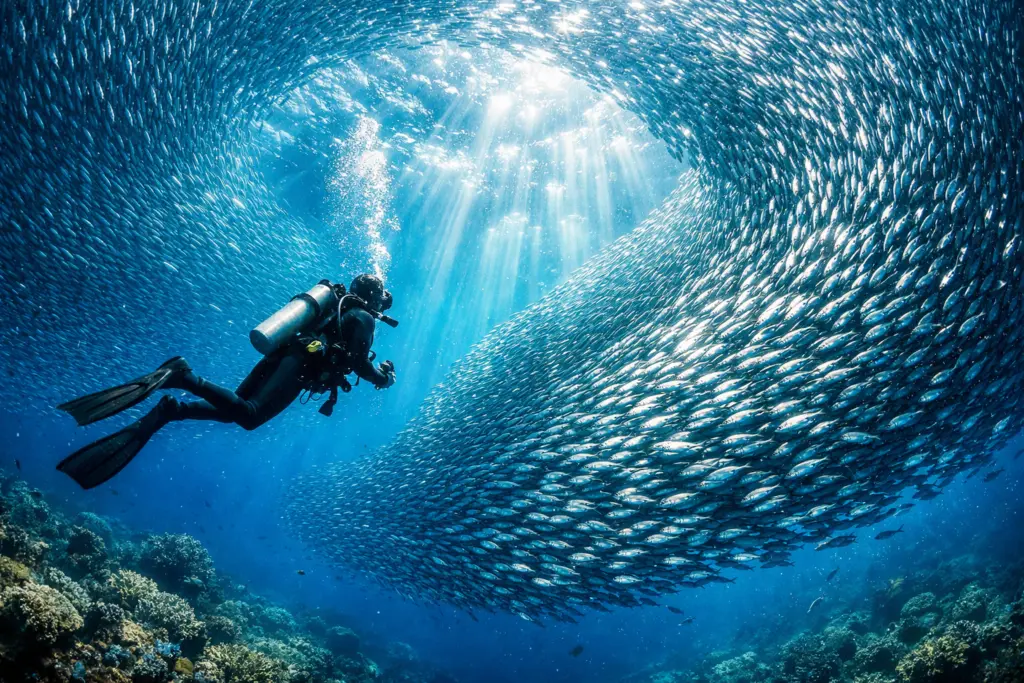
The first time I dived in Cebu, I was already in the water. The boat captain had said sardines, and I pictured a school. What I dropped into at Moalboal was not a school. It was a city. Millions of them, moving in formation thirty meters below the surface, compressing and expanding in shapes that had no name because nothing in ordinary experience prepares you for the comparison. I hung there with the regulator in my mouth, trying to figure out whether I was inside the formation or the formation was inside something larger that included me.
That is what Cebu Island diving delivers when it is working. Not a curated encounter managed from a boat. Not wildlife on the other side of a viewing window. The actual ocean, with the actual creatures in it, does what they do when the conditions are right, and a diver is patient enough to wait.
Moalboal and What a Million Sardines Look Like From the Inside
Moalboal is on the southwest coast of Cebu, about two hours south of Cebu City by road. The sardine run there is one of the more unusual phenomena in Philippine diving because it is not seasonal. The bait ball is present year-round, though its size and density peak between November and May when the sardines are most concentrated. What keeps them there is not entirely understood. The most credible explanation involves the reef wall dropping sharply just offshore, creating a nutrient upwelling that holds the sardines in place even though there is nothing holding them.
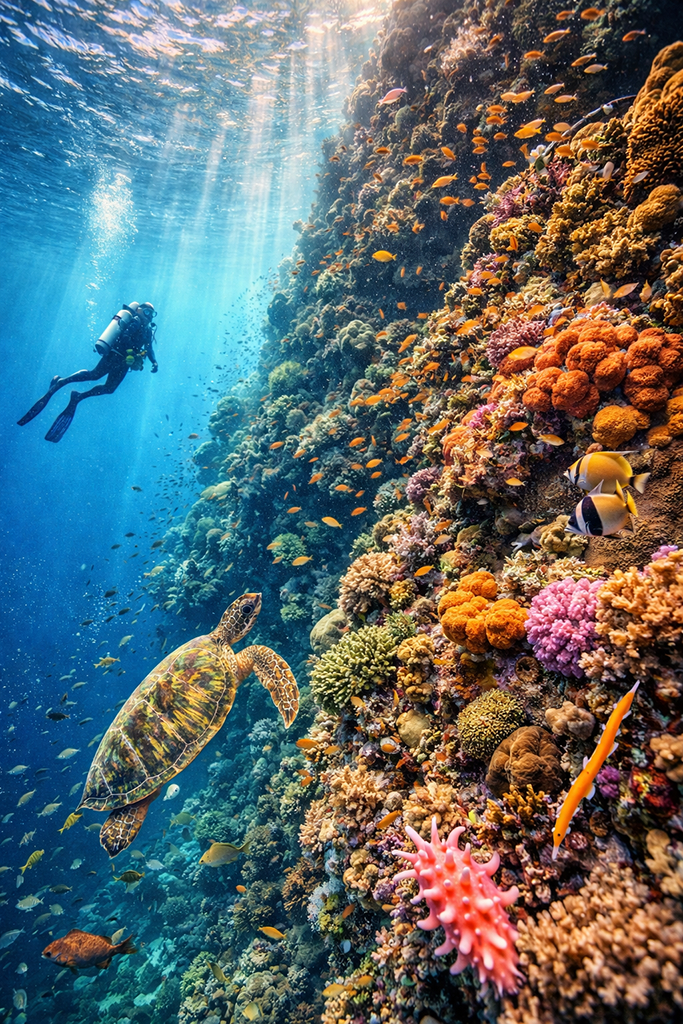
Pescador Island, a small uninhabited rock about three kilometers off the Moalboal coast, offers a different experience entirely. The island is a marine sanctuary. Its walls drop to more than 40 meters, and the coral coverage on the upper sections is unusually good for a site with this level of traffic. Cathedral Cave, a cavern formation on the northwest wall, draws open-water divers who want something beyond the open-water experience without committing to cavern certification. The light at depth inside the formation is worth the dive on its own.
What sets Moalboal apart from most dive sites on Cebu is that the snorkeling is almost as good as the diving. The sardine formation runs from the surface down. This means a swimmer with a mask and fins can reach the top of the bait ball without descending. This is not true at other sites. Most of the high-value encounters in Cebu require depth, certification, and pre-dawn boat trips. Moalboal offers an experience accessible to non-certified divers.
Oslob, the Whale Sharks, and the Question Worth Asking Before You Book
Oslob is five hours south of Cebu City by road, or accessible by ferry from Dumaguete on Negros Island. The whale shark interaction there began around 2012, when local fishermen discovered that feeding the sharks uyap, a small shrimp, would keep them near the surface long enough for tourists to swim alongside them. It became one of the most visited marine attractions in the Philippines within three years. On peak days, several hundred people enter the water at a single site.
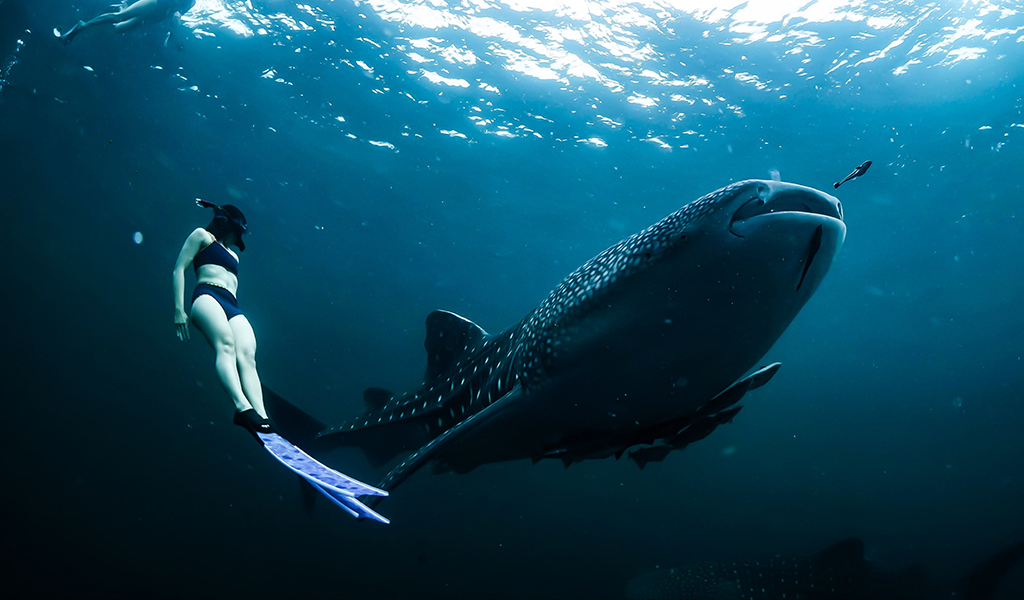
The experience is exactly what it looks like in the photographs. The whale sharks are the largest fish in the ocean, and being in the water alongside one at close range is a genuinely disorienting encounter. They move slowly, and they are not aggressive, but their scale does something to your sense of proportion. A tail fin larger than you will swing past at arm’s length, and the physics of the water movement is something you feel in your body, not just see with your eyes.
The honest part of the Oslob discussion is this: the feeding program has changed the animals. Studies tracking the Oslob sharks have found that they spend more time near the surface than whale sharks typically do, are present in the feeding area rather than following their natural migration routes, and have an elevated exposure to boat propellers. Scarring from propeller strikes is documented. Conservation organizations, including WWF Philippines, have raised concerns about how the feeding program is affecting the animals over time. None of this is secret. The operators know the research exists.
How Will You Act?
Whether that information changes what you decide to do at Oslob is a question only you can answer. The local fishing community has built a livelihood around it and largely stopped net fishing in the area as a result, which is a genuine conservation trade-off. I have been to Oslob and seen the shark, and I understand why people go. I also understand why serious divers in the Cebu Island diving community are increasingly directing people toward alternatives. The context matters. Read it before you book. You can find more on what responsible tourism looks like across the Philippines in the Cebu Island section of this site.
Malapascua and the Thresher Sharks Before Sunrise
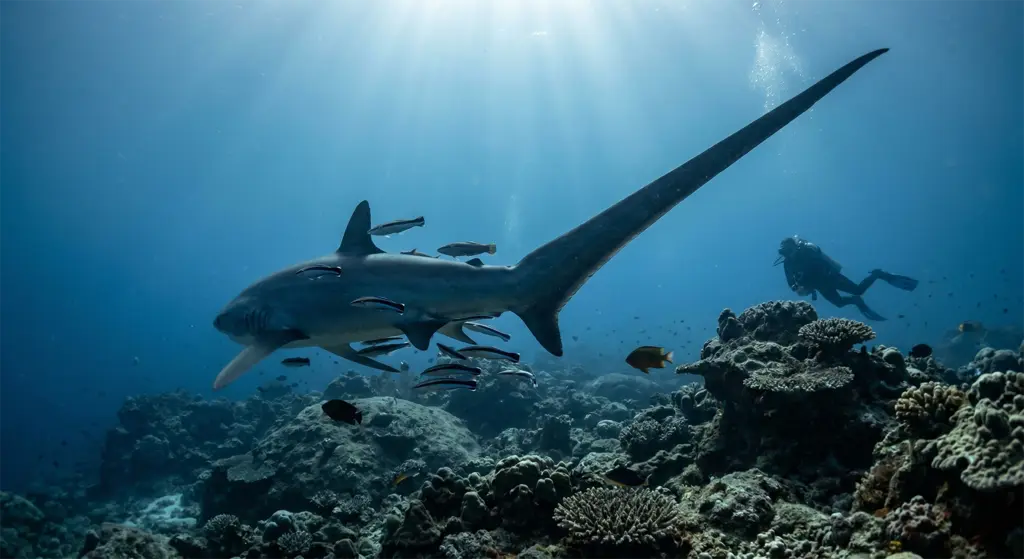
Malapascua Island is at the northern tip of Cebu, about ninety minutes from Maya by bangka. The dive community found it in the early 1990s when word spread that thresher sharks were reliably sighted at a seamount called Monad Shoal. Thresher sharks use the shoal as a cleaning station. Cleaner wrasse remove parasites from the sharks in the early morning hours, which means the sharks are present and relatively stationary at a predictable depth for a predictable window of time each day. The peak months are December through April. At most sites in the Visayas, threshers are rare. At Malapascua, before sunrise, they are almost guaranteed.
The dive briefing at Monad Shoal is strict. No flash photography. No hovering directly above the sharks. Maintain distance from the cleaning station so the sharks are not interrupted. The reason is practical, not ceremonial: if divers disturb the cleaning-station interaction, the sharks leave and do not return that morning. The operators are rigorous about this because a disturbed site has no return customers.
Malapascua has developed into a full dive destination beyond the thresher shark dives. Gato Island, to the northwest, is a marine sanctuary with a tunnel that passes through the island at around 12 meters, and the area inside the tunnel hosts populations of banded sea snakes and whitetip reef sharks. The island also attracts hammerheads during certain months, and there are records of manta ray sightings from the northwest side of the shoal. The island itself is small and quiet by Philippine standards.
Sumilon Island, the Coral Triangle, and What a Marine Sanctuary Actually Does
Sumilon Island sits off the coast of Oslob and is the first marine sanctuary established in the Philippines, designated in 1974 by Silliman University. The Sumilon story is the clearest evidence available in this part of the Visayas for what happens to a reef when you stop fishing it and enforce the boundary. Inside the sanctuary zone, coral coverage and fish biomass are measurably higher than in unprotected areas immediately adjacent. The fish do not respect the boundary line on a map, of course. They move. Which means the sanctuary is effectively seeding the surrounding areas with juvenile fish.
Cebu sits within the Coral Triangle, the area bounded roughly by the Philippines, Indonesia, and Papua New Guinea that contains the highest marine biodiversity on the planet. This is not a marketing claim. It is the scientific consensus, based on species counts, that dwarfs anything comparable in the Atlantic or Pacific outside this region. Cebu Island diving operates on top of this biological foundation. The reefs around Pescador, Sumilon, and Malapascua are not remarkable, despite being in the Philippines. They are remarkable because of where they are. For context on what the broader marine environment in this region looks like on the Negros side of the Visayan Sea, see the Ocean and Marine Life of Negros Island article for a comparison.
The Environmental Implications
The pressure on Cebu’s reefs is real and documented. Parts of the reef system around the more heavily trafficked sites show bleaching, anchor damage, and signs of excessive diver contact with live coral. Malapascua has an enforcement problem because it is a remote island without a consistent government presence. Moalboal has its own issues with boat traffic density during the sardine run peak. Sumilon holds up better because it has institutional backing from Silliman and a community that understood the economic argument for protection before the dive tourism economy existed to prove it.
What Cebu Island Diving Requires Before You Hit the Water
The four main sites covered in this article require different certification levels. Moalboal sardine run and basic Pescador wall dives are appropriate for Open Water Diver certification. Cathedral Cave at Pescador requires Advanced Open Water and, ideally, some cavern awareness. Monad Shoal at Malapascua is a deep dive, typically thirty meters plus, and is not appropriate for freshly certified open water divers, regardless of what any operator tells you. The thresher dives require at least Advanced Open Water. Gato Island’s tunnel at 12 meters is manageable for open-water divers but does require comfort in overhead environments.
The dive operators on Cebu are a mixed picture. The established operations at Malapascua and Moalboal with long track records are professional. Equipment is maintained, briefings are given, and guides know the sites. The budget operations that appear during peak season near high-traffic sites are more variable. The standard check applies everywhere: inspect the gear before you commit to a dive, ask directly about guide-to-diver ratios, and walk away if the pre-dive briefing is skipped or rushed.
A few words of Advice
Diving on Cebu Island operates in conditions that are generally favorable year-round, but the specifics matter. The southwest monsoon (habagat) runs from roughly June through October and affects sites on the west coast of Cebu, including Moalboal, more than sites on the north end of the island near Malapascua. Visibility is typically 15 to 25 meters under good conditions. Water temperature ranges from 26 to 29 degrees Celsius for most of the year. The seasonal windows for specific marine encounters are discussed in the FAQ section below. Cebu City itself is covered in detail in the history of Cebu Island article if you are planning to spend time on the island beyond the water.
The realistic planning horizon for a diving trip to Cebu Island, covering Moalboal, Malapascua, and Oslob, is at least 6 days. Moalboal is two days, minimum. Malapascua requires at least two nights because the thresher dive departs before the first mainland ferry arrives. Oslob, if you decide to go, is a half-day activity that fits into the transit between the south and north ends of the island. Trying to rush this itinerary into a long weekend is possible. It is not a good idea.
Now for the Downside
Diving on Cebu Island has attracted enough international attention that parts of the experience have been shaped by it in ways that are not entirely good. The whale shark feeding at Oslob is the most visible example. The sardine run at Moalboal has its own crowd management problem during peak months. These are not reasons to avoid Cebu. There are reasons to approach it with the same standard you apply anywhere else: read what is actually happening, not what the operators would prefer you to believe, and make decisions accordingly. The water is extraordinary. The obligation to be a thoughtful visitor so it does not disappear because the fish are impressive.
Frequently Asked Questions About Cebu Island Diving
Q1: What certification do I need for diving in Cebu Island?
The answer depends entirely on which sites you intend to dive. The Moalboal sardine run is accessible to Open Water Diver-certified divers, since the formation runs from the surface down and the standard dive profile stays within open water limits. Pescador Island wall dives are also appropriate for Open Water. Cathedral Cave at Pescador, however, is an overhead environment and requires comfort with confined spaces; Advanced Open Water with some cavern awareness is recommended before attempting it.
Monad Shoal at Malapascua is a different matter. The thresher shark cleaning station sits at 25 to 30 meters, which is at the deep end of the open water certification limit, and the briefing requirements are strict. Most reputable operators at Malapascua require Advanced Open Water as a minimum and recommend logged deep dive experience before booking. Showing up with a freshly printed Open Water card and expecting to do the thresher dive the next morning is a plan that does not always end well.
Gato Island’s tunnel in Malapascua is 12 meters long and manageable for Open Water divers who are comfortable in overhead environments. If you have never dived in a cavern or tunnel before, tell your operator. A good guide will position you in the formation appropriately. The fish inside the tunnel, including the banded sea snakes and whitetip reef sharks, are worth the navigation.
Q2: When is the best time for Cebu Island diving at each major site?
The Moalboal sardine run is year-round, which is one of the things that makes it genuinely unusual among Philippine dive experiences. The formation is present in some density at any time of year. The peak months for maximum school size are November through May, when the sardines are most concentrated, and the southwest monsoon has not yet disrupted the west coast dive conditions. If you are visiting specifically for the sardine run, and your schedule is flexible, November through April is the window to target.
Malapascua thresher shark encounters peak from December through April. The sharks are present year-round at Monad Shoal, but December to April deliver the best visibility and the calmest seas for the morning crossing from the island. March and April are widely considered the peak of the peak. June through October brings the southwest monsoon and can make the crossing from Maya to Malapascua rough.
Oslob whale sharks are present year-round as well, since the feeding program runs continuously. There is no best time of year for the encounter itself. The question worth asking is not when to go for whale sharks but whether to go at all, a question the article addresses directly. If you decide to visit, the crowd management is better on weekday mornings outside the December to April peak season.
Q3: How do I get to Malapascua Island from Cebu City?
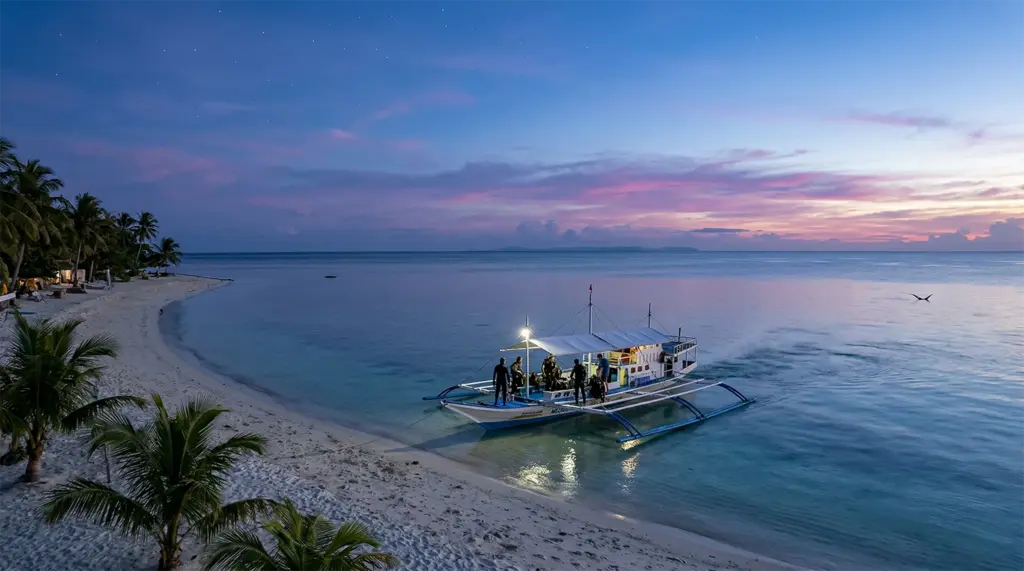
Malapascua sits off the northern tip of Cebu Island, and getting there from Cebu City is a committed journey. The standard route is a bus or hired car north from Cebu City to Maya port, which takes three to four hours depending on traffic through the northern towns. From Maya, a bangka (outrigger boat) crosses to Malapascua in approximately thirty minutes. The Bangka schedule is weather and tide-dependent; the crossing can be rough during the southwest monsoon.
The total transit time from Cebu City to the island is typically four to five hours door-to-door. This is relevant to the thresher shark planning because the dive departs before the first realistic boat from Maya would arrive. The implication is straightforward: you need to be on the island the night before your thresher dive, which means at least two nights on Malapascua are built into any thresher-focused Cebu Island diving trip.
Accommodation on the island runs from basic beach guesthouses to mid-range dive resorts. Dive resorts typically include the morning boat briefing in their packages and provide the organized logistics required for a pre-dawn departure. If you are booking independently, confirm the departure time and meeting point for the Monad Shoal dive before you arrive on the island. Some operators will not hold a spot if you miss the briefing the evening before.
Q4: Is the Oslob whale shark experience worth visiting?
This is the question that divides the Cebu Island diving community, and it deserves a straight answer rather than a diplomatic non-answer. The experience itself, measured purely by what it delivers, is striking. Whale sharks are the largest fish in the ocean, and sharing the water with one at close range is an encounter that is difficult to match anywhere in the Philippines. The Oslob sharks are habituated to human presence, so they do not scatter when divers approach, making the encounter predictable and prolonged. On that basis alone, many people find it worth the drive south.
The honest counter is also documented. The feeding program has measurably altered the sharks’ behavior. Animals that were previously migratory are now semi-permanent residents at a feeding station. Studies have found increased propeller-strike scarring among Oslob sharks. Conservation organizations, including WWF Philippines, have called for reform of the program. The operators know this research exists.
What the Oslob program has done well is provide sustainable income for a former fishing community and eliminate most net fishing in the immediate area. That is a genuine trade-off, not a justification for dismissing the concerns. If you go, the most responsible version of the visit is a brief encounter with no flash photography and no physical contact with the animals. If you decide not to go, the Moalboal sardine run and Malapascua threshers deliver comparable intensity through observation rather than feeding.
Q5: What marine life can I expect on a Cebu Island diving trip beyond the headline encounters?
The headline encounters at Moalboal, Malapascua, and Oslob are the ones most guides lead with because they are the easiest to describe. The broader marine life picture in diving around Cebu Island is more varied and less predictable, which is its own kind of appeal.
Green and hawksbill sea turtles are common at multiple sites, particularly around Moalboal and Sumilon Island. They are more reliably spotted in the early morning before dive traffic increases. Manta rays appear at Monad Shoal near Malapascua, though they are not guaranteed, unlike the thresher sharks. Hammerhead sightings are logged at Malapascua during certain months, typically December through March, and are site and season-dependent. Frogfish appear throughout Cebu’s reefs in their usual fashion, which is to say almost invisibly, waiting for someone patient enough to stop and look properly at what appears to be a piece of rubble or a sponge.
The nudibranch variety throughout Cebu is exceptional and largely underpublicized compared to the macro diving reputation of sites like Anilao in Luzon. Photographers targeting small subjects will find material at most sites that does not require a special overnight departure or a specific season. The Moalboal house reef at several of the established dive resorts is decent for a night dive, with frogfish, octopus, and nudibranchs more visible after dark than during daylight hours.
Q6: What else is there to do in Cebu beyond diving?
Cebu Island has enough above-water content to justify a trip for someone who does not dive at all, which is relevant if you are traveling with non-divers or building an extended stay around the diving.
Cebu City is a full urban experience with a Spanish colonial layer that most visitors underestimate. Magellan’s Cross, planted by Ferdinand Magellan’s crew in 1521, is one of the few surviving artifacts of the Spanish first contact in the Philippines. The Basilica Minore del Santo Niño holds a mass several times daily and has been doing so continuously since the 16th century. The history of how Cebu became the first Spanish colonial settlement in the Philippines is covered in detail on this site, and rewards reading before you arrive rather than after. The Sinulog Festival in January fills Cebu City with street dancing and religious procession, which is one of the most photographed events in the country.
Inland Cebu, which most dive-focused visitors skip entirely, offers canyoning at Kawasan Falls and arguably the best waterfall descents in the Visayas. The southern coastal road to Moalboal passes through mountain terrain worth stopping for if you have a vehicle rather than a bus. The Sinulog Festival of Cebu article on this site covers the January festival in detail for anyone whose timing aligns. The island is large enough that a two-week visit can move between the diving, the history, and the festivals without the itinerary feeling compressed.
Suggestions For Travel Arrangements and Lodging
Lodging is widely available throughout the Philippines. However, you may want to get some assistance booking tours to some of the Philippines’ attractions. I’ve provided a few local agencies that we’ve found to be very good for setting up tours. For transparency: We may earn a commission when you click on certain links in this article, but this doesn’t influence our editorial standards. We only recommend services that we genuinely believe will enhance your travel experiences. This will not cost you anything, and I can continue to support this site through these links.
Local Agencies
- Guide to the Philippines: This site specializes in tours throughout the Philippines. They seem to have some flexibility in scheduling, and pricing is very competitive.
- Hotel Accommodations: I highly recommend The Manila Hotel for your stay in Manila. It is centrally located, and many attractions are easily accessible from there. I have provided a search box below for you to find hotels (click on “Stays” at the top) or flights (click on “Flights” at the top). This tool will provide me with an affiliate commission (at no cost to you).
- Kapwa Travel is a travel company focused on the Philippines. It specializes in customizing trips to meet customers’ needs.
- Tourismo Filipino is a well-established company that has operated for over 40 years. It focuses on tailoring tours to meet customers’ needs.
- Tropical Experience Travel Services – Tours of the Philippines: This company offers a range of tour packages, allowing you to tailor your trip.
Lastly, we recommend booking international travel flights through established organizations rather than a local travel agent in the Philippines. I recommend Expedia.com (see the box below), the site I use to book my international travel. I have provided a search box below for you to use to search for flights (click on “Flights” at the top) or Hotels (click on “Stays” at the top). This tool will provide me with an affiliate commission (at no cost to you).
Specific Lodging Recommendations
Oslob
Mactan Island
- Sempre Premier Inn Mactan Airport Hotel
- Waterfront Airport Hotel & Casino
- Savoy Hotel Mactan Cebu near Newtown Beach
Cebu City
Moalboal