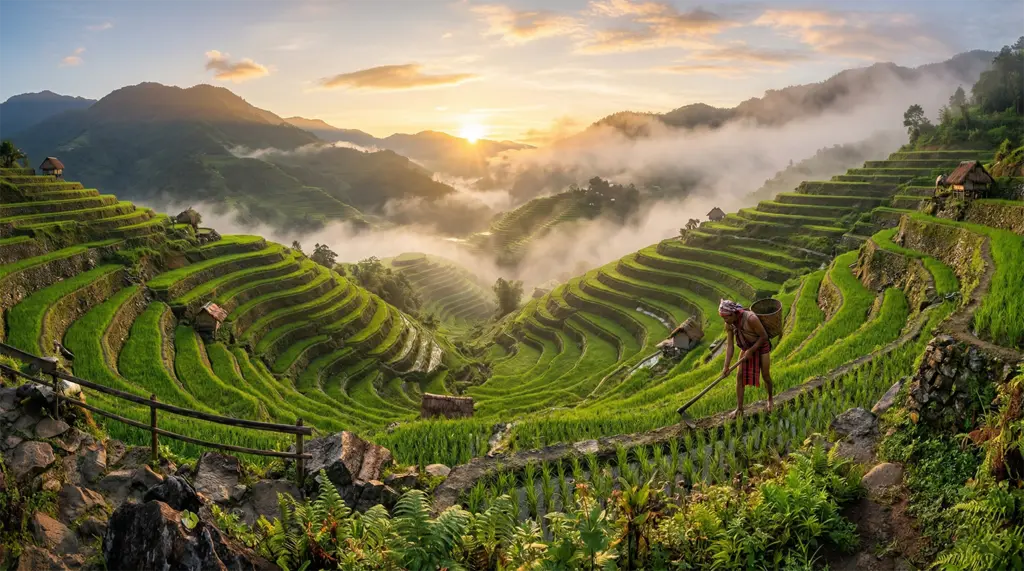
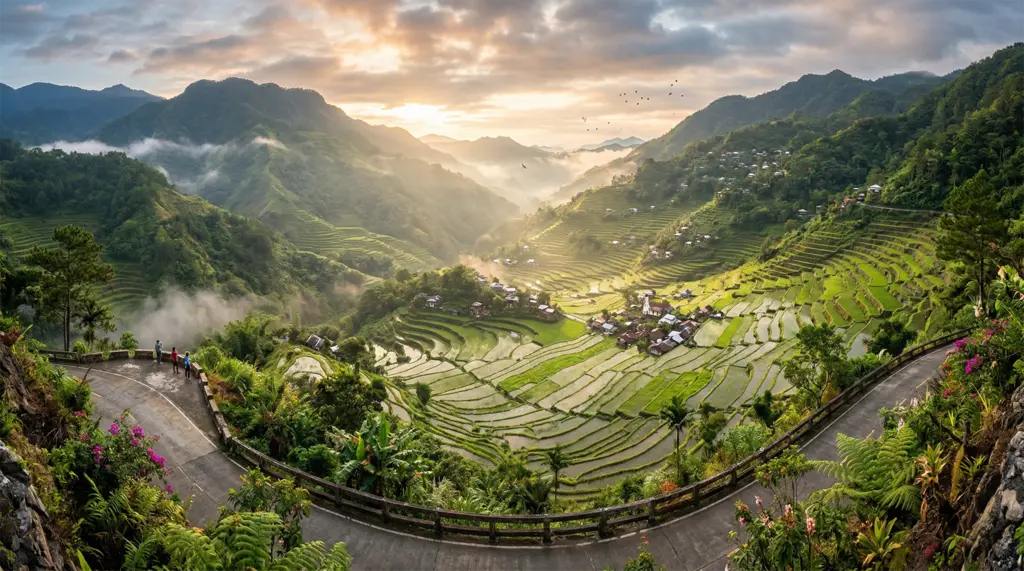
The first view of the Banaue Rice Terraces from the main viewpoint does something unexpected. It makes the scale incomprehensible. You know they are large. You read that they cover more than 10,000 square kilometers in Ifugao Province. Those numbers do not prepare you for the moment you stand at the viewpoint railing and try to find the top of them with your eyes.
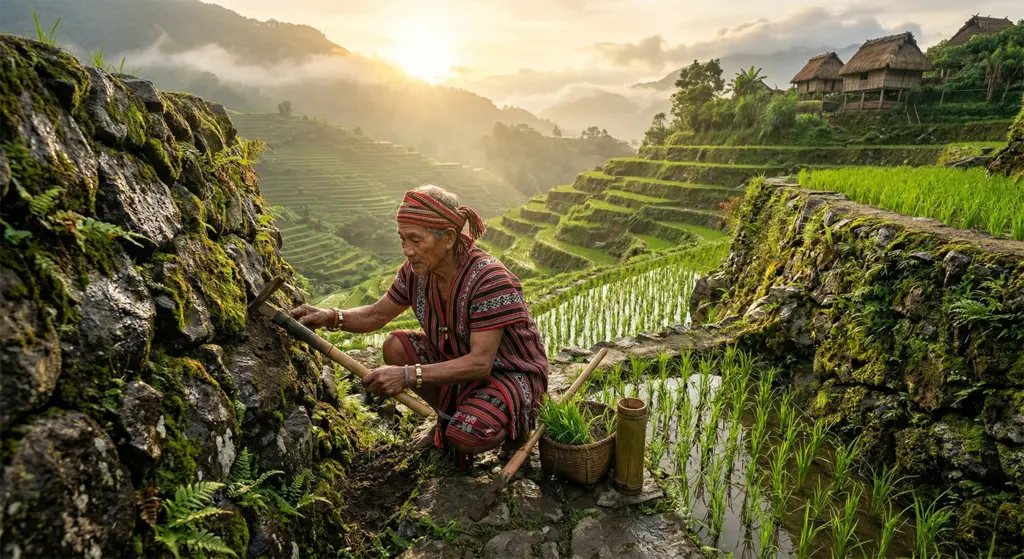
I had been to the Philippines many times before my first visit to Banaue. I thought I understood what carved rice terraces would look like, but I was wrong. The terraces do not climb a hillside. They are on the hillside. The mountains have been so thoroughly worked into steps over two millennia that the human architecture and the natural landscape become one. That is not an accident. It is the point. The Banaue Rice Terraces were carved by the ancestors of the Ifugao people beginning roughly 2,000 years ago. The ‘Eighth Wonder of the World’ label they carry is contested. The UNESCO designation is more carefully phrased. But the terraces earn it through the plain fact of what they are: a functioning agricultural system, still producing rice, still maintained by the same community that built it. That is the thing worth understanding before you arrive.
What the Banaue Rice Terraces Actually Are
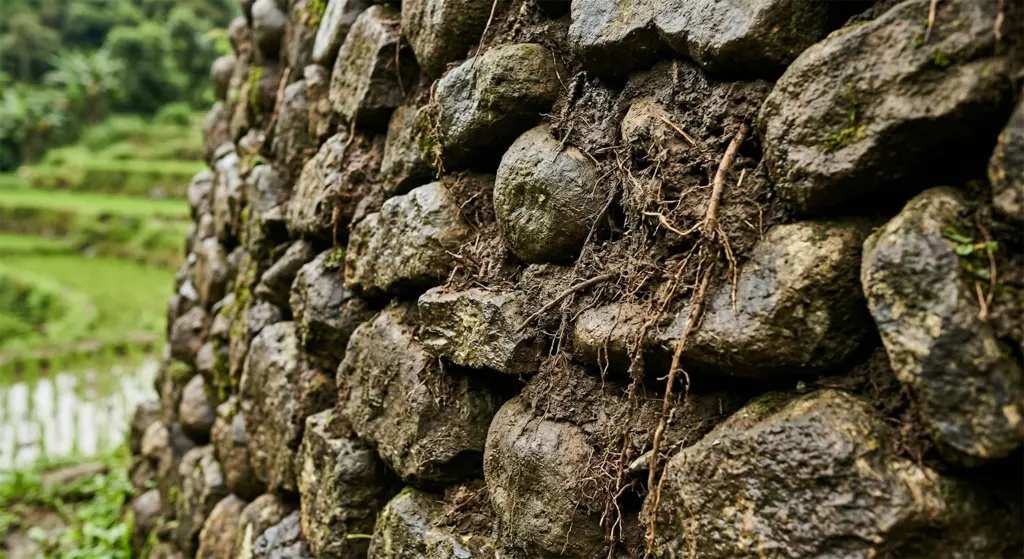
The Banaue terraces are one of several distinct terrace systems that the Ifugao carved across the Cordillera Central mountains of northern Luzon. Batad, Bangaan, Hapao, and Hungduan are others. All are part of the same UNESCO World Heritage property, designated in 1995 as the ‘Rice Terraces of the Philippine Cordilleras.’ Banaue is the most accessible of these systems, which is why it is the one most visitors reach. Engineering is what stops most visitors cold once they understand it. The Ifugao built an irrigation system that channels water down from the rainforests above the terraces through a network of channels and bamboo pipes to the individual paddies below. This system requires constant maintenance. Every channel, every earthen wall, every muddy berm is someone’s responsibility. The community manages it collectively through a system of mutual obligation that has kept the water moving for two thousand years. It is not a relic. It is a living infrastructure.
The Main Viewpoint — and Why You Should Walk Past It
The main Banaue viewpoint above the town is accessible by jeepney from the town center, a short ride up the road. From there, the terraces spread across the valley in waves. Most visitors spend thirty minutes at the viewpoint, take their photographs, and leave. That is one way to visit the Banaue Rice Terraces. It captures the scale. It does not capture the experience.
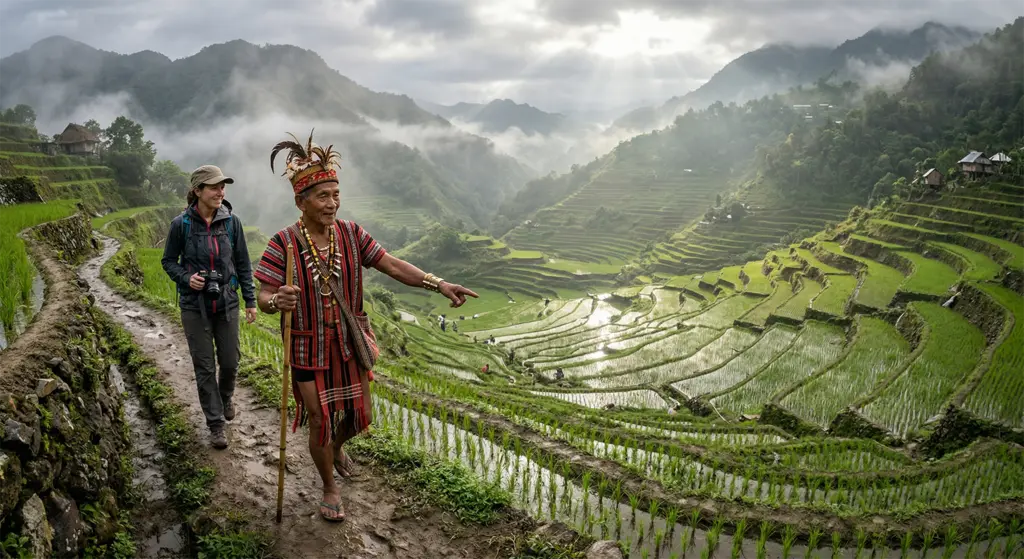
The real encounter begins when you walk into the terraces. The paths between the paddies are narrow, uneven, and cut at angles that remind you they were built for Ifugao farmers moving quickly through terrain they have known since childhood. They were not built for someone carrying a camera bag and second-guessing every step. You will slip. You will misjudge distances. The path ahead will look shorter than it is. Do it anyway.
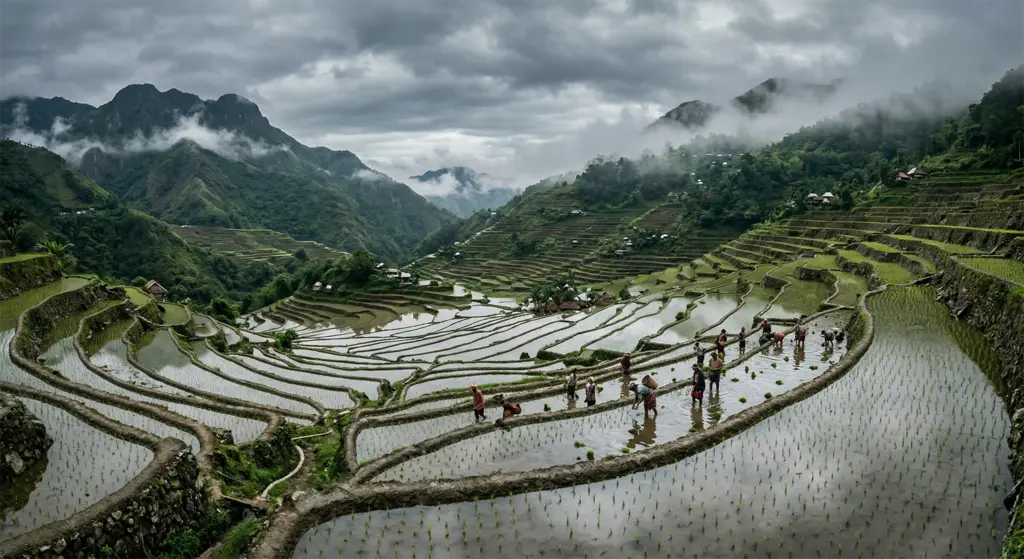
Eddie, an Ifugao guide I hired through the Banaue tourism office, took me into the terraces on a morning when the paddies were flooded for planting, and the sky was overcast. The reflection of the clouds in the flooded fields is one of those things that is genuinely difficult to describe without sounding like you are performing a wonder. I will simply say that it stopped me. I stood there longer than I planned. Eddie waited. He had seen this reaction before.
Hiring an Ifugao Guide
A guide is not optional if you intend to walk the terraces. The paths change with the season and the water level; they are not consistently marked, and the community has organized a guide program through the Banaue tourism office that puts money directly into the hands of the Ifugao. Rates depend on route and time. Expect to pay between 500 and 1,500 pesos for a half-day walk. That range is reasonable for what you receive. The knowledge Ifugao guides carry about the terraces, the irrigation system, and the community is considerably more valuable than the rate they charge for it.
Getting to the Banaue Rice Terraces from Manila
The Bus from Manila
The standard route from Manila to Banaue is the overnight bus from Cubao or Sampaloc. Ohayami Transport and Coda Lines both run services on this route. The journey from Manila to the destination takes approximately 9 hours, depending on traffic. Book the night bus. You arrive in Banaue in the early morning when the light is best, the air is cool, and the viewpoint crowds are thinnest. Day buses exist, but they arrive mid-afternoon, when the haze is heaviest, and the light is flat. The overnight bus is not comfortable. It is correct.
When to Visit
The terraces look different depending on the farming season. From June to October, the paddies are planted and flooded. This is when the Banaue Rice Terraces look like their photographs: layered green, water reflecting the sky, the full effect. From November to February, the harvest has happened, and the terraces are dry and straw-colored. This is a different kind of impressive, but some visitors find it disappointing if they expected the green version. March to May is the dry season: some paddies carry a second crop, while others rest. The terraces are accessible year-round. If green and water are your priority, plan for the planting window.
Batad — Worth Knowing About, Worth Approaching Carefully
Batad is a separate Ifugao village about two hours from Banaue by jeepney, then a steep descent on foot into the valley below. The terrace amphitheater at Batad is described by most people who complete it as the more dramatic of the two systems. The stone walls at Batad are vertical rather than sloped. The valley is enclosed on three sides. The effect is different from Banaue’s broader panorama. My Batad experience is partial. I walked the upper trail and saw the terraces from the ridge. I did not descend to the village floor. What I saw from the ridge was striking: the enclosed valley, the vertical walls, the sense of a place that has chosen remoteness as a feature rather than a limitation. Tappiyah Falls lies below the village and by all accounts is worth the additional kilometer if your legs are willing. If you are going to Banaue and have a full spare day, Batad is worth adding. Do not attempt it in sandals. Do not attempt it in a hurry.
The Conservation Question Nobody Asks at the Viewpoint
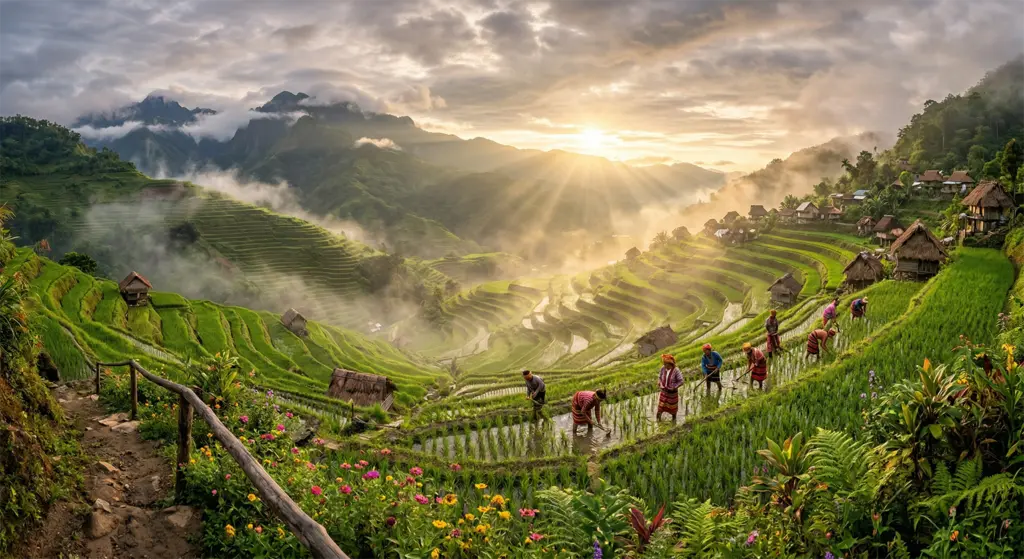
The terraces are under pressure. Not in the dramatic way that makes for an urgent travel article, but in the slow, practical way that threatens living systems. The young Ifugao are leaving. Banaue town has jobs. Manila has more. The terraces require intensive manual labor to maintain, and that labor depends on people who know how and choose to stay. Fewer people are staying.
UNESCO placed the terraces on its List of World Heritage in Danger in 2001. They were removed from that list in 2012 after conservation measures improved the situation. The terraces are currently stable. They are not without ongoing pressure. The irrigation channels need seasonal monitoring. The earthen walls need repair after every significant rain. Every season that passes without sufficient labor is a season where some sections of the Banaue Rice Terraces weaken quietly. Visitors can contribute in simple ways. Hire Ifugao guides through the tourism office rather than walking independently. Eat at local restaurants in Banaue town rather than hotel dining rooms. Buy Ifugao crafts from community cooperatives rather than roadside stalls selling imports. The money flows differently depending on where you put it. This is not abstract. Every peso that reaches an Ifugao family farming the terraces is a small argument for staying.
A Learning Opportunity
The ‘Eighth Wonder of the World’ label does the Banaue Rice Terraces a mild disservice. Wonders are things you visit, photograph, and leave. The terraces are still being farmed. They still need to be maintained by the people whose ancestors built them. They are a working system, not a monument. The distinction matters. A monument is preserved by keeping people away from it. The Banaue Rice Terraces need people to stay, to work, to care.
Most visitors do not think about that at the viewpoint. They think about the photographs. That is understandable. But if you go, take a moment after you have taken the photograph. Ask your guide what the biggest challenge is this season. The answer will tell you more about the Banaue Rice Terraces than any image can.
Frequently Asked Questions
Q1: How do I get to the Banaue Rice Terraces from Manila?
The standard and most practical route is the overnight bus from Manila’s Cubao terminal or Sampaloc. Two companies reliably serve this route: Ohayami Transport and Coda Lines. Book your ticket at least a few days in advance during the dry season and holiday periods, as seats fill. The journey takes approximately nine hours under normal conditions. Traffic leaving Manila on a Friday evening can push that to eleven. Factor this in if your timing matters.
You arrive in Banaue in the early morning. This is the correct time to arrive. The light is low and golden. The air in the Cordillera at that altitude is genuinely cool, which is a surprise after Manila. The viewpoint crowds are not yet there. Use the first two hours of the morning well: get to the viewpoint before 8am, then arrange your guide for the terrace walk while the rest of the town is still waking up.
Some travelers fly to Tuguegarao or Cauayan in Cagayan province and travel overland from there, cutting the bus journey. This is a viable option if the nine-hour overnight bus seems daunting. Most people, including me, find the overnight bus reasonable once you accept that it is a sleeping arrangement rather than a comfort arrangement. Bring a neck pillow. The road through the Cordillera in the final two hours is winding.
Q2: What is the best season to visit the Banaue Rice Terraces?
The short answer: June to October, which is the planting and growing season. This is when the paddies are flooded and the terraces look like the photographs you have seen. The green is deep and saturated. The flooded fields reflect the sky. If you visit during an overcast morning in July, the effect of cloud reflection in the terraces is one of those things that justifies the bus journey on its own.
The longer answer is that each season offers something different. November to February is dry season and harvest time. The terraces are golden-brown, the air is crisp, and the Cordillera mountain scenery is clear without the rainy-season mist. Many photographers prefer this period for the colors and visibility, even though the terraces look nothing like the calendar version. March to May bridges the two: some paddies are in second crop, some are resting. The weather is warm, and the crowds are lower than in the peak December to February holiday season.
What to avoid: arriving in Banaue without having checked which season your visit falls in. The difference between flooded and dry terraces is significant, and travelers who arrive expecting green and find brown are disappointed. The terraces are extraordinary in both states. Know which state you are walking into.
Q3: Do I need a guide to walk the Banaue Rice Terraces?
Yes, if you plan to walk into the terraces rather than photograph them from the viewpoint. The terrace paths are not consistently marked. They change with the water level and the season. A path that is dry and stable in March may be underwater and invisible in August. Getting disoriented inside the terrace system is a real possibility for a first-time visitor, and the consequences of a wrong turn include falling into a flooded paddy or damaging sections of the terrace wall.
The Banaue tourism office coordinates licensed Ifugao guides. This is the right channel. Hiring through the office supports the formal guide program, which puts money into the community in a structured way rather than through informal arrangements that may or may not benefit the right people. Rates as of my last visit were in the 500 to 1,500 peso range for a half-day walk, depending on the route. Longer routes to Batad and other terrace systems are priced separately.
A practical note on guide selection: ask what route they recommend for your fitness level and conditions. A good guide will give you an honest answer rather than the longest route. Eddie, the guide I worked with, shortened the route when the path to the lower paddies was too muddy after overnight rain. He took me to a different section instead. That kind of judgment is what a licensed guide who knows the terrain provides.
Q4: Is Batad worth the extra effort from Banaue?
Yes, if you have a full spare day and reliable legs. Batad is approximately two hours from Banaue town by jeepney, followed by a 45-minute to 1-hour trail descent into the valley, depending on your pace. The descent is steep. The return is steep in the other direction. The village sits at the bottom of an enclosed valley, and the terrace walls here are vertical rather than sloped, which creates a different visual effect from Banaue. Most people who complete the full Batad circuit describe it as worth the effort.
My own Batad experience is partial: I walked the upper ridge trail and saw the terraces from above, but did not descend to the village floor. What I saw from the ridge was striking enough that I understand why the full descent is recommended. Tappiyah Falls is below the village and, by all reports, is a legitimate reason to continue past it.
Practical notes: leave Banaue for Batad early, no later than 7 am if you want a full day. Bring more water than you think you need. The trail is not difficult by mountain standards, but it is sustained, and the Cordillera heat builds through the morning. Do not attempt Batad without proper footwear. Sandals are not adequate. The trail is rocky and slippery in sections regardless of the season.
Q5: What should I know about the Ifugao culture before visiting?
The Ifugao are not a backdrop for tourism. They are the reason these terraces exist and continue to function. Understanding this before you arrive changes how you move through the experience.
The terraces are central to Ifugao cultural identity in a way that is difficult to overstate. The annual rice planting and harvesting ceremonies are not performed for visitors; they are performed because they matter to the community. If you happen to be present during one of these periods, observe respectfully and follow your guide’s guidance on what is appropriate to watch and what is not.
Photography etiquette: ask before photographing individuals. This is basic courtesy anywhere in the Philippines and more so in communities that have been photographed by tourists for decades without always being consulted. A direct request and a willingness to hear no will earn you more genuine interaction than a camera pointed from a respectful distance.
Supporting the Ifugao economy directly has practical conservation value. The guide program, local restaurants, and cooperative craft stalls are all channels through which a visitor’s presence becomes a reason for Ifugao families to stay in the mountains rather than migrate to the cities. The terraces’ survival and the Ifugao community’s presence are not separate questions.
Q6: How long should I plan to spend in Banaue?
Two nights is the minimum for a meaningful Banaue visit. One day for the main viewpoint and a guide-led walk into the terraces. One day for Batad, if your fitness allows, or for a longer terrace walk to a different section of the system, such as Bangaan village. A single overnight gives you the morning light on day one but forces you back on the bus before you have had time to absorb the place.
Three nights is better. The Cordillera has its own rhythm, and Banaue is not a town that rushes. The market in the morning, the mist that sits in the valley until mid-morning most days, the shift in light across the terraces through the afternoon: these are things you notice on the second and third day that you miss if you are already thinking about the bus back. Practical logistics: book accommodation in Banaue town in advance during the December to February peak season and during Holy Week, when the town fills with Filipino domestic travelers. Outside these periods, rooms are generally available. The Banaue Hotel is the most established option, with the best proximity to the viewpoint. Smaller guesthouses in town are also workable and put more money into the local economy. Ask your accommodation which guide program they recommend: the answer tells you something about how they think about the community.
Other Related Articles that may be of Interest
You may also find the following articles interesting.
Suggestions For Lodging and Travel
Lodging is widely available throughout the Philippines. However, you may want to consider getting assistance booking tours to some of the Philippines’ attractions. I’ve provided a few local agencies that we’ve found very good for setting up tours. For transparency, we may earn a commission when you click on certain links in this article, but this doesn’t influence our editorial standards. We only recommend services that we genuinely believe will enhance your travel experiences. This will not cost you anything, and I can continue to support this site through these links.
Local Lodging Assistance
Guide to the Philippines: This site specializes in tours across the Philippines, offering flexible scheduling and competitive pricing. I highly recommend them for booking local arrangements for a trip like this one. You can book flights and hotels through the Expedia link provided below.
Hotel Accommodations: I highly recommend The Manila Hotel for a stay in Manila. I stay here every time I travel to the Philippines. It is centrally located, and many attractions are easily accessible. Intramuros and Rizal Park are within walking distance. I have provided a search box below for you to find hotels (click “Stays” at the top) or flights (click “Flights” at the top). This tool will provide me with an affiliate commission (at no additional cost to you).
Kapwa Travel is a travel company focused on the Philippines. It specializes in customizing trips to meet customers’ needs.
Tourismo Filipino is a well-established company that has been operating for over 40 years. It specializes in tailoring tours to meet customers’ needs.
Tropical Experience Travel Services – Tours of the Philippines: This company offers a range of tour packages, allowing you to tailor your trip to your preferences.
Lastly, we recommend booking international travel flights through established organizations rather than a local travel agent in the Philippines. I recommend Expedia.com (see the box below), the site I use to book my international travel. I have provided a search box below for you to use to find flights (click “Flights” at the top) or Hotels (click “Stays” at the top). This tool will provide me with an affiliate commission (at no cost to you).