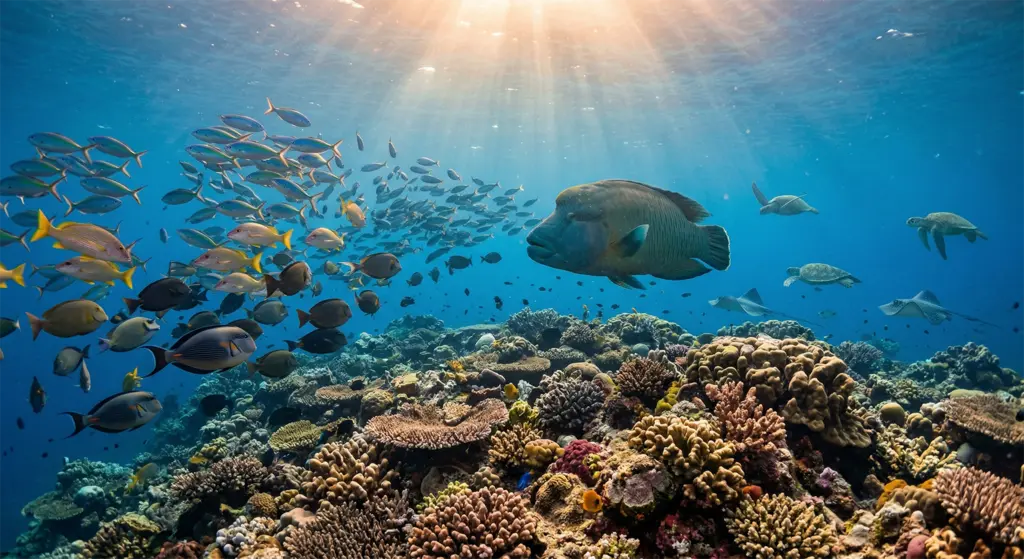
The waters surrounding Negros Island lie within the Coral Triangle. This is a roughly triangular area of tropical seas bounded by the Philippines, Indonesia, and Papua New Guinea. It contains more species of reef fish, coral, and marine invertebrates than any other comparable area of ocean on Earth. The Coral Triangle is to marine biodiversity what the Amazon is to terrestrial biodiversity. It is a region of such extraordinary species density that the numbers are almost meaningless. That is, until you are in the water. The Coral Triangle contains more than 600 species of reef-building coral. Compare that to around 400 species in the Caribbean and roughly 2,000 reef fish species. Negros Island sits near the apex of this region. It is in waters that have supported reef systems for longer than human civilization has existed.
Within that global context, two destinations on Negros Island stand out as exceptional even by Coral Triangle standards. Apo Island is a small volcanic islet off the southeastern tip of Negros Oriental. It has become one of the most-cited examples of successful community-led marine conservation anywhere in the world. And the coastal town of Dauin, 15 kilometers south of Dumaguete, is also recognized. It has developed a reputation among specialist divers as one of the finest muck diving sites in Southeast Asia. Muck diving is a different and more demanding form of diving than reef work. It focuses on the bizarre and cryptic creatures that live in sandy, silty seafloors rather than on the coral itself.
Developing Our Understanding
The marine environment is not a side feature of Negros Oriental. It is the primary reason most international visitors come to the province. Understanding what makes the waters here distinctive, and why the conservation story at Apo Island matters beyond the dive community, is the starting point for anyone planning time on the Negros Oriental coast.
Apo Island — How a Reef Came Back
Apo Island is small, roughly 12 hectares of volcanic rock, about 7 kilometers offshore from Dauin. It does not look, from the surface, like anything special. The ferry from Malatapay market takes about 30 minutes in calm weather. What the island looks like from the surface has nothing to do with what it contains beneath it.
In the 1970s, the reefs around Apo Island were in serious decline. This is largely due to dynamite and cyanide fishing practices. Both of these activities kill or stun fish efficiently. But in the process, they destroy the coral habitat that supports them. These practices have caused significant damage to the reef system. The fishing community on the island was catching less each year because there was less to catch. In the early 1980s, with support from Silliman University in Dumaguete, the island’s community stepped in. They established what became one of the first community-managed marine sanctuaries in the Philippines. A no-take zone was declared around a section of the reef. Destructive fishing methods were banned across the entire marine area. Community members enforced the rules themselves.
Outcome of Local Efforts
What happened in the following decades serves as a case study in the scientific community. Scientists have demonstrated the effects of removing fishing pressure from a damaged reef and allowing it to recover. Fish populations in the no-take zone rebounded to some of the highest densities recorded in the Philippines. Coral covers grew significantly. Larger fish, such as groupers, jacks, and trevally, returned due to increased food and shelter. Reef fish spilled into buffer zones, boosting catches in areas where fishing was still allowed. Fishermen who restricted access to part of the reef saw improved catches from the healthier ecosystem. Overall, the reef has begun to recover in an amazing manner.
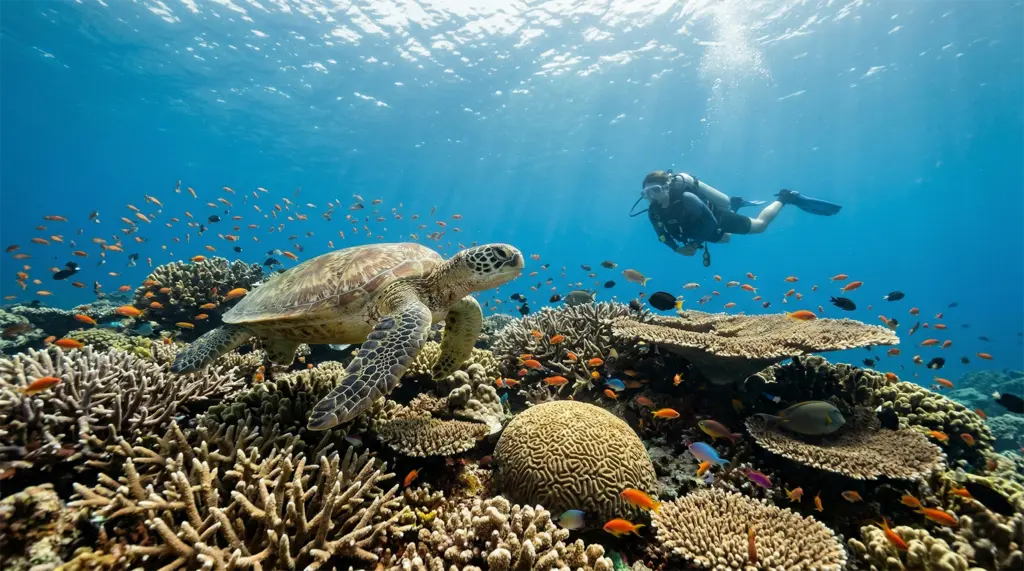
Green sea turtles are now a near-certain sighting at Apo Island. The population that uses the island as a feeding ground has grown significantly since the sanctuary was established. The turtles have lost much of the wariness toward divers that characterizes populations in heavily fished areas. A calm, experienced diver can spend extended time in the water alongside turtles that are simply going about their business. This is not guaranteed anywhere. At Apo Island, it is routine.
Diving and Snorkeling at Apo Island
The dive sites around Apo Island range from the accessible to the demanding. The sanctuary zone on the island’s eastern side has the densest fish populations and most intact coral. The western side features a wall that drops into deeper water with strong currents. These currents attract pelagic species, such as schools of jacks and barracuda, as well as occasional reef sharks. Underwater visibility reveals the reef system’s scale more clearly than at shallower sites.
Snorkeling at Apo Island is more productive than at many Philippine dive sites. The reef here rises shallow enough for surface swimmers to see coral and fish without diving. Day trips from Dauin are the most common option for visitors. The trip includes a boat ride, entry fee, and snorkeling or diving in one day. Most visitors leave the Malatapay market in the morning and return by mid-afternoon. Overnight stays on the island in basic accommodation are also possible. Staying overnight is ideal for divers wanting to be in the water at dawn. Early morning diving offers high fish activity and avoids the day-trip crowd.
Dauin — Muck Diving in the Macro World
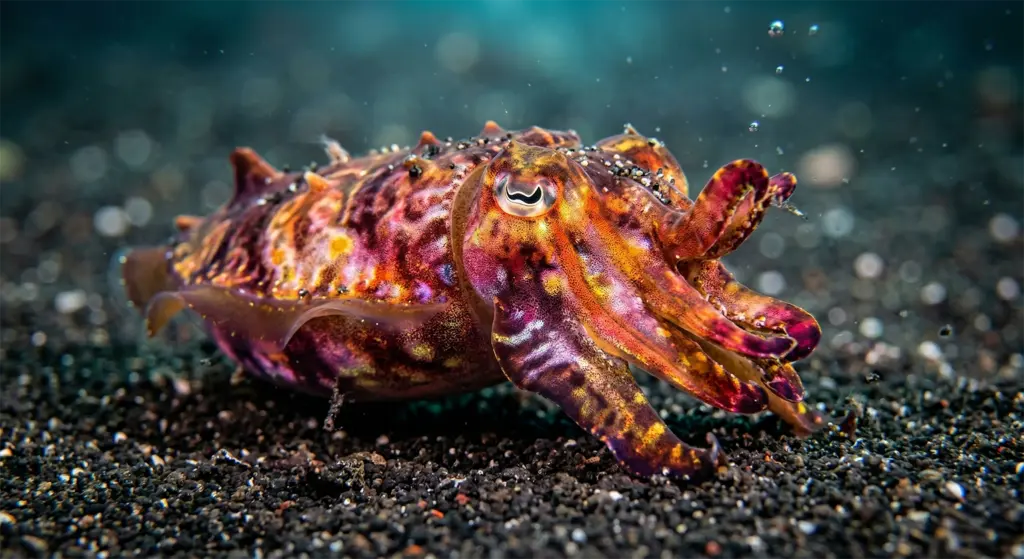
Dauin is 15 kilometers south of Dumaguete, along the coast of Negros Oriental, and has a distinct underwater character from Apo Island. The seafloor here is largely black volcanic sand with scattered coral rubble, not the dramatic coral walls and dense schools of fish of the sanctuary zone. What the sandy substrate offers instead is a habitat for a different category of marine life entirely: the small, cryptic, often bizarre creatures that specialist divers refer to as “muck” fauna.
The Dauin muck diving sites have an international reputation among experienced divers. The black sand slopes hold species that are difficult or impossible to find at conventional reef sites: flamboyant cuttlefish that walk across the substrate on modified arms while pulsing iridescent warning colors; hairy frogfish that ambush prey with a strike faster than the eye can follow; mimic octopuses that impersonate flatfish and lionfish; blue-ringed octopuses (small, beautiful, and carrying a venom for which there is no antidote); ghost pipefish hovering vertically against macro algae; and dozens of species of nudibranch, the shell-less sea slugs with chromatic warning patterns that have made them the obsessive focus of a significant portion of the underwater photography community.
Pygmy seahorses are found at the dive sites around Dauin, clinging to sea fans so precisely matched in color and texture that finding them is an acquired skill rather than a casual observation. The same is true of the various species of pipefish, the mantis shrimp that excavate burrows in the sand, and the ribbon eels that emerge from the substrate in brilliant blues and yellows as they mature.
Why Muck Diving?
Muck diving is slower and more methodical than reef diving. The objective is not the panoramic view but the close inspection: a square meter of black sand that looks empty until a guide points out the hairy mass that is a frogfish sitting in plain sight, or the ripple of color along the substrate that resolves into a flamboyant cuttlefish in motion. It suits divers who are willing to slow down, look carefully, and appreciate the value of finding something strange and specific over covering distance. Dauin rewards patience in proportion to how much you bring.
The dive operators based in Dauin and Dumaguete run trips to both local muck sites and Apo Island, making it straightforward to combine the two experiences in a single trip. The Dauin Marine Protected Area system has reduced fishing pressure on coastal sites, and artificial reef structures installed at several locations have provided additional substrate for colonization by fish and invertebrates.
The Taon Strait — Cetaceans in Deep Water
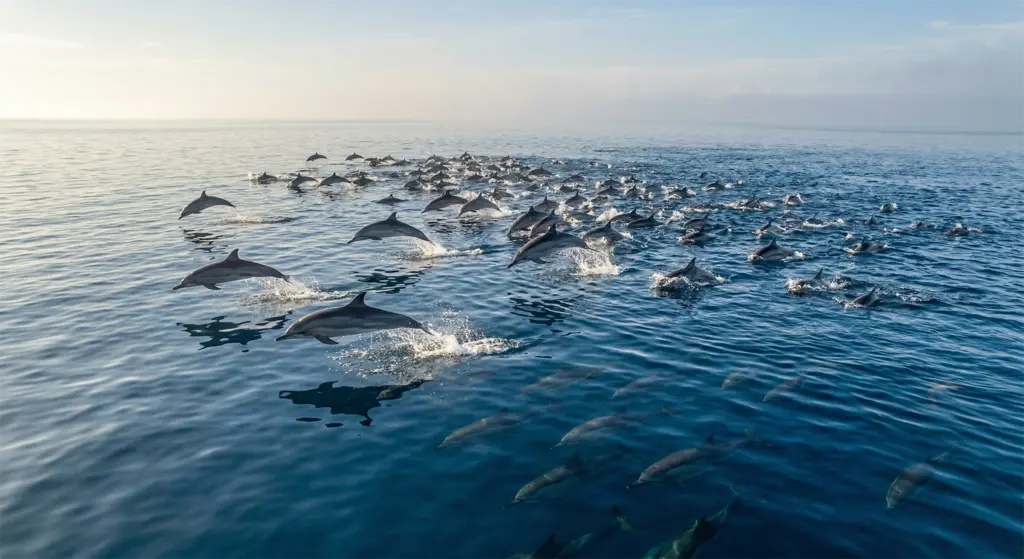
The Taon Strait, the body of water between Negros Island and Cebu, is one of the most productive cetacean habitats in the Philippines. The strait is relatively deep for its width, reaching more than 400 meters in places, and the combination of depth, nutrient upwelling, and protected geography creates conditions that support a year-round rather than seasonal cetacean population.
The most commonly encountered species in the strait are spinner dolphins, which appear in large pods, sometimes hundreds of animals, and are reliably found in the early morning before the wind picks up. Dwarf sperm whales and pygmy sperm whales are present but more cryptic; they do not surface dramatically and require calm water and patient searching to spot them. Risso’s dolphins, bottlenose dolphins, and pantropical spotted dolphins are also recorded regularly. Humpback whales occur in the strait, but are not common enough to be a reliable target.
Pygmy killer whales, an unusual species that, despite the name, is a dolphin rather than a whale, have been documented in the Taon Strait and are occasionally seen by whale-watching operators working the area. Their presence, along with the broader cetacean diversity in the strait, reflects the depth and productivity of the water column rather than any single feature of the coastline.
Whale and dolphin watching trips are operated from both Dumaguete and Bais City, on the eastern coast of Negros Oriental. The Bais City operations, which depart from Manjuyod Sandbar, a white sandbar that emerges from the sea at low tide, are among the better-known in the Philippines. Conditions in the strait can deteriorate quickly when the wind picks up, so morning departures are strongly recommended, and weather flexibility in trip planning is essential.
The Coral System — What the Reef Contains
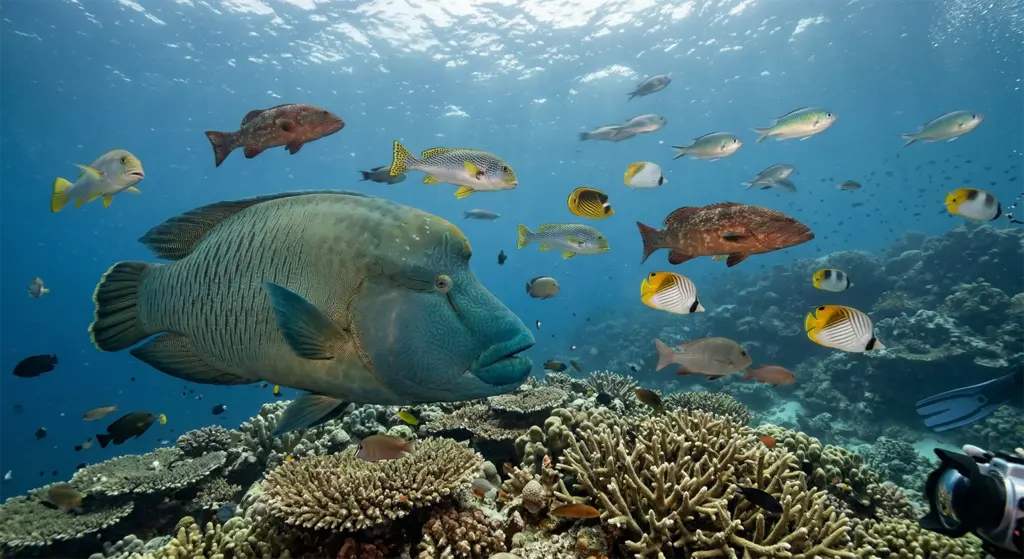
Beyond Apo Island and Dauin, the reef system around Negros Island reflects its location in the Coral Triangle. The species count here is higher than most divers experience elsewhere. There are more species of coral, reef fish, and invertebrates per square meter than outside the Coral Triangle.
Parrotfish are abundant across the reef system and play a key role in reef maintenance by grazing algae. These fish digest coral and excrete calcium carbonate as fine sand, creating much of the white sand on tropical beaches. Groupers have returned in large numbers to the protected areas. Napoleon wrasse, one of the largest reef fish, appears at well-protected sites. This species is heavily targeted by the live fish trade elsewhere in the Philippines. Lionfish and their relatives hover in reef crevices confidently. Their spines make them untouchable, so they do not need to hide.
Seagrass beds along the Negros Oriental coast support dugongs, large marine mammals that graze on seagrass. Dugongs are increasingly rare across the Philippines. Their presence indicates healthy seagrass systems, as they cannot survive without grass or in disturbed waters. Intact mangrove systems along the coast serve as nursery habitats. These mangroves help juvenile reef fish grow before populating offshore reef structures.
Conservation — What Is Working and What Remains at Risk
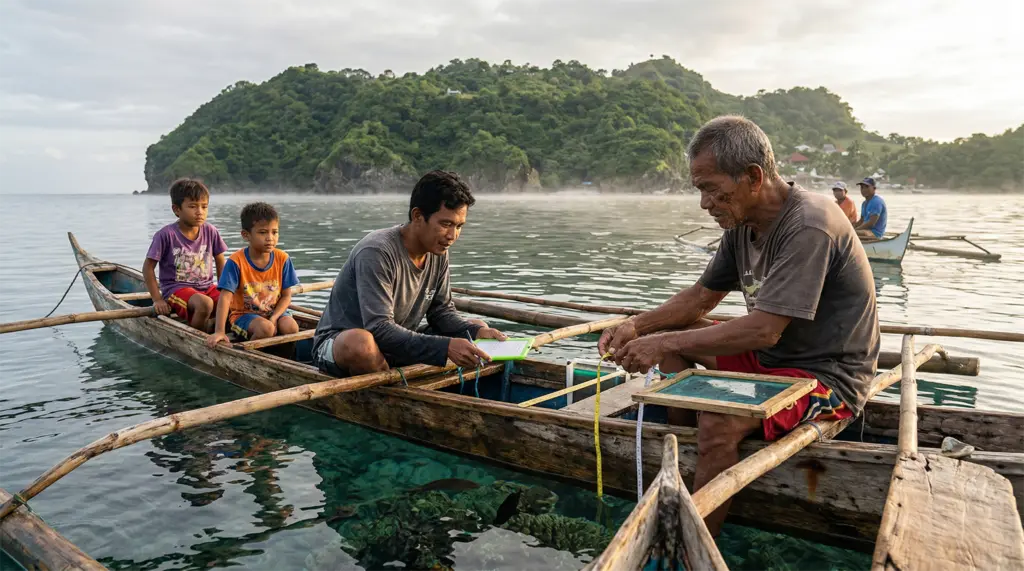
The Apo Island model, community management, no-take zones, peer enforcement, and documented recovery have been replicated at more than a thousand sites across the Philippines and cited in marine conservation literature worldwide as evidence that reef recovery is possible when fishing pressure is genuinely removed. This is worth stating directly: not simulated, not theorized, but demonstrated at Apo Island with decades of follow-up data. The reef that was in serious decline in the 1970s is now one of the most intact in the Philippines.
The challenges that remain are real and not underestimated by the conservation community working in these waters. Climate change is driving coral bleaching events that affect even well-protected reefs when sea surface temperatures exceed the thermal tolerance of coral symbionts. The 1998 El Niño event caused bleaching on Apo Island, which took years to recover from. More frequent bleaching events, driven by warming ocean temperatures, represent a structural threat to reef systems that community management alone cannot address.
Illegal fishing using destructive methods continues in some areas outside the protected zones, particularly when enforcement resources are stretched. Plastic pollution from coastal communities and river inputs affects water quality and is visible on dive sites that would otherwise be pristine. Crown-of-thorns sea stars, which periodically break out and consume large areas of living coral when fish populations that prey on their juveniles are reduced, require active management at some sites.
The Outcome, So Far
The overall picture in Negros Oriental’s marine environment is not one of crisis, but it is not one of comfort either. The marine protected area system works where it has community buy-in and consistent enforcement. The dive tourism economy provides economic incentives for conservation that align the interests of operators, guides, and local communities with reef health in a way that fishing alone does not. Apo Island generates more economic value per hectare of reef through dive tourism than it ever did through fishing, and the fishing in the buffer zones around it is better than it was when the reef was degraded. This is the conservation argument that works in practice rather than in principle.
Practical Guide — Diving and Snorkeling Negros Oriental
Dumaguete City is the base for almost all dive operations in Negros Oriental. The city has a well-developed dive industry with operators ranging from budget-friendly to full-service technical diving facilities. Most operators run regular trips to both Dauin’s muck sites and Apo Island, and several are based in Dauin itself, which reduces transit time to the dive sites.
The best diving conditions in Negros Oriental generally run from March through June, when visibility is highest, and seas are calm. October through December can bring rougher conditions due to the northeast monsoon, particularly affecting Apo Island crossings. The Dauin muck sites are more sheltered and often diveable when conditions on Apo Island are poor. Year-round diving is possible, but weather flexibility in your schedule and a few extra days to wait out bad conditions significantly improve the quality of the experience.
A dive certification is required for all scuba diving; most operators offer courses for beginners through the standard international agencies (PADI, SSI). A rescue diver or divemaster-level of experience is recommended for the stronger currents on the western wall of Apo Island. Snorkeling at Apo Island is productive without any certification and is a genuine option for non-divers traveling with dive partners.
Marine park entry fees apply at Apo Island. Respect the no-touch policy on the reef: coral that takes decades to grow can be broken in seconds by an errant fin or an inexperienced diver trying to steady themselves on the reef wall. Buoyancy control matters here not as an aesthetic preference but as a direct conservation act. The reef at Apo Island has been recovering for forty years. The divers who visit it are benefiting from that investment.
A Note on Oslob Whale Sharks
Oslob, in southern Cebu, is visible across the Taon Strait from the Negros Oriental coast. It is a common day-trip destination from Dumaguete by ferry. The boat crossing takes about an hour from Tampi Port. Whale sharks are gathered by local fishermen in Oslob, who feed them to keep them near the coast. This makes encounters essentially guaranteed for paying visitors. Interactions with Whale Sharks are closely regulated regarding visitor behavior. However, the practice of feeding wild whale sharks to attract tourism is controversial within the marine conservation community. It raises concerns about behavioral changes in the animals, potential nutritional impacts, and boat-strike risks due to the high vessel traffic at the site.
Whether to visit Oslob is a decision for each traveler to make with awareness of the debate. The whale sharks are real, and encounters are genuinely extraordinary in physical scale. The conservation concerns are also real and well-documented. The dive community around Dumaguete tends to have strong opinions in both directions. What is clear is that Oslob is a Cebu destination rather than a Negros Island one; the whale sharks aggregate on the Cebu side of the strait, and a visit there is a separate day trip rather than part of the Negros Oriental marine experience.
The Negros Island Series — What Follows This Article
Negros Island is one of those destinations that resists a single article. The island is large enough, varied enough, and historically layered enough that a traveler who reads only one piece about it before arriving will miss the larger picture, and the larger picture is worth having before the flight lands.
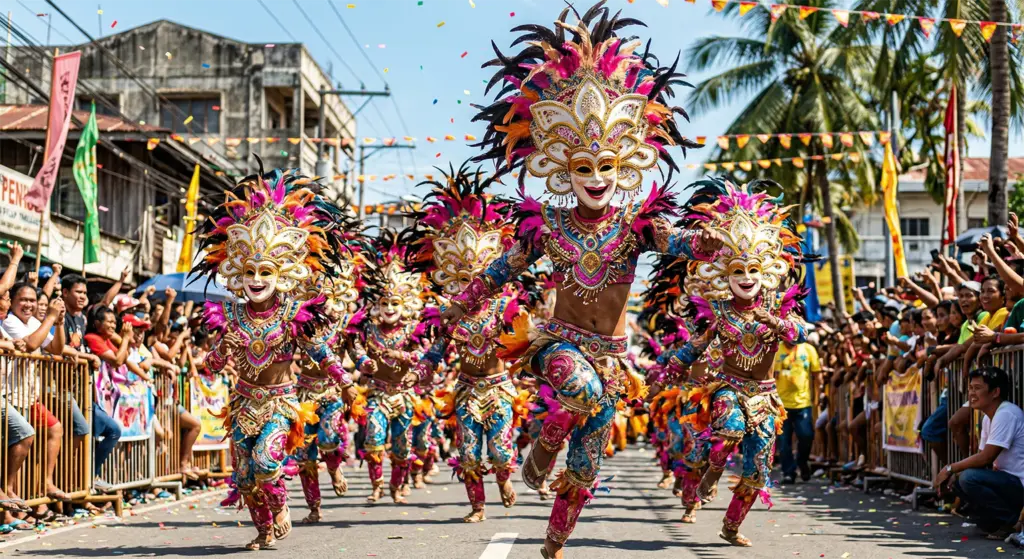
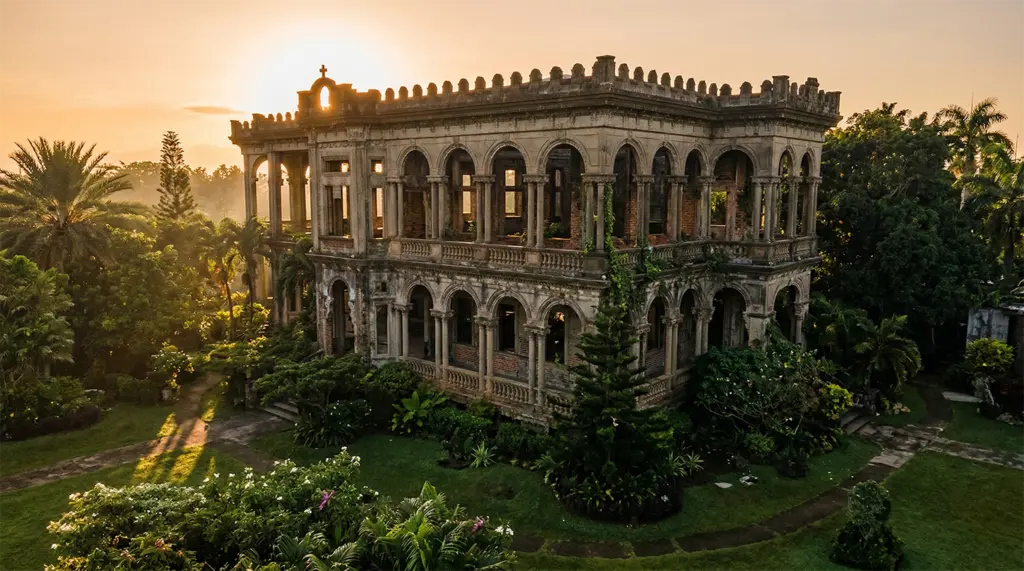
This article is part of a five-piece series covering Negros Island in full. The history article traces everything from the pre-colonial Ati and Bukidnon communities through the Spanish sugar economy. It extends the exploration beyond the 1898 Cantonal Republic of Negros, the American chapter, and the 1980s sugar crisis. It’s noteworthy that the sugar crisis gave rise to the MassKara Festival. Having this context makes the hacienda architecture, the festival culture, and the social character. This applies equally to Bacolod and Dumaguete, making each considerably more readable on the ground. The natural wonders article covers Mt. Kanlaon and the broader volcanic landscape. It also pulls in the Mabinay cave systems, the waterfalls of Negros Oriental, the Twin Lakes of Balinsasayao, and the endemic species of the North Negros Natural Park.
The culture article examines the language divide between the two provinces. It covers the full story of MassKara and Buglasan, the food traditions of both coasts, and the ancestral home architecture of Silay City. It will also address the literary culture that Silliman University has sustained in Dumaguete for more than a century. The ocean and marine life article (this article) delves into Apo Island’s community conservation story. It will also address the muck-diving coast at Dauin, and the cetacean corridors of the Taon Strait. The overview article is the practical planning piece. It will help with the two-province decision, how to get there and between them, when to visit, and which province to base yourself in, depending on what you are looking for.
The Takeaway
Read together, the five articles cover the island the way it deserves to be covered. Read individually, each one stands on its own. Either approach works, but the traveler who arrives knowing the history, ecology, culture, and marine environment will find that Negros Island gives back more than it asks.
Frequently Asked Questions About Diving and Marine Life off Negros Island
Q1: How do I get to Apo Island from Dumaguete?
The standard route to Apo Island is from Malatapay market, approximately 30 kilometers south of Dumaguete in the municipality of Zamboanguita. Tricycles, jeepneys, and private vehicles can reach Malatapay from Dumaguete in about an hour. From Malatapay, outrigger boats (bangkas) make the crossing to Apo Island in 30–45 minutes, depending on sea conditions. Most dive operators in Dumaguete and Dauin arrange transport as part of their day-trip packages, which is the simplest option for most visitors. An alternative approach is via Dauin, where some operators run their own boats directly to the island. Marine park entry fees are collected on arrival at Apo Island. Overnight accommodation is available on the island, but books quickly; contact Apo Island accommodation providers directly and well in advance.
Q2: What is muck diving, and is Dauin worth visiting if I am not an expert diver?
Muck diving refers to diving in sandy, silty, or rubble seafloor environments — as opposed to coral reef diving — specifically to find the unusual, cryptic species that live in these habitats. Dauin’s black volcanic sand is one of the best-known muck diving environments in Southeast Asia. A good local guide is essential for muck diving because the target species are masters of camouflage and often invisible until pointed out. Intermediate divers — with around 25–50 dives and decent buoyancy control — will get as much out of Dauin as experienced divers, as long as they have a guide. The dives themselves are generally shallow (12–20 meters), making them comfortable for recreational divers. Snorkeling at Dauin is less productive than at Apo Island because the target species are on the sandy bottom rather than on shallow coral.
Q3: When is the best time to dive in Negros Oriental?
March through June offers the best diving conditions in Negros Oriental: highest visibility, calmest seas, and the most reliable Apo Island crossing conditions. April and May are generally considered the peak months for underwater visibility. The Dauin muck sites are diveable year-round as they are sheltered from most weather patterns. October through December can bring rougher seas due to the northeast monsoon, which can particularly affect access to Apo Island. July through September is diveable but with variable conditions. Whale and dolphin watching in the Taon Strait is best in calm weather, which favors the March–June window. Building a few extra flexible days into any Negros Oriental diving itinerary is strongly recommended.
Q4: Are there whale sharks near Negros Island?
Whale sharks are not a reliable sighting in Negros Island’s own waters. The whale sharks that are frequently encountered in the region are at Oslob, in southern Cebu, across the Taon Strait from Negros Oriental. Oslob is accessible as a day trip from Dumaguete (approximately one hour by bangka from Tampi port). The Oslob encounters are made possible by local fishermen who feed the whale sharks to attract them and keep them near the coast, a practice that is controversial in the marine conservation community. Whale sharks are occasionally sighted in open water in the Taon Strait, but these are chance encounters rather than reliable dive site features. The more consistently extraordinary marine experiences near Negros Island are the reef diving at Apo Island and the muck diving at Dauin.
Q5: What are the sea turtles at Apo Island like, and is it ethical to dive there?
Green sea turtles are a near-certain sighting at Apo Island, particularly in the sanctuary zone on the eastern side of the island. The population has grown significantly since the marine sanctuary was established in the early 1980s, and the turtles are accustomed to divers to the point that extended, natural encounters can occur without disturbance. The correct approach is to observe without touching, without chasing, and without blocking their path to the surface to breathe. Most Apo Island dive operators brief their clients on turtle interaction protocols as standard. Diving at Apo Island is not only ethical but actively supports the conservation model: the marine park entry fees and dive operator revenues fund the community enforcement and monitoring that keep the sanctuary functioning. The reef has been recovering for forty years because of the model; supporting it with responsible dive tourism continues that trajectory.
SUGGESTIONS FOR LODGING AND TRAVEL
Lodging is widely available throughout the Philippines. However, you may want to get some assistance booking tours to some of the Philippines’ attractions. I’ve provided a few local agencies that we’ve found to be very good for setting up tours. For transparency: We may earn a commission when you click on certain links in this article, but this doesn’t influence our editorial standards. We only recommend services that we genuinely believe will enhance your travel experiences. This will not cost you anything, and I can continue to support this site through these links.
- For Hotel Accommodations in the Manila area, I highly recommend The Manila Hotel. It is centrally located and within walking distance of Rizal Park and Intramuros. Many other attractions are easily accessible from there as well. I have provided a search box below for you to find hotels (click on “Stays” at the top) or flights (click on “Flights” at the top). This tool will provide me with an affiliate commission (at no cost to you).
Local Travel & Lodging Assistance
- Guide to the Philippines: This site specializes in tours throughout the Philippines. They seem to have some flexibility in scheduling, and pricing is very competitive.
- Kapwa Travel is a travel company focused on the Philippines. It specializes in customizing trips to meet customers’ needs.
- Tourismo Filipino is a well-established company that has operated for over 40 years. It focuses on tailoring tours to meet customers’ needs.
- Tropical Experience Travel Services – Tours of the Philippines: This company offers a range of tour packages, allowing you to tailor your trip to your preferences.
Specific Lodging Suggestions
- Big BamBoo Beach Resort Sipalay – This is a moderately priced resort in Sipalay, Negros Oriental, with great beach access.
- Hotel Dumaguete – A very nice hotel with good reviews and reasonably priced.
- Rovira Suites in Dumaguete – A very nice hotel with very good reviews and a very reasonable price.
- Citadines Bacolod City – A highly rated and popular hotel in the Bacolod area. A little pricier than some, but worth the cost.
- Stonehill Suites – Another highly rated hotel in the Bacolod area. This one is a little more reasonably priced.
- Circle Inn – Hotel & Suites – This hotel falls into the budget-friendly category. They, too, are well-rated and provide good, comfortable lodging.
Lastly, we recommend booking international travel flights through established organizations rather than a local travel agent in the Philippines. I recommend Expedia.com (see the box below), the site I use to book my international travel. I have provided a search box below for you to use to search for flights (click on “Flights” at the top) or Hotels (click on “Stays” at the top). This tool will provide me with an affiliate commission (at no cost to you).