The Philippines contains more than 7,000 islands. Most visitors reach three or four on a single trip, which means the first decision is not where to stay but where to begin. The wrong starting point is trying to cover everything. The right one is understanding what each major destination actually offers and matching that against what you are looking for.
This guide covers the islands that consistently deliver for travelers: Palawan for raw natural scenery, Boracay for the classic beach experience, Siargao for surf and island character, Bohol for a slower pace and distinctive landscapes, and the Cebu cluster for diving and urban access. It also covers Batanes in the far north, which operates on entirely different terms from the rest of the country. Each section describes what makes the destination worth visiting, who it suits, and what to be aware of before going.
Palawan: The Last Frontier
Palawan occupies the western edge of the Philippine archipelago, running roughly 450 kilometers from north to south between the South China Sea and the Sulu Sea. It has the lowest population density of any large Philippine province and the most intact forest cover. The combination produces landscapes found almost nowhere else in the country.
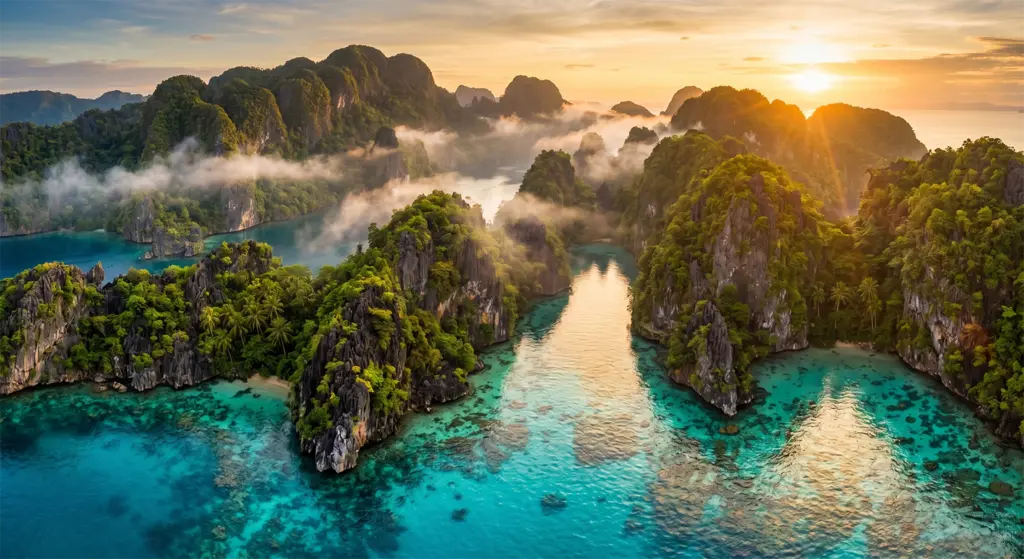
El Nido, in the north, is built around a bay surrounded by sheer limestone karst formations. The island-hopping tours here move between hidden lagoons, white sand beaches enclosed by cliff walls, and snorkeling grounds with high coral cover. The scenery is genuinely arresting. It draws large crowds in peak season, which is worth factoring into the timing.
Coron, on the neighboring island of Busuanga, is the better destination for divers. The bay holds more than a dozen Japanese shipwrecks from a 1944 American air strike, many now colonized by coral and accessible to recreational divers. Kayangan Lake, a saltwater lake ringed by limestone, is the most photographed inland site in the province.
Puerto Princesa, the provincial capital, is the entry point for most Palawan visitors. The Puerto Princesa Subterranean River is a UNESCO World Heritage Site and one of the longest navigable underground rivers in the world. Day trips from the city are straightforward and well-organized.
Palawan rewards visitors who allow time for it. A rushed three-day itinerary that tries to cover El Nido, Coron, and Puerto Princesa will not do any of them justice. One area at a time, with at least four to five days, is the right approach.
Boracay: The Classic Beach Destination
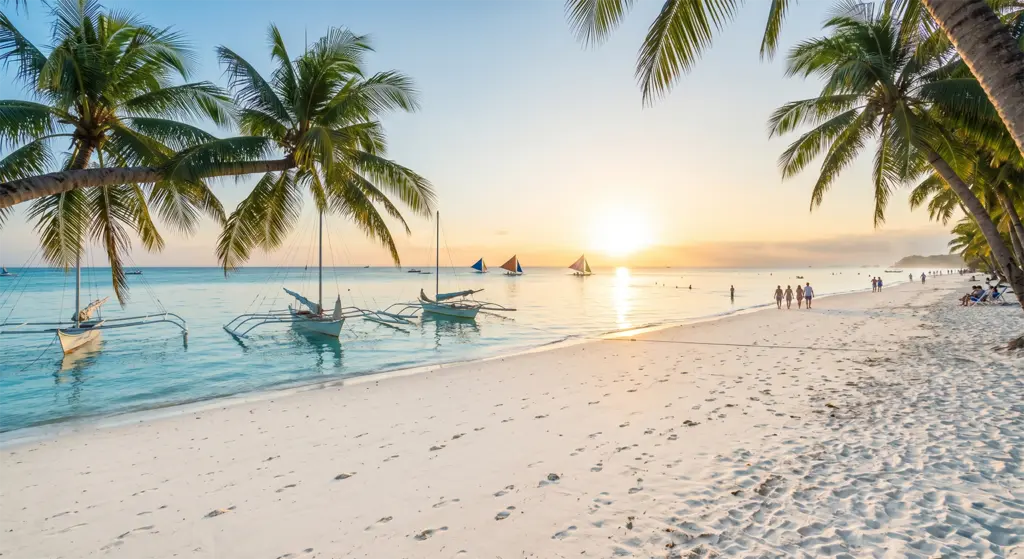
Boracay is 10 kilometers long and has been one of the most visited islands in Southeast Asia for more than three decades. White Beach, on the western shore, is the island’s center of gravity: a four-kilometer arc of fine white sand with restaurants, beach bars, and water sports operators running its full length.
In 2018, the Philippine government closed Boracay for six months for environmental rehabilitation. The closure addressed overcrowding, untreated sewage, and illegal construction that had degraded the beach and reef conditions. The island that reopened was noticeably cleaner. Visitor numbers and environmental standards are now more actively managed than before the closure.
Boracay works best for travelers who want a straightforward beach holiday with good food, reliable infrastructure, and a range of water sports available. Kitesurfing off Bulabog Beach on the eastern shore is world-class from November through April, when the Amihan (northeast) winds are consistent. The island is small enough to walk from one side to the other in under an hour, which keeps logistics simple.
The northwest monsoon from June through October brings stronger swells and rougher conditions on White Beach. The better experience is during the dry northeast season, from November through May.
Siargao: Surf, Lagoons, and Island Character

Siargao sits in the Philippine Sea off the northeast coast of Mindanao. Its reputation internationally rests on Cloud 9, a right-hand reef break that produces hollow, fast-moving waves and has hosted major surfing competitions since the 1990s. The surfing season runs from August through November, when swells from the Pacific are largest and most consistent.
The island has more to offer than surf. Sugba Lagoon, reached by a 45-minute boat ride through mangrove channels, is a large protected lagoon with clear water and minimal development. The island-hopping routes south of the main town of General Luna pass through small islands with sandbars, pools, and a relaxed pace that is harder to find in the more developed parts of the Visayas.
Siargao has grown significantly in the past decade. The typhoon damage from Typhoon Odette in December 2021 was severe, and recovery has been ongoing. Most tourist infrastructure has been rebuilt or improved, but it is worth checking current conditions before traveling if specific facilities matter.
The island suits travelers who prefer a less polished experience. The road infrastructure is basic, power can be unreliable in outlying areas, and the best version of Siargao involves going at the island’s pace rather than imposing a demanding itinerary.
Bohol: Chocolate Hills, Tarsiers, and Panglao
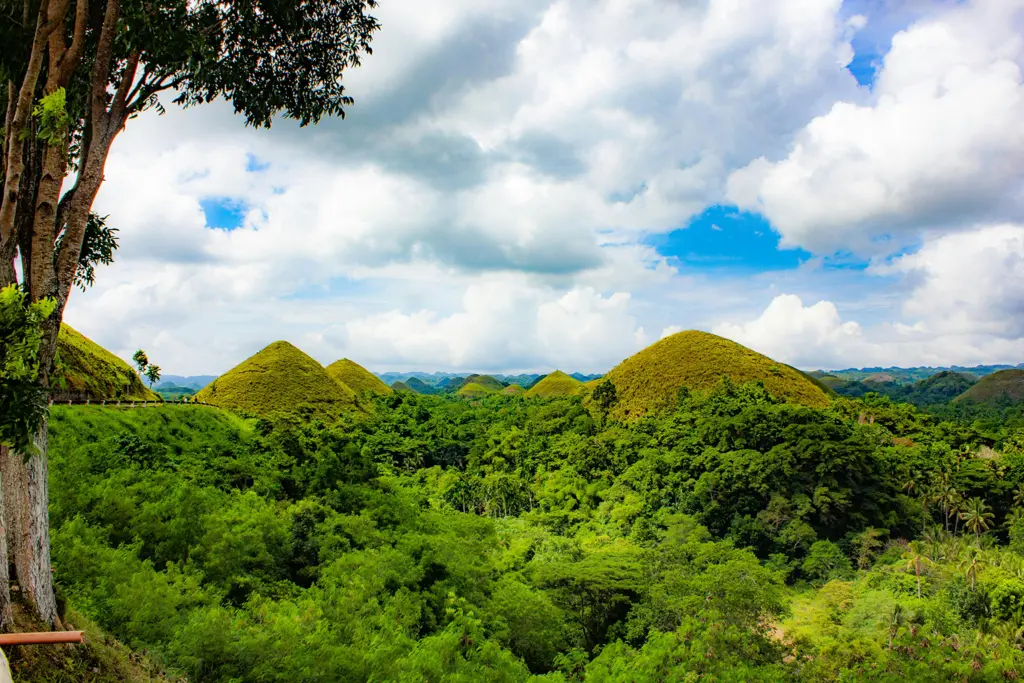
Bohol is a compact island in Central Visayas, easily reached from Cebu City by fast ferry in two hours. It combines two very different types of attraction: a distinctive interior landscape and a well-developed diving destination off its southwestern peninsula.
The Chocolate Hills are the island’s signature feature. More than 1,200 near-symmetrical conical hills cover roughly 50 square kilometers of the Bohol interior. The hills are covered in grass that turns brown in the dry season, giving them the name. The geological origin is debated, but the most widely accepted explanation is that they are weathered marine limestone formations from a period when the area was below sea level.
The Philippine tarsier is found in Bohol in numbers large enough to support dedicated sanctuaries. These are among the smallest primates in the world, nocturnal and fragile. The Tarsier Sanctuary near Corella takes a conservation-first approach, which produces a better experience than the roadside tarsier operations that still exist elsewhere on the island.
Panglao Island, connected to Bohol by a bridge, is the diving hub. Balicasag Island, a 20-minute boat ride from Panglao, has a marine sanctuary with high fish density, sea turtles, and walls that drop to significant depths. Alona Beach on Panglao is the main tourist strip, with a dense concentration of dive operators and accommodation.
Cebu and Its Neighbor Islands
Cebu City is the most accessible entry point into the Visayas for international travelers. Mactan-Cebu International Airport offers direct flights from several Asian hubs, making Cebu a practical starting point for a multi-island trip. The city itself has good food, strong historical sites, and efficient transportation to the rest of the island.
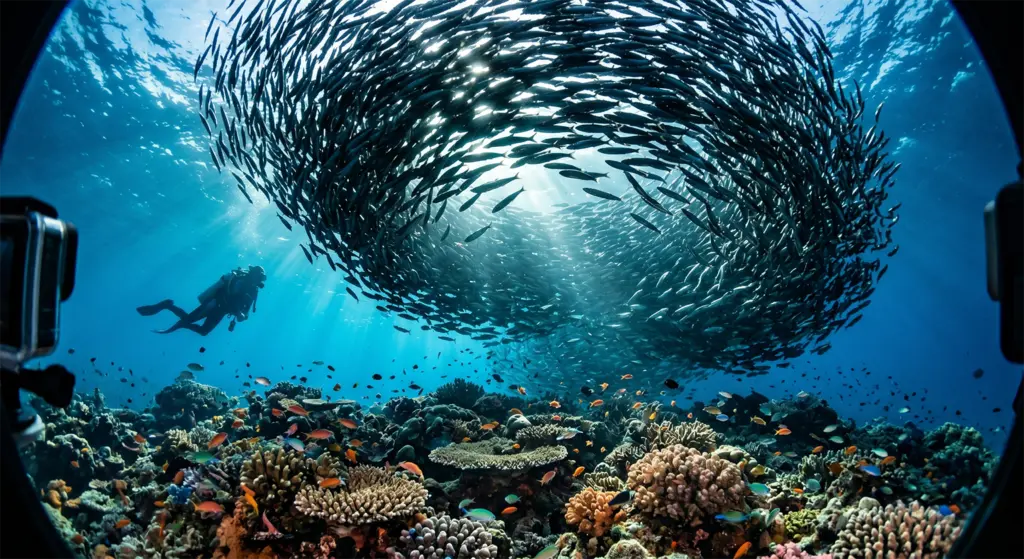
The island’s diving reputation comes from two main sites. Moalboal, on the southwestern coast, is known for a resident school of tens of millions of sardines that moves as a single shifting mass just off the beach reef. Sea turtles are reliably encountered at the same site. Malapascua Island, off the northern tip of Cebu, is the primary destination for seeing thresher sharks, which visit a cleaning station at Monad Shoal in the early morning hours.
Oslob, in southern Cebu, offers whale shark encounters through a feeding operation that draws large numbers of visitors. The conservation debate around this site is ongoing. The whale sharks are conditioned to the feeding location rather than encountered in open water, which affects the quality of the experience and raises documented concerns about the animals’ natural feeding behavior. Travelers should factor this into their decision.
The island of Bantayan, off the northwest coast of Cebu, offers a quieter alternative to the more developed beach destinations. Fine white sand, calm water, and a slower pace make it a good option for travelers who find Boracay too busy.
Batanes: The Philippines at Its Most Different
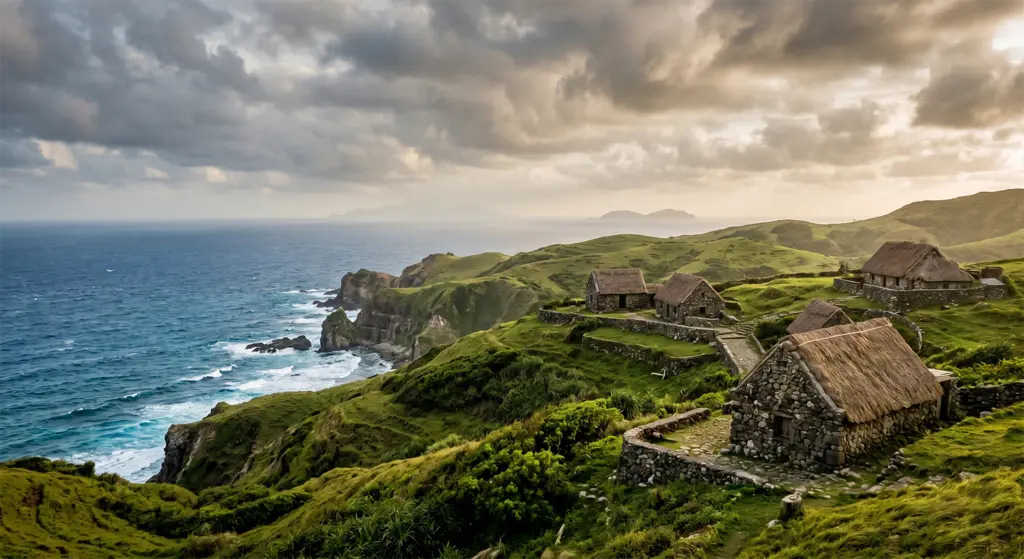
Batanes is the northernmost province of the Philippines, a small group of islands closer to Taiwan than to Manila. The landscape, culture, and climate bear no resemblance to the rest of the country. Rolling green hills drop to the Pacific Ocean on one side and the South China Sea on the other. The Ivatan people, the indigenous inhabitants, build stone houses with thick walls and grass roofs, designed to withstand the typhoons that regularly cross the islands.
Batan Island, where the capital, Basco, is located, has no mass-tourism infrastructure and limited accommodation. The appeal is precise. The landscapes, traditional architecture, fishing culture, and cool climate (by Philippine standards) create a travel experience unlike anything found in the central or southern Philippines.
Getting to Batanes requires a flight from Manila, and services can be disrupted by weather. The best months are March through May, when typhoon activity is lowest. It is not a destination for travelers who need reliable schedules or extensive options. It is well-suited for those willing to accept those conditions in exchange for a genuinely different experience.
Planning Your Philippines Island Trip
The dry season runs from November through May across most of the Philippines, with some regional variation. February through April is the most reliable window for the widest range of destinations. The southwest monsoon from June through October brings heavier rain and rougher seas, particularly affecting Palawan and western-facing coasts. Siargao’s surf season runs counter to this pattern, peaking from August through November.
Inter-island travel in the Philippines is primarily by domestic flight or fast ferry. Cebu Pacific, Philippine Airlines, and AirAsia cover the main routes. Fast ferries connect Cebu to Bohol, Negros, and Leyte in under three hours. Planning routes that minimize backtracking to Manila saves significant time. A Visayas loop, for example, can move efficiently from Cebu to Bohol to Negros to Cebu without retracing steps.
Budget allocation varies significantly by island. Palawan and Siargao tend to be more expensive than destinations in the Visayas due to their distance from supply chains and the cost of motorized island-hopping boats. Boracay’s infrastructure supports a wide range of prices. Batanes is expensive relative to what is available because supply logistics to the remote north are costly.
More on the Philippine Islands
This site covers several of the destinations described above in dedicated articles. The Negros Island series examines one of the most underrated island destinations in the Visayas, spanning five pieces that cover history, natural wonders, culture, marine life, and practical planning. Separate articles address Cebu’s underwater environment, the hidden beaches of Cebu and Bohol, island hopping in the lesser-known Visayan islands, and the broader ocean and marine life of the region. Each article covers its subject in enough depth to read as a standalone guide.
Frequently Asked Questions About the Philippines Island Travel
1. What is the best time of year to visit the Philippine islands?
February through May is the most reliable window for most destinations. This period falls within the dry season across most of the archipelago, with calm seas, low rainfall, and good visibility for diving and snorkeling. Boracay is at its best from November through April. Siargao’s surf season peaks from August through November, which overlaps with the typhoon season for other islands. Batanes is best visited from March through May. Checking the specific weather pattern for your destination before booking is always worth doing.
2. How many islands should I try to visit on a single trip?
Two or three island destinations are a comfortable target for a two-week trip. Three allows a day of travel between each time to settle in, and enough days at each location to go beyond the surface. Four or more islands in two weeks tends to make for a trip more about logistics than experience. The Philippines rewards depth over coverage. One week in Palawan, followed by one week in the Visayas, is a well-used two-week itinerary.
3. Is it safe to travel between Philippine islands by ferry?
Fast ferries operated by the major companies are generally reliable and safe on established routes. The Cebu-Bohol, Cebu-Negros, and Cebu-Dumaguete crossings run multiple times daily on modern vessels. Weather delays and cancellations are common during the typhoon season and during strong monsoon swells. For longer or more remote crossings, checking vessel safety ratings and departure port reputations is worth the effort. RORO (roll-on, roll-off) ferries and outrigger bancas on shorter routes vary considerably in quality.
4. Which Philippine island is best for first-time visitors?
Cebu is the most practical starting point for first-time visitors. The international airport, the ferry connections to Bohol and Negros, the range of accommodation, and the concentration of things to do in a compact area make it easier to navigate than Palawan or Siargao for someone unfamiliar with Philippine travel logistics. Boracay is the best choice if the primary goal is a beach holiday with minimal planning complexity. Palawan is the best choice if natural scenery is the priority and the visitor is comfortable with a more demanding travel experience.
5. Do I need to arrange tours in advance for destinations like El Nido or Coron?
For peak-season travel (December through March), advance booking of island-hopping tours in El Nido and diving tours in Coron is strongly recommended. Boat permits for El Nido’s most popular tours are limited per day, and tours fill quickly. Accommodation in both areas books out weeks ahead in high season. For shoulder season (May through July) and low-season travel, walk-in arrangements are usually possible, though advance booking still helps avoid uncertainty. Siargao and Bohol are generally easier to arrange on shorter notice than Palawan.
SUGGESTIONS FOR LODGING AND TRAVEL
Lodging is widely available throughout the Philippines. However, you may want to get some assistance booking tours to some of the Philippines’ attractions. I’ve provided a few local agencies that we’ve found to be very good for setting up tours. For transparency: We may earn a commission when you click on certain links in this article, but this doesn’t influence our editorial standards. We only recommend services that we genuinely believe will enhance your travel experiences. This will not cost you anything, and I can continue to support this site through these links.
- For Hotel Accommodations in the Manila area, I highly recommend The Manila Hotel. It is centrally located and within walking distance of Rizal Park and Intramuros. Many other attractions are easily accessible from there as well. I have provided a search box below for you to find hotels (click on “Stays” at the top) or flights (click on “Flights” at the top). This tool will provide me with an affiliate commission (at no cost to you).
Local Travel & Lodging Assistance
- Guide to the Philippines: This site specializes in tours throughout the Philippines. They seem to have some flexibility in scheduling, and pricing is very competitive.
- Kapwa Travel is a travel company focused on the Philippines. It specializes in customizing trips to meet customers’ needs.
- Tourismo Filipino is a well-established company that has operated for over 40 years. It focuses on tailoring tours to meet customers’ needs.
- Tropical Experience Travel Services – Tours of the Philippines: This company offers a range of tour packages, allowing you to tailor your trip to your preferences.
Lastly, we recommend booking international travel flights through established organizations rather than a local travel agent in the Philippines. I recommend Expedia.com (see the box below), the site I use to book my international travel. I have provided a search box below for you to use to search for flights (click on “Flights” at the top) or Hotels (click on “Stays” at the top). This tool will provide me with an affiliate commission (at no cost to you).