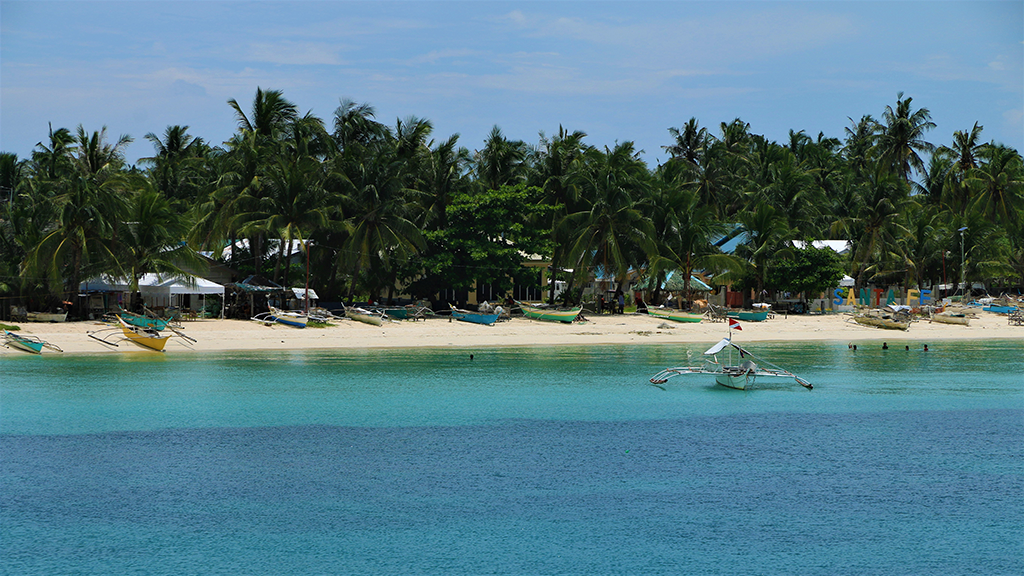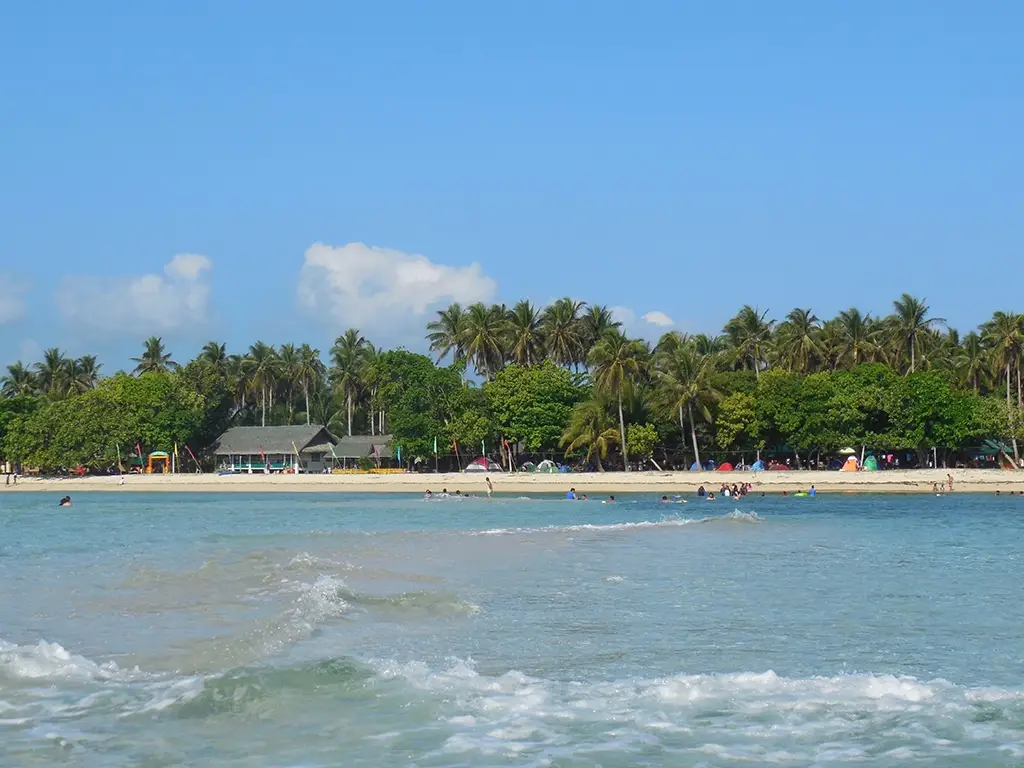
The Visayan Islands occupy the center of the Philippine archipelago. They cover three administrative regions: Western Visayas, Central Visayas, and Eastern Visayas. The major islands include Panay, Cebu, Bohol, Negros, Leyte, Samar, and Siquijor, along with hundreds of smaller islands and islets. The diversity within this one region is considerable. A diver, a history reader, a surfer, a person who wants a week on a white sand beach, and someone looking for a festival all find what they are looking for here, often without traveling more than a few hundred kilometers.
The ten destinations below represent the range. Some are well-known and well-developed. Others receive far fewer visitors than they deserve. All of them reward the traveler who arrives knowing something about what makes each one distinct.
1. Boracay
Boracay is a 10-kilometer island in Aklan province, Western Visayas. It has appeared on international best-beach lists for more than three decades. White Beach, on the island’s western shore, runs four kilometers and is the reason most visitors come. The sand is fine, the water calm, and the infrastructure is the most developed of any of the Philippine Islands.
In 2018, the Philippine government closed the island for six months for environmental rehabilitation. The problems that prompted the closure were real: untreated sewage draining into the beach, and illegal construction on the foreshore. In addition, the visitor numbers outpaced the island’s capacity. The closure addressed them. Boracay, which reopened, had cleaner water, a restored beach profile, and stricter management of visitor numbers and construction.
Bulabog Beach on the eastern shore is the kitesurfing hub. From November through April, the Amihan northeast winds create consistent conditions ideal for kitesurfing. This made Bulabog one of the recognized kitesurfing venues in Southeast Asia. Sunset sailing and water sports on the White Beach side round out the activity options. In addition, Boracay also offers a vibrant nightlife.
2. The Chocolate Hills, Bohol
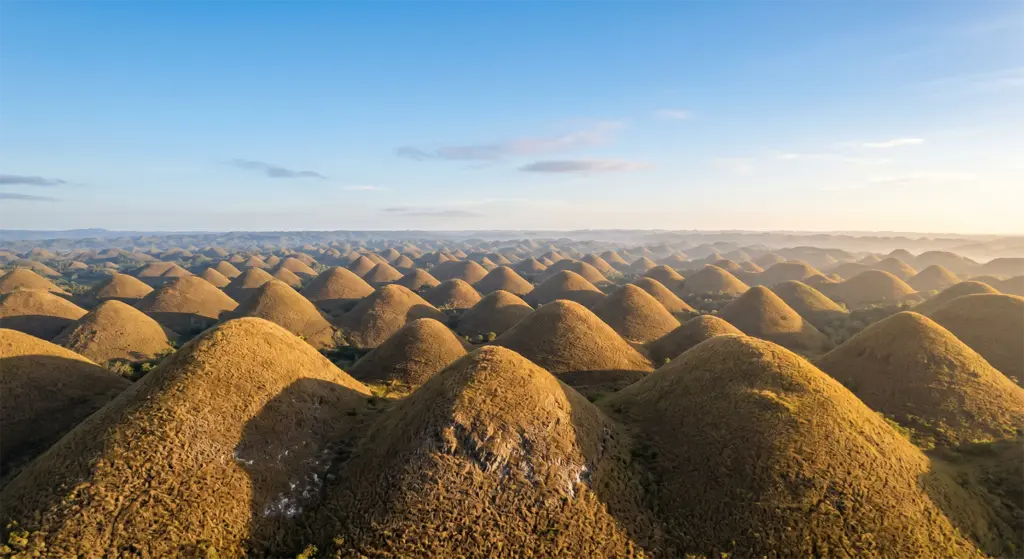
More than 1,200 near-symmetrical conical hills cover roughly 50 square kilometers of Bohol’s interior. They spread across the municipalities of Carmen, Batuan, and Sagbayan. The hills range from 30 to 50 meters in height and are composed of marine limestone. They have been shaped by millions of years of rainfall and erosion. Their near-identical proportions remain unexplained by any single geological model.
The name comes from the dry season, when the grass covering the hills turns from green to brown. In the wet season, the same hills are uniformly green and less striking against the landscape. The best time to visit for the classic appearance is February through May. The main viewing complex at Carmen has an elevated observation deck. In addition, the Sagbayan Peak site offers a wider panoramic view and is less crowded.
The local origin myth tells of two giants who hurled rocks and boulders at each other for days. They then left without cleaning up the battlefield. The story is a better company on the observation deck than the geological explanation. However, the geology is genuinely interesting on its own terms.
3. Oslob, Cebu
Oslob is a municipality on the southern tip of Cebu where whale shark encounters have been offered since 2011. Local fishermen began feeding the sharks to keep them near the shore, and the operation grew into one of the most-visited marine tourism sites in the Philippines. Daily visitor numbers are capped, and guidelines require swimmers to keep a prescribed distance from the animals.
The conservation debate around Oslob has been ongoing for years. The whale sharks here are conditioned to the feeding location and interact with visitors as part of a managed operation. This is different from a wild open-water encounter. Researchers have documented changes in the sharks’ natural behavior and feeding patterns as a result of the operation. Travelers should weigh this before deciding whether to participate. The encounter is close and visually striking. The question of what it costs the animals remains unresolved.
For those who want a whale shark encounter closer to natural conditions, Donsol in Sorsogon (Luzon) offers spotter-guided open-water swims during the seasonal aggregation from November through June. That option requires more planning, but the difference in the experience is significant.
4. Apo Island, Negros Oriental
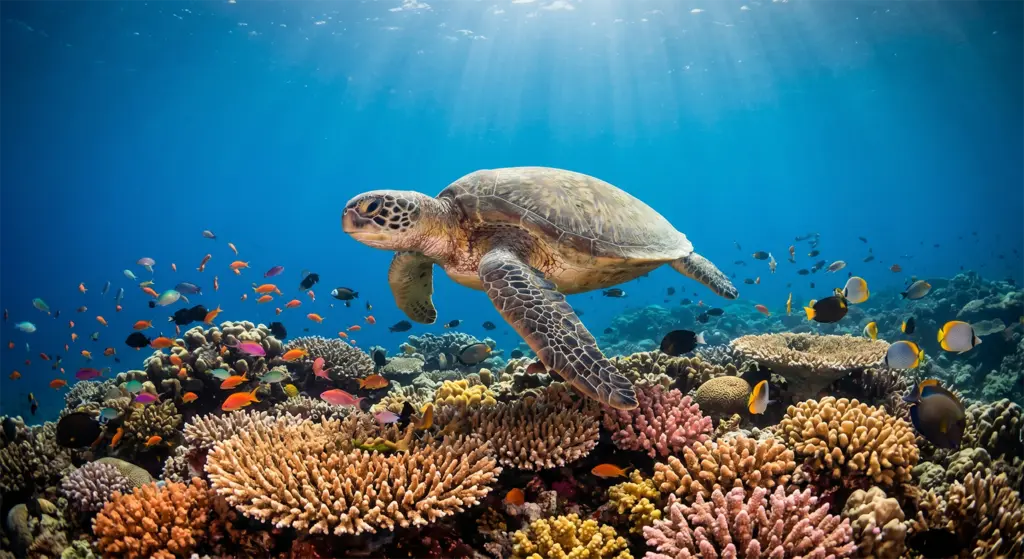
Apo Island is a small volcanic island about 30 kilometers south of Dumaguete, accessible by outrigger from Malatapay market in roughly 30 minutes. The community-managed marine sanctuary established in the early 1980s, developed with support from Silliman University, has produced one of the most-documented cases of reef recovery in the Philippines.
The no-take zone mechanism is straightforward: a portion of the reef is fully protected, fish populations within it recover and grow, and spillover into the adjacent fishing grounds increases catches for the local community. Fish density at Apo Island is consistently documented as among the highest in the Visayas. Green sea turtles have returned to nest on the island’s beaches. The reef structure ranges from shallow gardens accessible to snorkelers to wall dives with current and pelagic species.
Apo Island works as a day trip from Dumaguete. Overnight stays are available in basic accommodation on the island for divers who want morning dives before the day trip boats arrive.
5. Kalanggaman Island, Leyte
Kalanggaman Island sits off the coast of Palompon in Leyte and has become one of the most photographed sandbar destinations in the Philippines. Two long sandbars extend from either end of the island into clear shallow water. At low tide, they stretch to their most dramatic, and the contrast between the white sand, the turquoise shallows, and the deeper blue beyond is the image most often seen in Visayas travel photography.
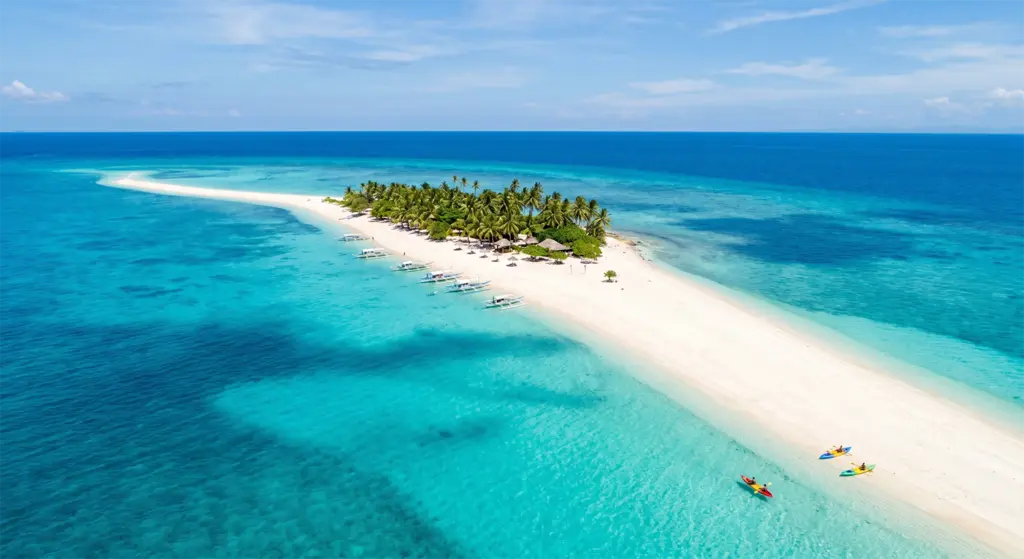
Local authorities cap daily visitor numbers to protect the fragile sandbar environment. There is no permanent accommodation on the island; Kalanggaman is a day trip destination. The crossing from Palompon takes about 45 minutes by motorized outrigger. Most visitors arrive in Palompon by bus or car from Cebu City, then take a boat out to the island.
The snorkeling around Kalanggaman is good, but secondary to the sandbar experience for most visitors. Bring your own food and water, as facilities on the island are limited to basic huts and comfort rooms.
6. Malapascua Island, Cebu
Malapascua is a small island, roughly 2.4 kilometers long, at the northern tip of Cebu, reachable by outrigger from Maya Port in about 30 minutes. It is one of the few places in the world where divers can reliably encounter thresher sharks. The sharks visit Monad Shoal, an underwater plateau about eight meters below the surface, to be cleaned by smaller fish. They appear most consistently in the early morning hours before the sun rises high.
The dive requires an early start. Boats leave before dawn to reach Monad Shoal at the right time. The thresher shark is distinctive: a long scythe-like upper tail lobe that can equal the length of the shark’s body. Watching one emerge from the blue below a cleaning station is a specific experience that draws divers from every continent. It is not replicable at most other destinations.
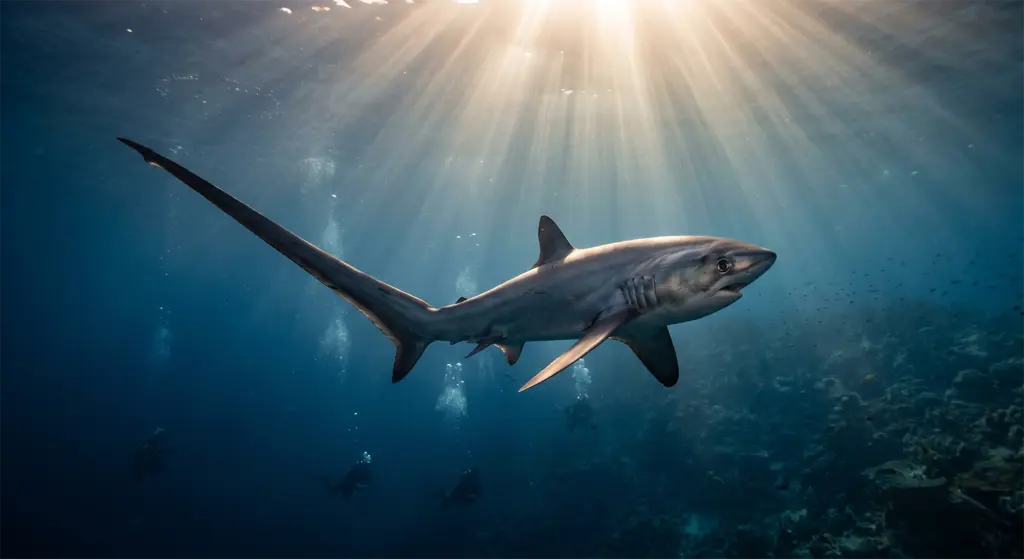
Outside the thresher shark dive sites, Malapascua has white-sand beaches, a small village, and a relaxed pace. Hammerhead sharks and manta ray sightings are documented at other sites around the island. Typhoon Yolanda (Haiyan) in 2013 caused significant damage; infrastructure has been rebuilt, and the diving community has returned.
7. Camiguin Island
Camiguin is technically in Northern Mindanao rather than the administrative Visayas region, but it appears in virtually every Visayan island itinerary and is geographically close to the Visayas border. It warrants inclusion here on those terms.
The island is called the Island Born of Fire. It has seven volcanoes on an island roughly 23 kilometers long, giving it one of the highest volcano-to-land ratios in the world. Mt. Hibok-Hibok is an active volcano; its last significant eruption was in 1953. The volcanic geology produces hot springs, cold springs, waterfalls, and the fertile soil that makes Camiguin’s lanzones fruit some of the most prized in the Philippines.
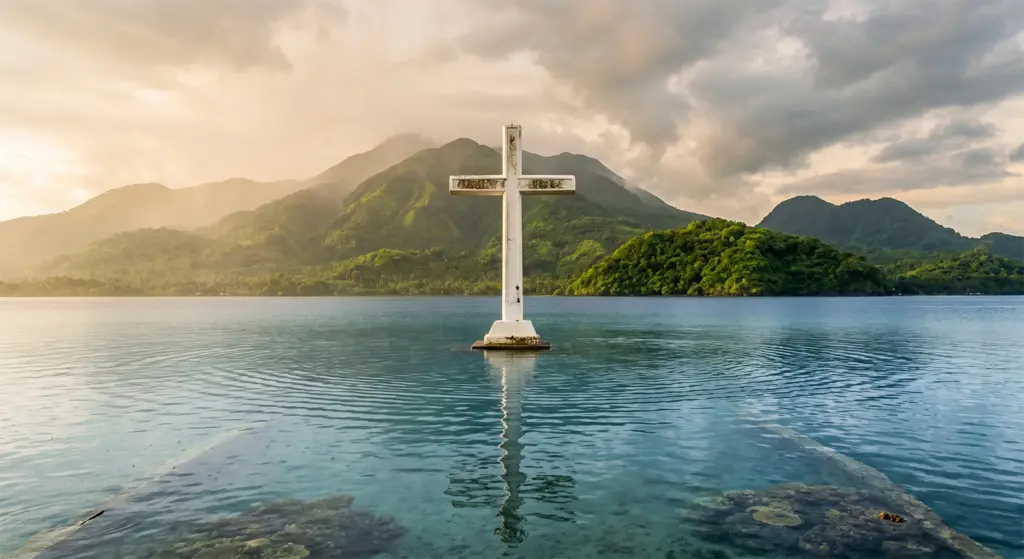
The sunken cemetery is the island’s most distinctive attraction. An eruption of Mt. Vulcan in 1871 submerged an entire cemetery beneath the sea. A large white cross now marks the site above the water. Snorkelers and divers explore the coral-covered tombstones below. The Lanzones Festival in October brings street dancing, parades, and the ceremonial harvest of the island’s signature fruit. White Island, a sandbar off the northern coast, is a short boat ride from the mainland and one of the better day trip options on the island.
8. Siquijor Island
Siquijor is the smallest province in the Philippines and one of the most misunderstood. The name Island of Fire has two origins, depending on the source: some attribute it to the phosphorescence that Spanish sailors observed at sea; others connect it to Siquijor’s deep association with folk healing, herbalism, and the supernatural traditions that have made the island both feared and fascinating in Philippine culture.
The folk healers, known as mananambal, practice herbal medicine using plants and roots gathered from across the island. Their preparations are taken seriously as traditional medicine rather than performance, and during Holy Week, the island draws visitors who come specifically for healing ceremonies. Lazi Church, completed in 1891, is one of the oldest parish churches in the Philippines and a declared National Cultural Treasure.
The natural side of Siquijor is as compelling as its mystical reputation. Cambugahay Falls, a series of turquoise cascading pools in the interior, is one of the best freshwater swimming sites in the Visayas. Salagdoong Beach on the eastern coast has clear water and a cliff jumping platform. The diving around the island is underrated and less crowded than comparable sites on Cebu or Bohol.
9. Panglao Island, Bohol
Panglao Island is connected to the Bohol mainland by a bridge and is effectively an extension of Bohol for most visitors. Alona Beach on the southwestern coast is the main tourist hub: a strip of sand backed by guesthouses, restaurants, and dive operators who run trips to the surrounding sites daily.
Balicasag Island, a 20-minute boat ride from Panglao, is the main dive draw. The marine sanctuary around the island has high fish density, a resident population of sea turtles, and walls that drop to significant depths on the southern side. Dolphins are also observed along the Balicasag route, with spinner dolphins common in the channel between Panglao and the open sea.
Hinagdanan Cave, inland from the beaches, is a lit limestone cave with a subterranean lagoon. The freshwater pool inside is swimmable and genuinely striking in the cave light. Panglao is most practical as a base for exploring both the marine environment and the Chocolate Hills and tarsier sanctuaries on the Bohol mainland, all within easy driving distance.
10. Gigantes Islands, Iloilo
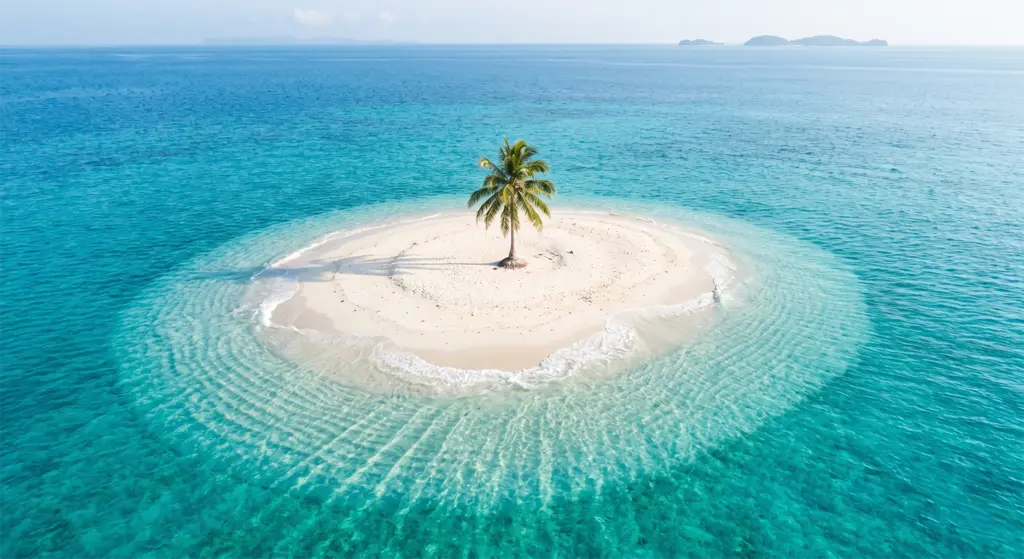
The Gigantes Islands are a group of small islands in the municipality of Carles, in the northeastern corner of Iloilo province on Panay. They remain significantly less developed than most entries on this list, which is both their main attraction and the practical challenge of visiting them.
Cabugao Gamay is the most photographed: a tiny island with a sandbar and a single coconut palm that appears in most Gigantes promotional photography. Tangke Saltwater Lagoon, enclosed by limestone cliffs on Gigantes Norte, is accessible through a narrow cave passage and opens into a protected lagoon with clear water. The lighthouse on Gigantes Norte provides a panoramic view over the island group.
Getting to the Gigantes Islands requires a boat from Estancia port in Iloilo, roughly two hours northeast of Iloilo City. Accommodation on the islands is basic. The experience rewards travelers who are comfortable with limited infrastructure in exchange for a destination that has not yet been organized for mass tourism.
More on the Visayan Islands
Several destinations on this list have dedicated coverage elsewhere on this site. Apo Island’s conservation story is covered in full in the Negros Island marine life article, alongside the Dauin muck diving coast and the Taon Strait cetaceans. The Negros Island series covers the island’s history, natural wonders, culture, and practical planning across five separate articles. Cebu’s underwater environment, the hidden beaches of Cebu and Bohol, and a broader guide to the best island trips in the Philippines are also available. Each article covers its subject in enough depth to use as a standalone planning resource.
Frequently Asked Questions
Q1: What is the best time of year to visit the Visayan Islands?
November through May covers the dry season for most of the Visayas, with February through April offering the most reliable weather across the region. Boracay is at its best during the Amihan season from November through April. Diving conditions at Apo Island, Malapascua, and Panglao are best from March through June. The Lanzones Festival on Camiguin and the MassKara Festival in Bacolod (Negros Occidental) both fall in October, making that month worth planning around for travelers interested in Philippine festivals.
Q2: Is the Oslob whale shark experience ethical?
This is a genuinely contested question. The Oslob operation involves feeding wild whale sharks daily to keep them in a fixed location. Researchers have documented changes in the sharks’ natural feeding and migration behavior as a result. The encounter is up close and visually compelling, but it is not wild. Travelers who want a whale shark experience closer to natural conditions should consider Donsol in Sorsogon, where spotter-guided open-water swims take place during the seasonal aggregation without a feeding operation. Making an informed decision requires weighing both sides of the debate.
Q3: How do I get to Kalanggaman Island?
The standard route is to take a bus or car from Cebu City to Palompon, Leyte (approximately four to five hours, including the Cebu-Ormoc fast ferry), then a 45-minute motorized outrigger from Palompon port to the island. Day trips only: there is no overnight accommodation on the island. Daily visitor numbers are capped, so arriving at Palompon early in the morning is advisable during peak season. Some organized tours from Cebu City include transport and the boat crossing in a single package.
Q4: Is Camiguin Island part of the Visayas?
Administratively, no. Camiguin belongs to Region X, Northern Mindanao, not the Visayas. It appears consistently in Visayan island tourism coverage because of its proximity to the Visayas and its natural fit within the regional island-hopping itinerary. Getting there from the Visayas typically involves a ferry from Cagayan de Oro or Balingoan in Misamis Oriental, or a connecting flight from Cebu to Cagayan de Oro. The distinction matters for planning purposes but not for the destination’s quality.
Q5: Which of these ten destinations is best for a first-time Visayas visitor?
Bohol is the most practical starting point for a first-time visitor to the Visayas. It is easy to reach from Cebu City by fast ferry in two hours, offers good accommodation across price ranges, and packs the Chocolate Hills, tarsier sanctuaries, Panglao diving, and Balicasag Island into a compact area. Cebu itself is the most accessible hub: international airport, strong infrastructure, and ferry connections to Bohol, Negros, and Leyte. Using Cebu as a base and making day trips or short overnight trips to Bohol, Malapascua, and Oslob covers four destinations on this list without excessive logistics.
SUGGESTIONS FOR LODGING AND TRAVEL
Lodging is widely available throughout the Philippines. However, you may want to get some assistance booking tours to some of the Philippines’ attractions. I’ve provided a few local agencies that we’ve found to be very good for setting up tours. For transparency: We may earn a commission when you click on certain links in this article, but this doesn’t influence our editorial standards. We only recommend services that we genuinely believe will enhance your travel experiences. This will not cost you anything, and I can continue to support this site through these links.
- For Hotel Accommodations in the Manila area, I highly recommend The Manila Hotel. It is centrally located and within walking distance of Rizal Park and Intramuros. Many other attractions are easily accessible from there as well. I have provided a search box below for you to find hotels (click on “Stays” at the top) or flights (click on “Flights” at the top). This tool will provide me with an affiliate commission (at no cost to you).
Local Travel & Lodging Assistance
- Guide to the Philippines: This site specializes in tours throughout the Philippines. They seem to have some flexibility in scheduling, and pricing is very competitive.
- Kapwa Travel is a travel company focused on the Philippines. It specializes in customizing trips to meet customers’ needs.
- Tourismo Filipino is a well-established company that has operated for over 40 years. It focuses on tailoring tours to meet customers’ needs.
- Tropical Experience Travel Services – Tours of the Philippines: This company offers a range of tour packages, allowing you to tailor your trip to your preferences.
Lastly, we recommend booking international travel flights through established organizations rather than a local travel agent in the Philippines. I recommend Expedia.com (see the box below), the site I use to book my international travel. I have provided a search box below for you to use to search for flights (click on “Flights” at the top) or Hotels (click on “Stays” at the top). This tool will provide me with an affiliate commission (at no cost to you).