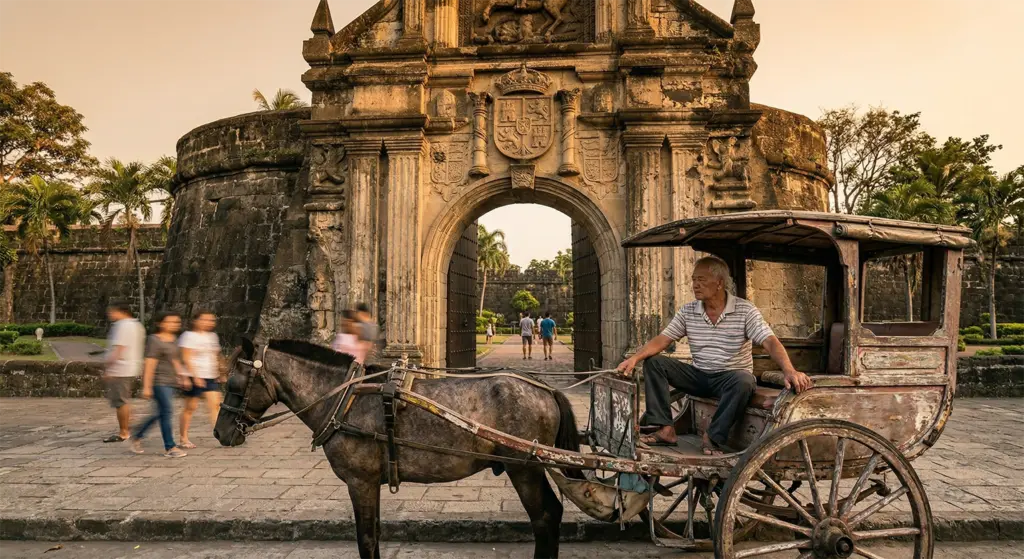
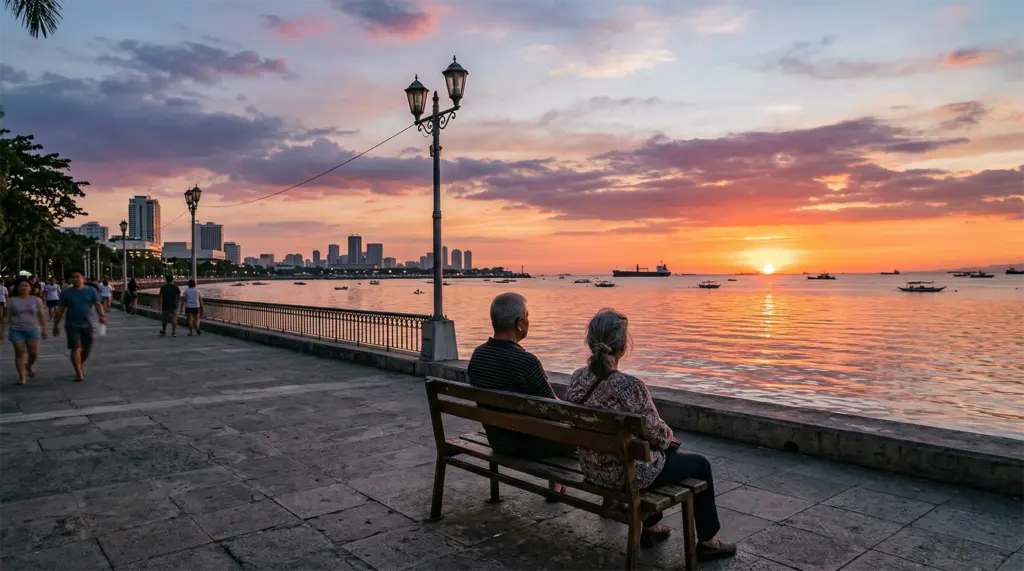
My mother-in-law, Rosaria, and father-in-law, Enrique, had a plan for my first day in Manila. They were going to show me everything. The bay. The boulevard. The neighborhood markets. The relatives — and there were many of those. By mid-afternoon, we had covered more of Manila than I had managed in a week in most other cities.
The party that night at their house was described to me as “small.” Fifty or sixty people showed up. I have no way to verify either number because I lost count somewhere around the fortieth introduction, and by then, my brother-in-law Edwardo had been following me around with a bottle of Tanduay rum for the better part of two hours. Every time I took a sip of my rum and Coke, he filled it back up. With rum. Just rum. By the end of the night, I was, as the military politely says, well-compromised. The Tanduay bottle still hadn’t run out.
That was my first lesson in what Manila Bay, and the Philippines, actually are. Not a destination. A welcome.
I have been coming back for 47 years, and I have never had to revise that assessment.
Why Manila Bay Works for Older Travelers
Manila Bay checks the boxes that matter to senior travelers without making a production of it. English is spoken everywhere in Metro Manila, not tourist English, actual English. You can get directions, read menus, and negotiate a tricycle fare without a translation app. Public transportation is well-established, and the Baywalk along Roxas Boulevard was built for foot traffic, not sprint intervals. If you want to move slowly and take in the view, the city accommodates you.
What no guidebook can convey is the culture underneath the logistics. Filipinos are genuinely warm to older visitors. Not in the performing-hospitality way you sometimes encounter in heavily touristed places. The warmth comes from how the culture actually views age.
I got my first real lesson in this from one of my sister-in-law’s children. She walked up to me, took my right hand, and brought it to her forehead. I had no idea what was happening. I waited until my wife and I were alone before I asked. It’s called ‘Mano Po,’ a gesture of respect offered to elders. I found out later that it’s expected every time you arrive, not just on introduction. Forty-seven years and dozens of visits later, it still happens. That small gesture tells you exactly where you stand.
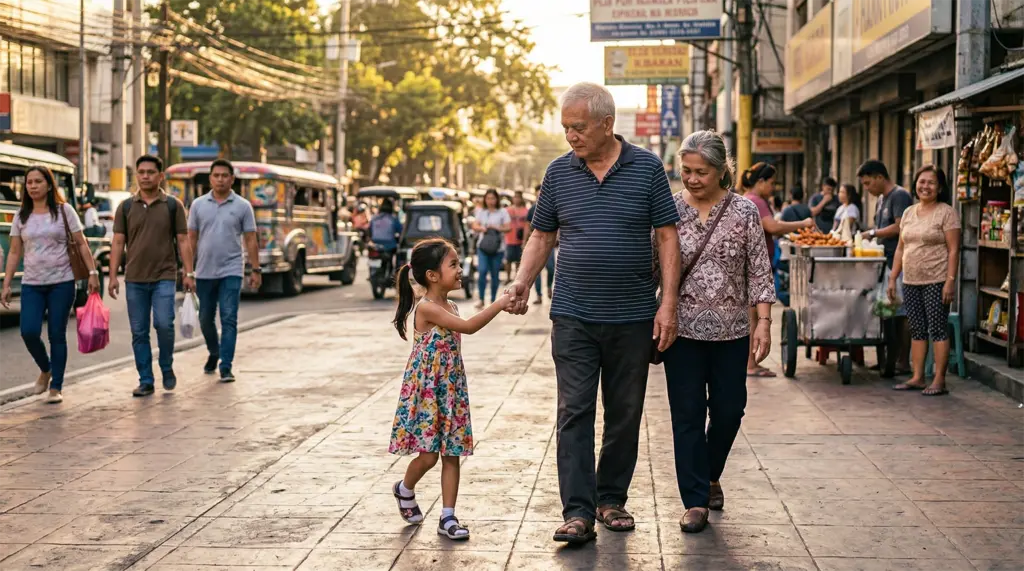
For older travelers who are tired of feeling like an afterthought, Manila Bay is worth knowing about for that reason alone.
Manila Bay — The Place Itself
Manila Bay sits on the western shore of Luzon, stretching roughly 50 kilometers from Corregidor Island to the port of Manila. For most visitors, the focal point is the Baywalk, Roxas Boulevard’s promenade running south from the American Embassy toward the Cultural Center of the Philippines.
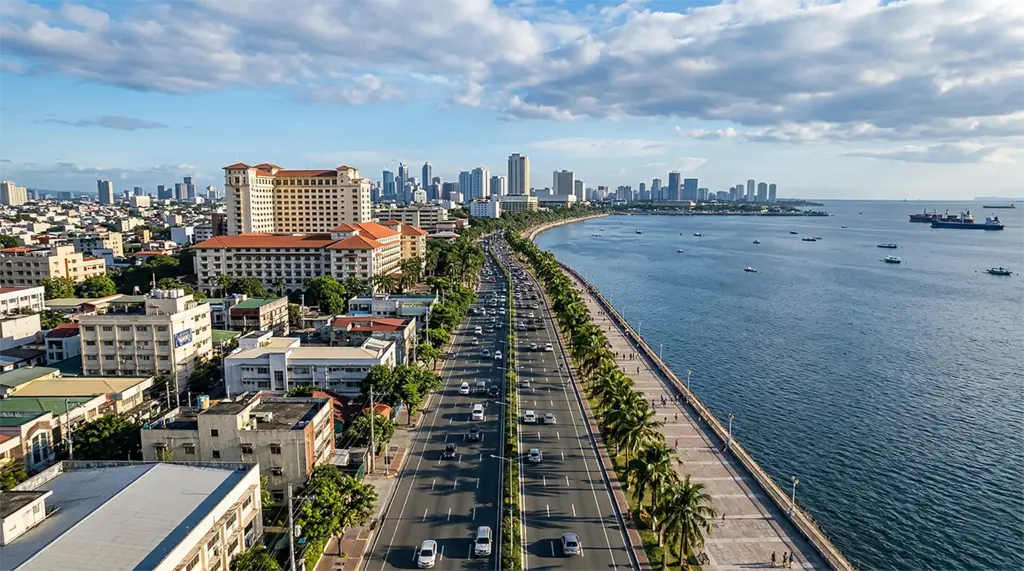
The water here is not for swimming. That’s not what the bay is for. What the bay is for, especially for older travelers, is the slower pace that comes with waterfront proximity. You walk when you want to walk. You sit when you want to sit. The bay doesn’t demand anything from you.
Nearby attractions are within easy reach. Intramuros, the ancient Spanish walled city. Rizal Park, where the national hero was executed and is now memorialized. Fort Santiago, whose stone walls held prisoners from three colonial eras. You can build a full day from the Baywalk outward without pushing the pace.
Forty-Five Years of Watching It Change
I have visited the Philippines many times over those 45 years. Manila Bay is one of the places where the change is most visible. It was not always a pleasant place to walk. For years, pollution and unchecked waste had degraded the waterfront to the point where restoration seemed unlikely. The ongoing cleanup campaign changed that. Water quality has improved substantially. Marine life has returned to sections of the bay that had gone quiet. The integration of green spaces and a reconstructed promenade has made the Baywalk a place where people actually want to spend time, not just pass through.
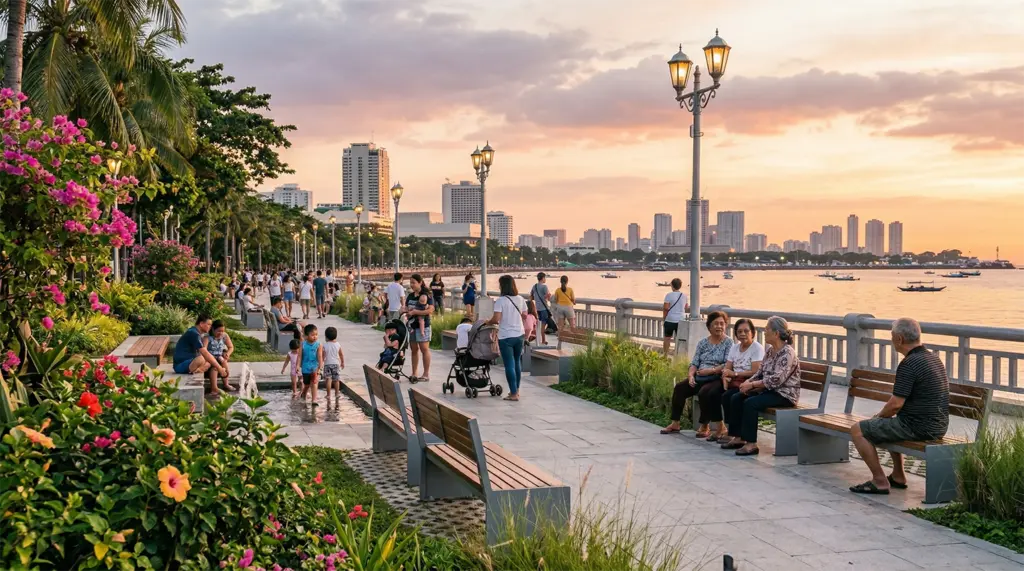
This matters for older travelers specifically. Boat tours along the bay, once inadvisable, are now a reasonable option. Walking the Baywalk without concerns about the surrounding environment is now a real experience rather than a hopeful one.
Manila Bay has not finished recovering. But what it has become is a workable, enjoyable coastal destination, and a credible example of what organized and sustained effort can accomplish.
The History Beneath the Waterline
Manila Bay’s strategic position shaped the Philippines long before European contact. Its naturally deep harbor made it a trading hub for indigenous Filipino groups and Asian merchants centuries before the Spanish arrived.
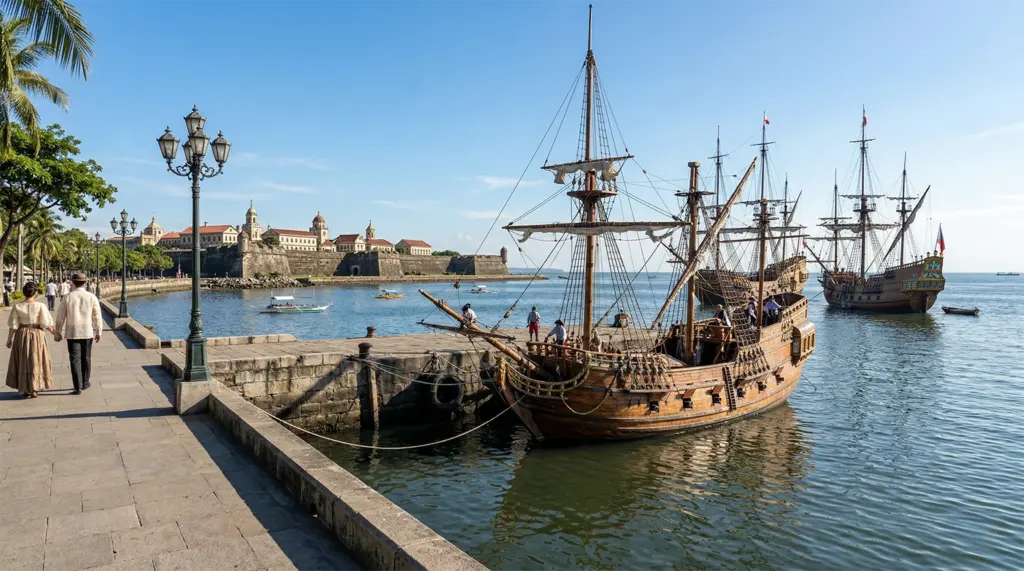
When the Spanish designated Manila their colonial capital in the late 16th century, they recognized what was already obvious: the bay was the commercial gateway. The Manila-Acapulco Galleon Trade that followed ran for more than two centuries. Ships left and returned through Manila Bay carrying silver from the Americas and silk from China. The bay became a vital artery within the Spanish Empire. That economic reality shaped the cultural fabric of the Philippines in ways still visible today.
The bay’s military significance came into sharp focus on May 1, 1898. Commodore George Dewey led the U.S. Asiatic Squadron into Manila Bay before dawn and destroyed the Spanish Pacific Squadron by noon. The Battle of Manila Bay effectively ended Spanish colonial rule in the Philippines and marked the beginning of American influence in the region. It remains one of the most decisive naval engagements of the Spanish-American War.
More Recent History
During World War II, Manila Bay became a pivotal battleground again. It was central to the Japanese occupation and to the eventual Allied liberation of the Philippines. The bay witnessed significant military operations on both sides. That history is evident in Manila today, particularly in the fortifications at Fort Santiago (covered in a separate article in this series) and the preserved walls of Intramuros (with its own article in the series).
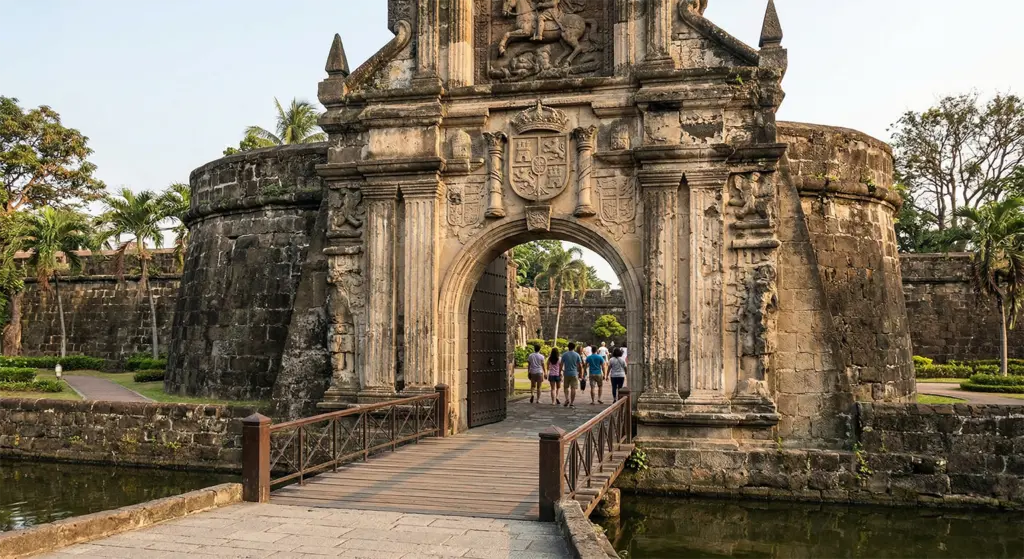
For senior travelers interested in military and colonial history, Manila Bay delivers. Few waterfront destinations offer this depth of historical narrative. These walls, these stones, and this water are the original locations. Nothing has been reconstructed for tourism.
Eating Well Along the Bay
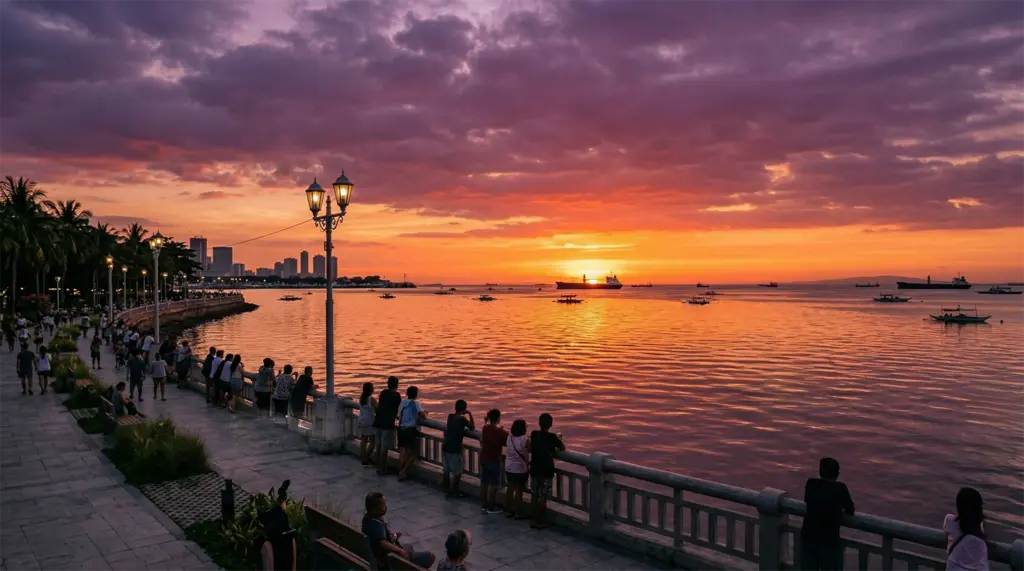
Roxas Boulevard is the spine of the Manila Bay dining scene. Restaurants and cafes line the waterfront, most of them positioned for sunset views over the water. Fresh seafood is the standard offer here, not a specialty item, the default. You order it, you watch the sky change color, and that combination is hard to improve on.
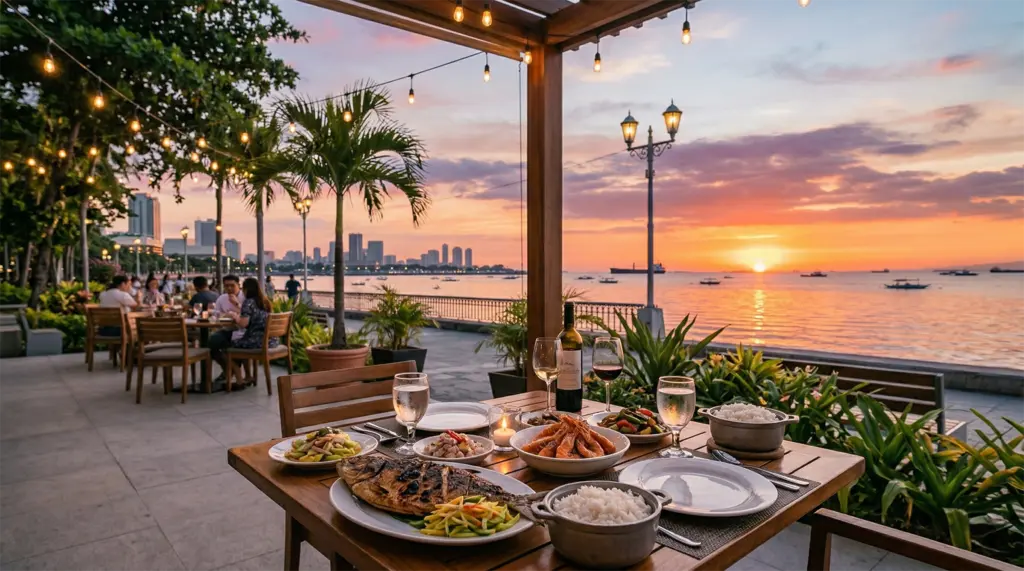
For travelers interested in the colonial history of the food as much as the food itself, the restaurants inside Intramuros are worth the short trip. The walled city’s dining scene leans into the Filipino-Spanish culinary fusion that developed over centuries of colonial crosscurrents. Dishes like adobo, kare-kare, and lechon show up inside heritage buildings turned into restaurants; The setting adds context that a standalone restaurant can’t replicate.

For those who want to get closer to where the seafood actually comes from, try the Dampa Seafood Market. You pick your fish from the stalls. The adjacent restaurants prepare it to order. Part market, part meal, it moves at a pace that suits travelers who aren’t in a hurry. Traditional Filipino sweets, such as ensaymada and halo-halo, are available at nearby bakeries for those who want something to finish their meal.
What Nature Offers Here
Manila Bay’s sunsets have a reputation they have earned. The bay’s open western exposure, and the haze of the tropical coast, pull the full color range out of the sky, orange, deep red, pink, purple. It moves fast enough to hold your attention from first light to full dark. The Baywalk faces west. There are benches. The timing takes care of itself.
Beyond the sunset, guided boat tours take visitors through the mangrove reserves and bird sanctuaries that have re-established themselves as part of the bay’s ongoing recovery. These tours move at a senior-friendly pace and provide access to nesting birds and restored coastal ecosystems that you won’t see from the Baywalk. For travelers who want a naturalist experience without the physical demands of a trail, a bay tour is the right option.
The broader conservation work underway, coral restoration programs, and coordinated cleanup operations, also create a learning dimension for those interested in environmental stewardship. Understanding what it took to bring this waterfront back from where it was is part of understanding Manila Bay as it is today.
Before You Go
That Tanduay bottle Edwardo was carrying the night I met my in-laws was not an accident. It was a statement. In the Philippines, you don’t offer what you can spare. You offer what you have.
Manila Bay is the same way. It doesn’t offer you the cleanest water or the most dramatic coastline in the archipelago. What it offers is four centuries of accumulated significance, and a people who will make you feel, from the moment you arrive, that this was somewhere you should have been all along.
Whether you come for the history, the food, the sunsets, or to simply sit and let a long life’s worth of planning drop away for a few hours, the bay is ready for you.
Just watch your drink if Edwardo is around.
Frequently Asked Questions
Q1: Is Manila Bay safe for older travelers?
Yes, in the areas most visitors frequent, the Baywalk along Roxas Boulevard, Intramuros, Rizal Park, and the vicinity of the Cultural Center of the Philippines. Metro Manila, like any large city, requires a normal level of awareness of your surroundings and belongings. The Baywalk itself is a popular local destination, busy throughout the day and well into the evening, which contributes to its safety profile. For travelers with mobility limitations, the promenade is generally accessible, though sidewalks in some surrounding areas are uneven and worth watching. I’ve been navigating Manila since the late 1970s, including in the early years when it was considerably less visitor-friendly, and the waterfront today is as manageable as any major Asian city I’ve spent time in.
Q2: What is the best time of year to visit Manila Bay?
The dry season runs from November through April, and those months are the most comfortable for outdoor time along the Baywalk. December through February offers the coolest temperatures, still warm by most standards, but without the intense humidity of the wet season. The rainy season (June through October) doesn’t rule out Manila Bay as a destination, but typhoon activity during those months requires monitoring, and the heat and humidity can significantly limit outdoor time. If watching the bay sunset is a priority, the dry season months also tend to produce clearer skies for the full color range. That’s not a minor consideration; the sunset is one of the primary reasons people make time for the Baywalk.
Q3: How do I get around Manila Bay and the surrounding attractions?
The Baywalk is within walking distance of most hotels along Roxas Boulevard. Intramuros is approximately two kilometers from the southern end of the Baywalk, manageable on foot for travelers comfortable with that distance, or reachable by tricycle or Grab. Rizal Park sits between the Baywalk and Intramuros and works as a natural stopping point. Taxis and Grab are the most reliable options for older travelers who want point-to-point transportation without navigating the jeepney system. Grab is particularly straightforward: the fare is set before you get in, there’s no negotiation, and the driver knows where you’re going before they arrive. That predictability matters when you’re covering a city you don’t know well.
Q4: What should older travelers know about dining along Manila Bay?
The dining options along Roxas Boulevard and in Intramuros are generally senior-friendly in terms of pace and environment, sit-down restaurants, English-language menus, and no pressure to rush. The seafood along the boulevard is fresh and prepared in ways ranging from traditional Filipino (which I recommend without reservation) to more familiar international styles, if needed. The Dampa Seafood Market is an experience as much as a meal: you choose from the raw display and have the adjacent restaurants prepare it for you. If your travel companion has dietary restrictions, it’s worth specifying clearly. Filipino hospitality means they will try to accommodate, but the default assumption is that there is an appetite for everything on the table.
Q5: Is Manila Bay worth visiting if I’ve already seen the main historical sites?
Yes. The historical sites, Intramuros, Fort Santiago, Rizal Park, and San Agustin Church, are close to the bay but are separate experiences. Manila Bay itself is more atmospheric than instructional. What it offers that the historical sites don’t is pace: a long walk, a meal with a view, a sunset that earns its reputation, and the particular feeling of standing at a place where a significant amount of history actually happened. Travelers who have already covered the major sites often find that the Baywalk is where they slow down and let the city settle on them. That’s nothing.
Q6: What lodging is best positioned for Manila Bay?
Hotels along Roxas Boulevard put you within walking distance of the Baywalk and within short transport range of Intramuros, Rizal Park, and Fort Santiago. This section of Manila, sometimes called the Manila Hotel district, is well-established and familiar to international visitors. It is not the trendiest part of Metro Manila, but it is convenient, walkable by the standards of a large Asian city, and directly positioned for the bay access most visitors prioritize. Booking through established international platforms is advisable for managing reservations from outside the country.
Q7: How does Manila Bay fit into a broader Philippines itinerary?
Manila Bay works better as an entry or exit point than as a standalone week-long destination. Most travelers arrive through Ninoy Aquino International Airport and will spend at least a night or two in Manila regardless. Using that time to cover the Baywalk, Intramuros, Rizal Park, and Fort Santiago is sensible. These sites give the rest of the Philippines its historical context. From Manila, connecting to other regions is straightforward by domestic air: Palawan, the Visayas, Panay, Cebu, Bohol, and Negros are all accessible within an hour or two of flying. Think of Manila Bay as the front door. It’s worth spending time in the doorway before you go further inside.
SUGGESTIONS FOR LODGING AND TRAVEL
Lodging is widely available throughout the Philippines. However, you may want to get some assistance booking tours to some of the Philippines’ attractions. I’ve provided a few local agencies that we’ve found to be very good for setting up tours. For transparency: We may earn a commission when you click on certain links in this article, but this doesn’t influence our editorial standards. We only recommend services that we genuinely believe will enhance your travel experiences. This will not cost you anything, and I can continue to support this site through these links.
- For Hotel Accommodations in the Manila area, I highly recommend The Manila Hotel. It is centrally located and within walking distance of Rizal Park and Intramuros. Many other attractions are easily accessible from there as well. I have provided a search box below for you to use to search for Hotels (click on “Stays” at the top) or flights (click on “Flights” at the top). This tool will provide me with an affiliate commission (at no cost to you).
Local Lodging Assistance
- Guide to the Philippines: This site specializes in tours throughout the Philippines. They seem to have some flexibility in scheduling, and pricing is very competitive.
- Kapwa Travel is a travel company focused on the Philippines. It specializes in customizing trips to meet customers’ needs.
- Tourismo Filipino is a well-established company that has operated for over 40 years. It focuses on tailoring tours to meet customers’ needs.
- Tropical Experience Travel Services – Tours of the Philippines: This company offers a range of tour packages, allowing you to tailor your trip to your preferences.
Lastly, we recommend booking international travel flights through established organizations rather than a local travel agent in the Philippines. I recommend Expedia.com (see the box below), the site I use to book my international travel. I have provided a search box below for you to use to search for flights (click on “Flights” at the top) or Hotels (click on “Stays” at the top). This tool will provide me with an affiliate commission (at no cost to you).