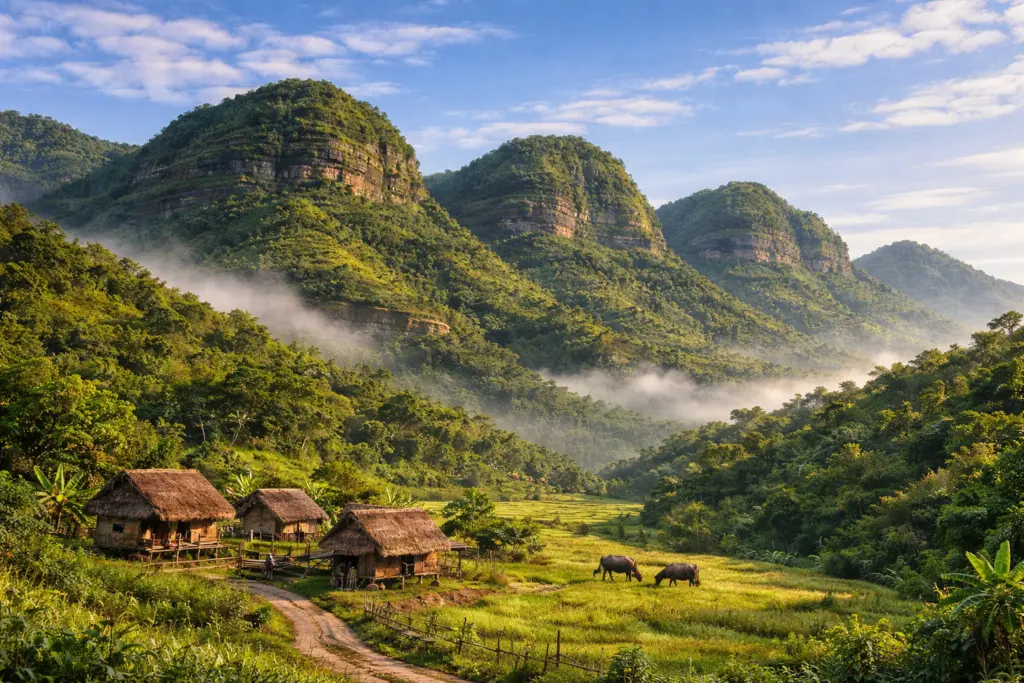
My family has a home in Mabinay, in the interior of Negros Oriental, not far from Mabinay Springs. When you drive in from the coast, the land changes. The sugarcane flats give way to karst limestone hills. Then the hills fold into each other, and you understand that you are somewhere old. Mabinay sits atop more than 500 caves, the largest concentration of caves in the Philippines. The rock beneath the town has been hollowed by water over millions of years. People have been living here, in and around those caves, for a very long time. The history of Negros Island is not something you read about on a placard. In Mabinay, it is in the ground under your feet.
Negros is the fourth-largest island in the Philippines. It’s roughly 13,000 square kilometers of mountain spine, sugarcane plains, and coastline. This is further divided between two provinces: Negros Occidental to the west, with its capital, Bacolod. To the east is Negros Oriental with its capital, Dumaguete. The two provinces have distinct personalities shaped by distinct histories. Understanding Negros means understanding both, and understanding where the split came from.
The People Who Were Here First
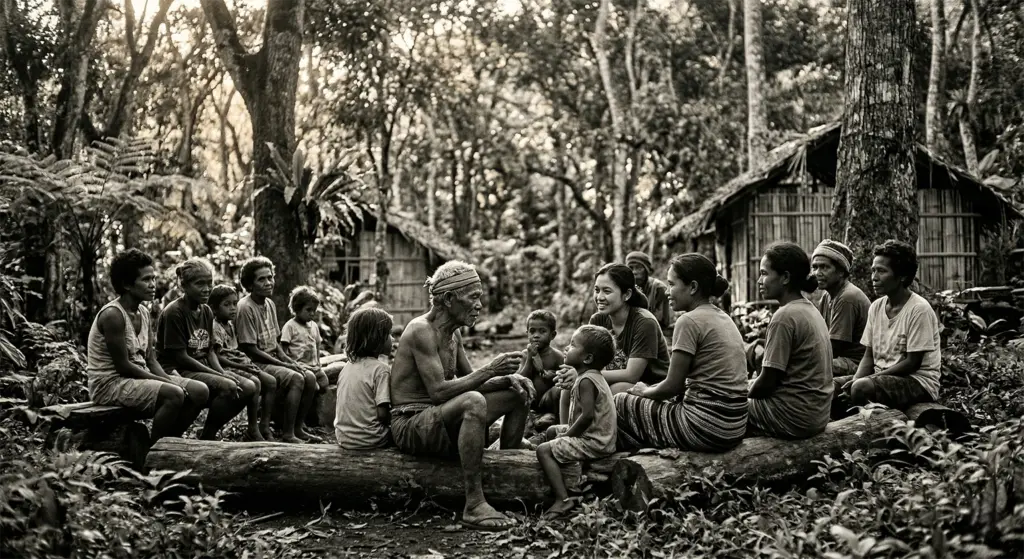
Long before any colonial map gave Negros its name, the island supported several distinct indigenous communities. The Ati, also called Negritos, were among the earliest inhabitants of the Philippine archipelago. They are a hunter-gatherer people with a presence across the Visayas that predates the Austronesian migrations by thousands of years. The Ati are smaller in stature and darker in complexion than the later Austronesian arrivals. They lived in the forested interior, moving with the seasons and the availability of resources.
The Bukidnon, a word meaning “people of the mountains,” occupied the upland areas. They developed a social structure centered on the barangay: a community unit led by a datu, or chieftain. His authority derived from lineage, wealth, and the loyalty he commanded. These were not early, rudimentary arrangements. The barangay system was sophisticated enough to manage trade, mediate disputes, and forge alliances with neighboring communities. They also participated in the broader maritime trade networks connecting the Visayas to Borneo, Java, and the Chinese coast. This was centuries before the arrival of Spain.
The coastal lowland communities of pre-colonial Negros were part of that trade world. Chinese merchants brought porcelain, silk, and bronze in exchange for beeswax, forest products, and slaves. Arab and Malay traders moved through the same waters carrying Islam and new commercial relationships. The archaeological record from sites across the Visayas includes: gold ornaments, Chinese trade ceramics, and burial jars that document a society that was outward-looking and economically active long before the Spanish arrived to claim they had discovered it.
The Outcome
The Ati and Bukidnon communities that survived the colonial period remain on Negros Island today. However, they are far smaller in number and face far more difficult circumstances. The interior highlands of Negros Oriental, the mountains around Mabinay, and further north remain areas where indigenous communities maintain cultural practices that trace an unbroken line to the pre-colonial world. That continuity is worth acknowledging before moving to the history that tried to erase it.
How the Island Got Its Name
The Spanish named Negros Island in the 16th century, and the name is exactly what it appears to be. When Spanish explorers encountered the Ati people on the island’s shores, they described them as “Los Negros,” the Black Ones. This was due to their dark complexion relative to the Austronesian populations the Spanish had encountered elsewhere in the archipelago. The island became “La Isla de los Negros,” shortened over time to simply Negros.
That naming is uncomfortable history, and it is worth sitting with rather than rushing past. The people who gave the island its name were cataloging a population. Keep in mind they intended to colonize and, in time, largely displace them. The Ati had no say in what the island would be called. They had no say in what would happen next. The name has stayed for 450 years.
Spanish colonization of Negros proceeded gradually through the latter half of the 16th century. The Augustinian and Dominican friars who accompanied the colonizers established missions in the coastal lowlands. They used the reduccion system to consolidate scattered barangay settlements into larger, controllable communities centered on a church and plaza. The indigenous population was baptized, renamed, and reorganized around the rhythms of the Catholic liturgical calendar. The highlands, where the Ati and Bukidnon retreated, remained beyond effective Spanish control for most of the colonial period.
Sugar and the Society It Created
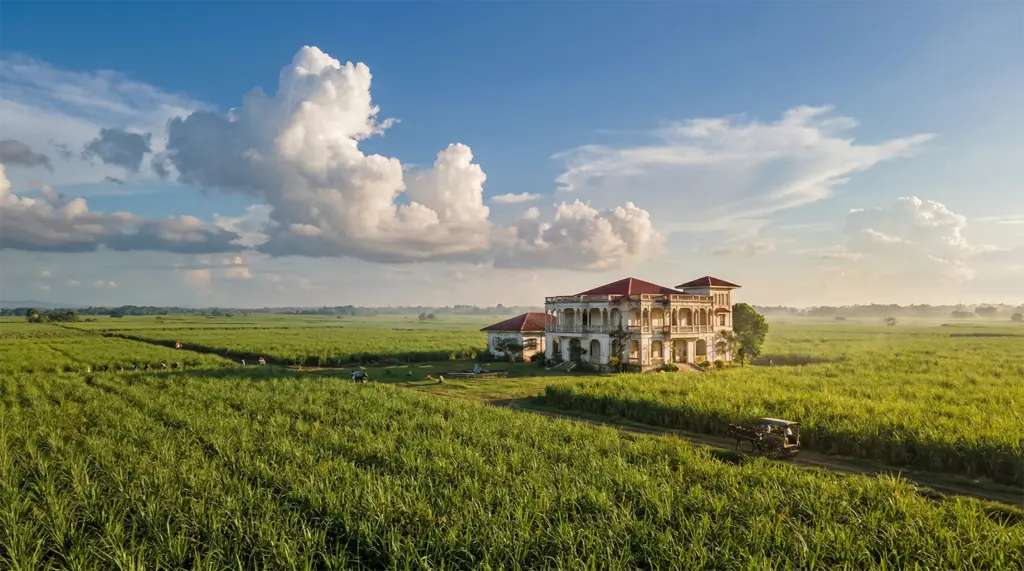
The transformation that made Negros what it is today came not in the 16th century, but in the 19th century. This is when the sugar economy arrived and remade the island’s social landscape with remarkable speed. Negros Occidental, the western province facing the Visayan Sea toward Panay, turned out to have ideal conditions for sugarcane: flat coastal plains, reliable rainfall, and river systems that could irrigate the fields. When the port of Iloilo opened to foreign trade in 1855, global demand for sugar surged. And as you might imagine, Negros Occidental was positioned to supply it.
What followed was one of the most rapid agricultural transformations in Philippine history. The forest was cleared. Haciendas, large agricultural estates, were carved out and planted with cane. Labor was needed in quantities that the existing population could not supply, so workers were brought from the Visayan islands, particularly from Cebu and Panay. The haciendero class, the estate owners, became extraordinarily wealthy. Bacolod, the provincial capital, developed the architecture and social institutions of a prosperous colonial city. By the late 19th century, sugar accounted for the overwhelming majority of Negros Occidental’s economic output, and the island had become the most productive sugar region in Southeast Asia.
The Ilustrados and the Making of an Elite
The sugar wealth produced a new social class: the ilustrados, literally “the enlightened ones,” the educated Filipino elite who could afford to send their sons to universities in Manila and Spain. The ilustrados of Negros were among the most politically engaged in the archipelago. They read the nationalist literature that was beginning to circulate in the 1880s, and some of them knew José Rizal personally. They understood that the colonial system that had made their families rich was also the system that denied them full political standing, and they were not comfortable with that contradiction.
The ilustrado class would play a central role in what came next. Their wealth gave them resources. Their education gave them language. And by the late 1890s, events in Manila and across the archipelago were moving faster than any of them had anticipated.
The November Revolution: The Republic That History Forgot
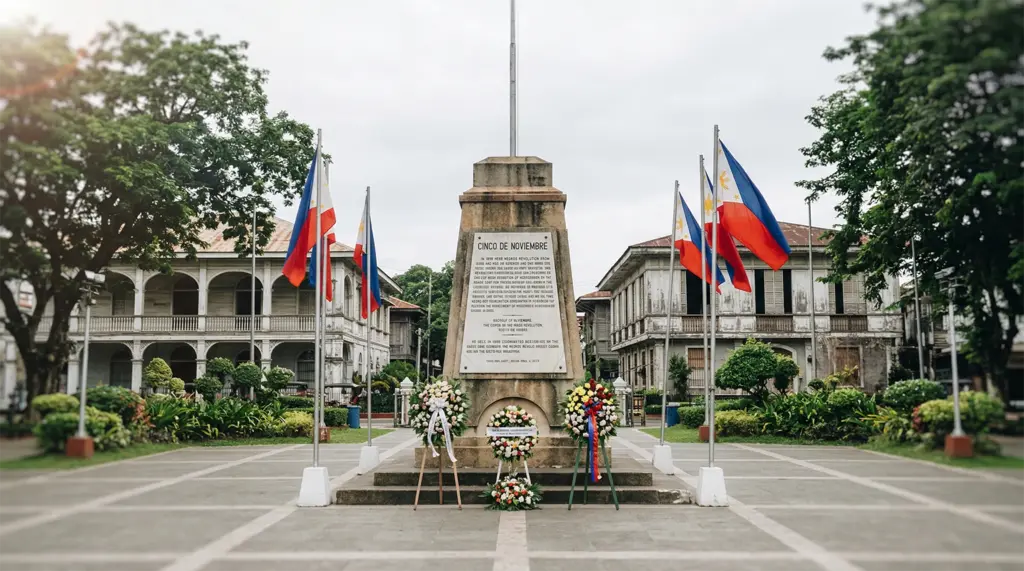
On November 5, 1898, Negros Island made its own revolution. It is one of the most remarkable and least-known episodes in Philippine history.
By the summer of 1898, the Spanish-American War had effectively ended Spain’s Pacific empire. Commodore Dewey had destroyed the Spanish fleet in Manila Bay in May. The Philippine Revolution was accelerating across the archipelago. On Negros, the ilustrado leadership and the emerging revolutionary movement had been watching events and preparing. When the Spanish authority finally collapsed, they moved quickly.
The Cinco de Noviembre uprising drove the remaining Spanish forces from Bacolod without significant resistance. Local leaders, including Aniceto Lacson and Juan Araneta, declared the Cantonal Republic of Negros, a self-governing entity that operated independently for nearly six months while the larger question of Philippine sovereignty was settled by powers over which the Negreños had no vote. The Cantonal Republic issued its own constitution, established a government, and maintained order on the island through the transition period.
Enter the Philippine-American War
When the Philippine-American War began in 1899, and it became clear that the United States intended to assume sovereignty over the islands rather than recognize Philippine independence, the Cantonal Republic negotiated its own accommodation with American forces. The terms were relatively peaceful compared to the brutal fighting that accompanied American pacification in other parts of the archipelago. The ilustrado leadership of Negros chose a path that preserved their economic interests and their political positions, at the cost of the independence they had briefly held.
The Cinco de Noviembre is commemorated annually in Negros Occidental. It deserves more recognition than it typically receives in the broader telling of Philippine history. For six months in 1898 and 1899, Negros Island had its own republic. That is not a footnote.
The American Chapter: Education, Infrastructure, and Continuity
American colonial administration came to Negros in 1899 and stayed, formally, until 1946. The Americans brought changes the Spanish had not: a public education system, infrastructure investment, and a political framework that eventually led to Philippine Commonwealth status in 1935. The Thomasites, the American civilian teachers who arrived in 1901, were named after the transport ship that carried them, and they established schools across the island. English became the language of instruction and, over the decades, of commerce and government.
What the Americans did not change was the sugar economy or the hacienda system that supported it. American colonial policy actively encouraged sugar production for the American market. The haciendero class that had emerged under Spanish rule remained the dominant social force in Negros Occidental. The laborers, the sacadas who came from other islands to cut cane for seasonal wages, remained at the bottom of the social structure. American modernization reformed many things in Negros. It did not reform this.
Negros Oriental developed differently during this period. Without the concentrated sugar wealth of the western province, Negros Oriental’s economy remained more diverse: coconut, corn, fishing, and small-scale agriculture. Dumaguete developed as an educational center: Silliman University, founded in 1901 by American Presbyterian missionaries, became one of the premier universities in the Philippines. It gave Dumaguete the character it has maintained: a university town with a literary culture, a seafront promenade, and a pace that does not match the sugar industry’s urgency.
The War Comes to Negros
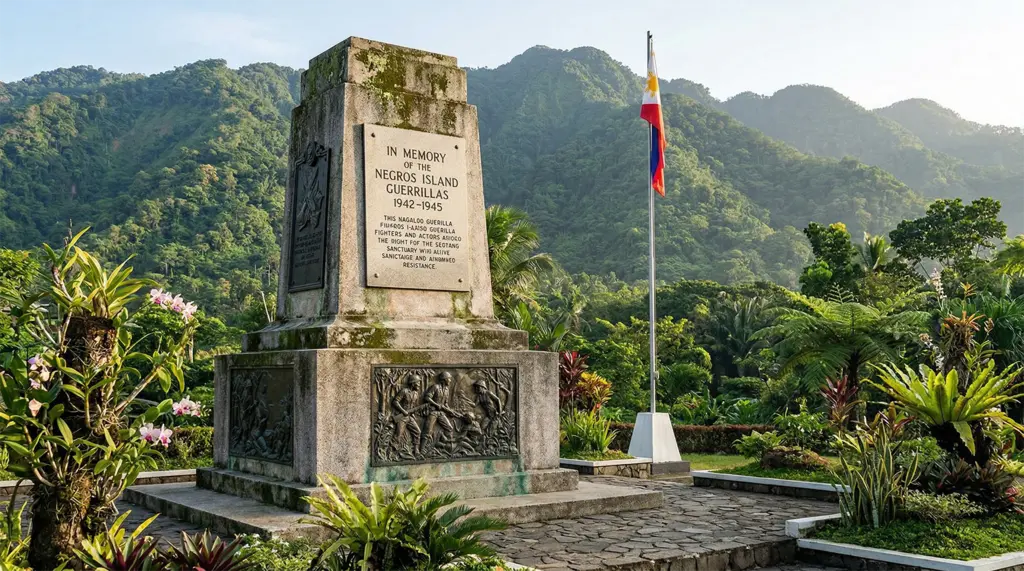
Japanese forces occupied Negros Island in 1942 following the fall of the Philippines. The occupation was harsh by the standards of Japanese administration throughout the occupied territories: food requisitioning, forced labor, the execution of suspected guerrillas and their families. The sugar industry, which required complex machinery and skilled management, effectively collapsed during the occupation years.
What the Japanese did not accomplish on Negros was the suppression of armed resistance. Guerrilla forces organized rapidly in the mountains and interiors of both provinces. The terrain helped: Negros’ mountainous spine and its dense interior forest provided cover and supply lines that the Japanese garrison could not effectively interdict. The guerrillas maintained radio contact with MacArthur’s forces in Australia, collected intelligence, conducted sabotage operations, and kept pressure on Japanese positions throughout the occupation.
American forces returned to Negros in March 1945 as part of the broader liberation of the Philippines. The fighting to clear the Japanese from the island’s interior continued until the formal Japanese surrender in August. The combined toll of the occupation and the liberation campaign on the civilian population, particularly, was severe. The economic infrastructure built over decades required years of rebuilding.
After the War — Sugar Crisis and What Followed
Negros recovered in the postwar decades by returning to what it knew: sugar. The postwar international sugar market rewarded the haciendas of Negros Occidental with prices that supported the industry’s restoration and a period of relative prosperity through the 1950s and 1960s. The social structure that had always accompanied the sugar economy, wealthy hacienderos, landless seasonal laborers, and minimal social mobility, returned along with the industry.
The crisis, when it came in the 1980s, was catastrophic. Global sugar prices collapsed. The Marcos government’s sugar monopoly, which had controlled marketing and pricing for the industry, had accumulated debts and made decisions that left the haciendas exposed when the market turned. By the mid-1980s, Negros Occidental was in a humanitarian emergency. The sacadas and rural workers, who had always been the most economically marginal people in the industry, were the first to face hunger. International attention, including significant media coverage, brought aid and accelerated the push for diversification that the island had long needed but that the sugar economy had always deferred.
The diversification that followed was partial and uneven, but real. The western province began developing other agricultural products: rice, vegetables, and aquaculture. Tourism began to register as an economic factor. Bacolod developed its service sector. Negros Oriental, which had never been as dependent on sugar, was in some ways better positioned for the transition: Dumaguete’s university economy and its growing reputation as a destination for retirees and divers gave it alternative foundations.
Two Islands in One — Occidental and Oriental
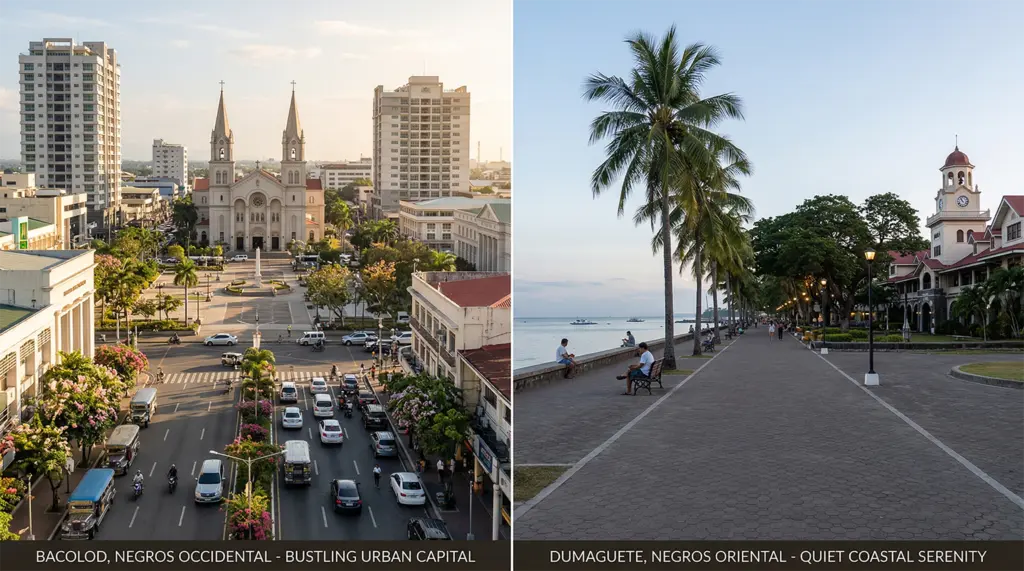
The administrative division of Negros into Occidental and Oriental is not just a geographic convenience. It reflects genuinely different histories and different cultures that developed in parallel on the same island.
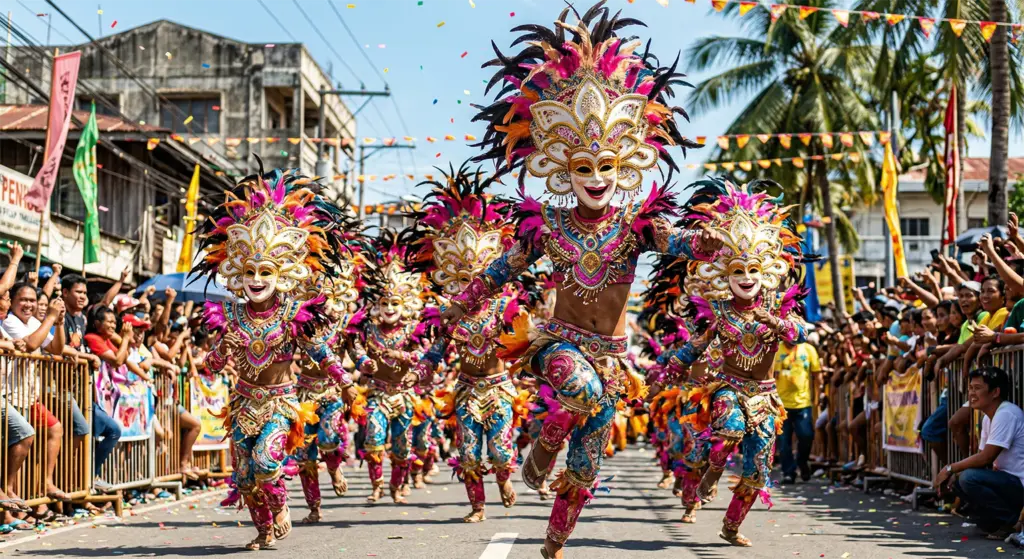
Negros Occidental is the sugar province. Bacolod, the “City of Smiles,” named for its residents’ reputation for warmth, is a substantial city with the architecture, the restaurants, and the social confidence that sugar money built over a century and a half. The MassKara Festival, held every October, is the most exuberant celebration in the Visayas: a street festival of masked dancers that originated in 1980 as a deliberate act of collective morale during the sugar crisis. The province carries its history on the surface.
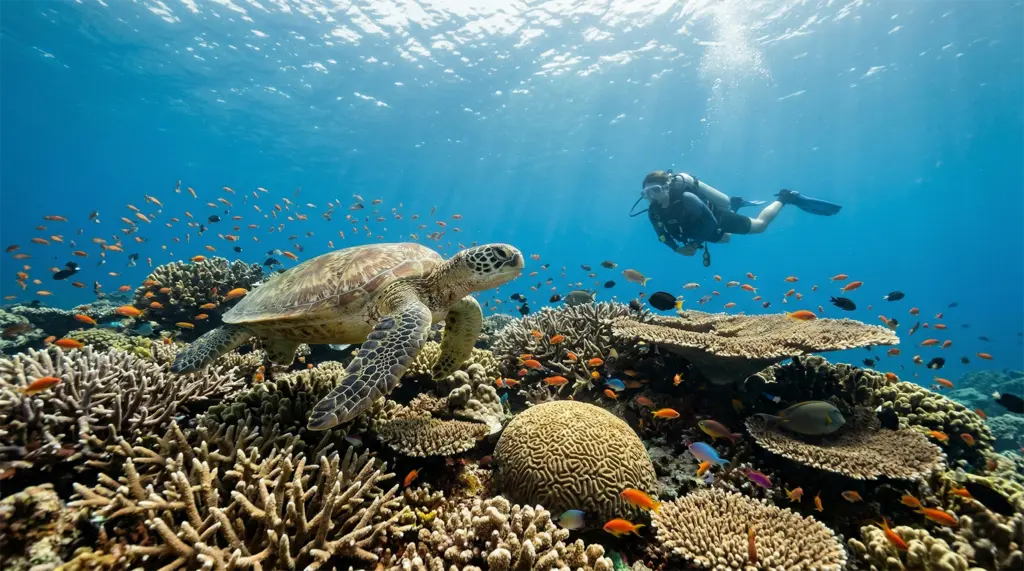
Negros Oriental moves to a different rhythm. Dumaguete is a university town; Silliman University’s campus occupies a central position in the city’s life and gives it a literary and intellectual character that distinguishes it from every other city in the Visayas. The province’s economy is more diverse, its landscape more rugged, and its tourism, built around Apo Island’s marine sanctuary, the whale sharks of Oslob, and the interior mountains and caves of Mabinay, is oriented toward nature rather than cultural spectacle.
My family’s home in Mabinay sits in the interior of Negros Oriental, in the karst landscape that has been inhabited since before any of this history was written. The caves contain pre-colonial artifacts. The springs that give Mabinay its character have been flowing through the same limestone formations for longer than anyone can measure. The history of Negros Island is long. The land has been keeping track of it.
The Negros Island Series — What Follows This Article
Negros Island is one of those destinations that resists a single article. The island is large enough, varied enough, and historically layered enough that a traveler who reads only one piece about it before arriving will miss the larger picture, and the larger picture is worth having before the flight lands.
This article is part of a five-piece series covering Negros Island in full. The history article (this article) traces everything from the pre-colonial Ati and Bukidnon communities through the Spanish sugar economy, the 1898 Cantonal Republic of Negros, the American chapter, and the sugar crisis of the 1980s that produced the MassKara Festival, a context that makes the hacienda architecture, the festival culture, and the social character of Bacolod and Dumaguete considerably more readable on the ground. The natural wonders article covers Mt. Kanlaon and the broader volcanic landscape, the Mabinay cave systems, the waterfalls of Negros Oriental, the Twin Lakes of Balinsasayao, and the endemic species of the North Negros Natural Park.
The culture article examines the language divide between the two provinces, the full story of MassKara and Buglasan, the food traditions of both coasts, the ancestral home architecture of Silay City, and the literary culture that Silliman University has sustained in Dumaguete for more than a century. The ocean and marine life article delves into Apo Island’s community conservation story, the muck-diving coast at Dauin, and the cetacean corridors of the Taon Strait. The overview article is the practical planning piece: the two-province decision, how to get there and between them, when to visit, and which province to base yourself in, depending on what you are looking for.
The Takeaway
Read together, the five articles cover the island the way it deserves to be covered. Read individually, each one stands on its own. Either approach works, but the traveler who arrives knowing the history, ecology, culture, and marine environment will find that Negros Island gives back more than it asks.
Frequently Asked Questions About the History of Negros Island
Q1: Why is Negros Island called Negros?
The island was named by Spanish explorers in the 16th century for the Ati people, the indigenous Negrito population, whose dark complexion the Spanish described as “Negros.” The full original name was La Isla de los Negros, the Island of the Black Ones, which was shortened to Negros over time. The name reflects the colonial gaze of the people who gave it and has remained in use for 450 years. The Ati people themselves, who were there long before the Spanish arrived and remain present on the island today, had no say in the naming.
Q2: What was Cinco de Noviembre, and why does it matter?
The Cinco de Noviembre, the Fifth of November, was the Negros revolution of November 5, 1898, in which local forces drove the remaining Spanish garrison from Bacolod and declared the Cantonal Republic of Negros. The republic operated under its own constitution for nearly six months before the Philippine-American War forced a negotiated accommodation with American forces. It is one of the few instances in Philippine history where a region achieved and administered genuine self-governance, however briefly. It matters because it demonstrates that the Filipino capacity for self-government was not a future aspiration in 1898; it was an active reality on Negros Island. The Cinco de Noviembre is commemorated annually in Negros Occidental.
Q3: What role did sugar play in shaping Negros Island?
Sugar is the defining economic force in Negros Island’s modern history, particularly in Negros Occidental. When the port of Iloilo opened to foreign trade in 1855, and global sugar demand surged, Negros Occidental’s flat coastal plains were converted to sugarcane on a massive scale. The hacienda system that emerged made a small class of estate owners extraordinarily wealthy, created a large class of landless seasonal laborers, and shaped the social structure of the western province for more than a century. The sugar crisis of the 1980s, when global prices collapsed, and the Marcos-era sugar monopoly failed, produced a humanitarian emergency in Negros Occidental that required international aid. The island has been diversifying its economy since then, but sugar remains central to Negros Occidental’s identity and economy.
Q4: What is the difference between Negros Occidental and Negros Oriental?
Negros Island is divided into two provinces by the mountain spine that runs north-south through its interior. First, Negros Occidental, to the west, is the sugar province: its capital, Bacolod, is the largest city on the island; its history is shaped by the hacienda economy; and its culture reflects the wealth and social complexity that sugar produced. Second, Negros Oriental, to the east, developed differently: its capital, Dumaguete, is a university town with a strong literary culture anchored by Silliman University, its economy is more diverse, and its landscape is more rugged. The two provinces share an island but have genuinely distinct characters that visitors notice immediately.
Q5: What indigenous peoples live on Negros Island, and are they still present today?
Two primary indigenous groups have historical roots on Negros Island. The Ati, also called Negritos, are among the earliest inhabitants of the Philippine archipelago. A hunter-gatherer people whose presence predates the Austronesian migrations by thousands of years. The Bukidnon, whose name means “people of the mountains,” occupied the upland areas and developed a barangay-based social structure that participated in the broader Visayan trade network. Both communities survived the colonial period, though in significantly reduced numbers and with considerable loss of land and cultural continuity. Ati and Bukidnon communities remain present in the interior highlands of Negros Island today, particularly in the mountainous areas of Negros Oriental. Their continued presence and ongoing advocacy for land rights and cultural preservation are part of the island’s contemporary reality.
SUGGESTIONS FOR LODGING AND TRAVEL
Lodging is widely available throughout the Philippines. However, you may want to get some assistance booking tours to some of the Philippines’ attractions. I’ve provided a few local agencies that we’ve found to be very good for setting up tours. For transparency: We may earn a commission when you click on certain links in this article, but this doesn’t influence our editorial standards. We only recommend services that we genuinely believe will enhance your travel experiences. This will not cost you anything, and I can continue to support this site through these links.
- For Hotel Accommodations in the Manila area, I highly recommend The Manila Hotel. It is centrally located and within walking distance of Rizal Park and Intramuros. Many other attractions are easily accessible from there as well. I have provided a search box below for you to find hotels (click on “Stays” at the top) or flights (click on “Flights” at the top). This tool will provide me with an affiliate commission (at no cost to you).
Local Travel & Lodging Assistance
- Guide to the Philippines: This site specializes in tours throughout the Philippines. They seem to have some flexibility in scheduling, and pricing is very competitive.
- Kapwa Travel is a travel company focused on the Philippines. It specializes in customizing trips to meet customers’ needs.
- Tourismo Filipino is a well-established company that has operated for over 40 years. It focuses on tailoring tours to meet customers’ needs.
- Tropical Experience Travel Services – Tours of the Philippines: This company offers a range of tour packages, allowing you to tailor your trip to your preferences.
Specific Lodging Suggestions
- Big BamBoo Beach Resort Sipalay – This is a moderately priced resort in Sipalay, Negros Oriental, with great beach access.
- Hotel Dumaguete – A very nice hotel with good reviews and reasonably priced.
- Rovira Suites in Dumaguete – A very nice hotel with very good reviews and a very reasonable price.
- Citadines Bacolod City – A highly rated and popular hotel in the Bacolod area. A little pricier than some, but worth the cost.
- Stonehill Suites – Another highly rated hotel in the Bacolod area. This one is a little more reasonably priced.
- Circle Inn – Hotel & Suites – This hotel falls into the budget-friendly category. They, too, are well-rated and provide good, comfortable lodging.
Lastly, we recommend booking international travel flights through established organizations rather than a local travel agent in the Philippines. I recommend Expedia.com (see the box below), the site I use to book my international travel. I have provided a search box below for you to use to search for flights (click on “Flights” at the top) or Hotels (click on “Stays” at the top). This tool will provide me with an affiliate commission (at no cost to you).
/